
Only logged in customers who have purchased this product may leave a review.
Products
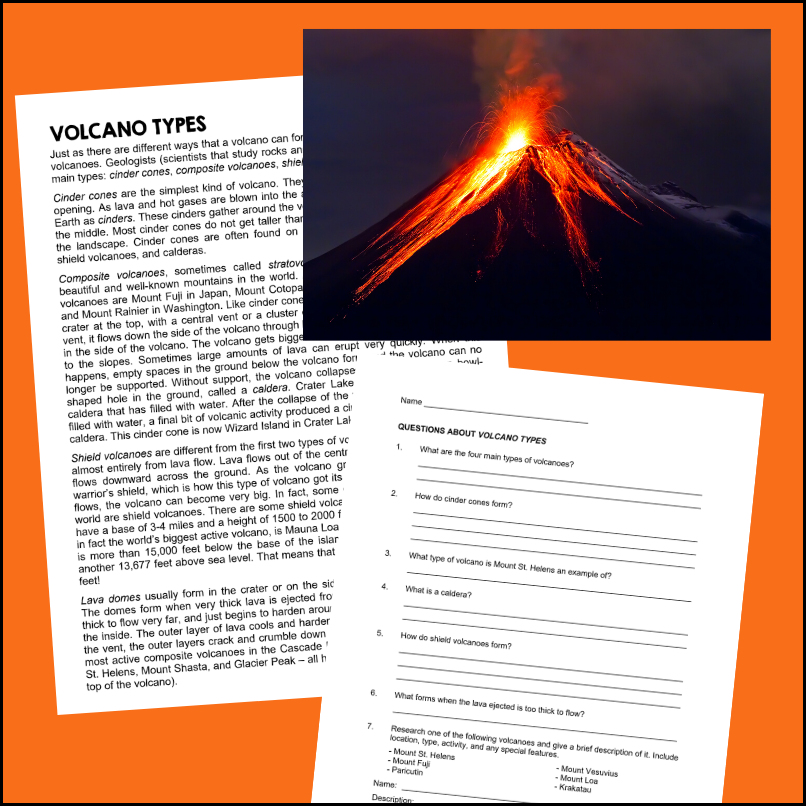
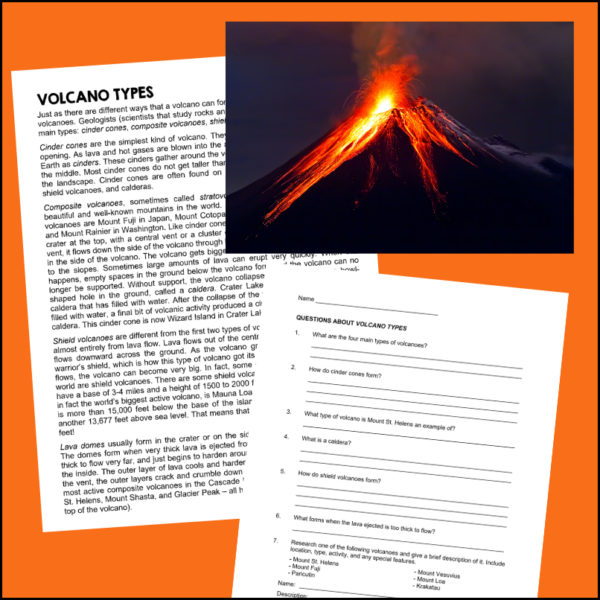
Types of Volcanoes – Reading Comprehension
$1.00
Here is a one page informational article to help students (6th-9th grades) learn about the various types of volcanoes and characteristics of each. After reading the text, student will answer questions to assess their comprehension.
Related products
-
 $1.50Add to Cart
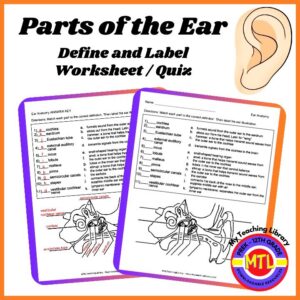
A ready-to-print and use worksheet that will have students define and label parts of the human ear. Answer key provided.
Great learning tool or quiz!
Parts: cochlea, eardrum, Eustachian tube, external auditory canal, incus, lobule, malleus, pinna, semicircular canals, stapes, vestibular cochlear nerve
-
$3.00Add to Cart
This resource is filled with fun activities for students to use whenever they are studying the presidents or for Presidents day! Activities include a word search, an acrostic poetry page, presidential trivia, a ‘Which President’ worksheet, two picture graphs (Washington and Lincoln) and report / notebooking pages. Answer Keys are provided!
Great for any classroom around Presidents Day in February (or) in a Government / Civics class (or) American History class anytime of the year. Designed for 5th, 6th, 7th, and 8th graders.
See description below for more info.
-
$3.00Add to Cart
✏️A student-centered resource to help students learn and practice research skills, report writing, project and presentation skills.
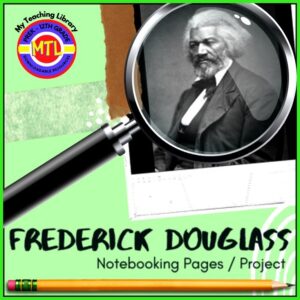
Students will use this project-based unit to learn about and report on Frederick Douglass. Frederick Douglass was an American social reformer, abolitionist, orator, writer, and statesman. After escaping from slavery in Maryland, he became a national leader of the abolitionist movement in Massachusetts and New York, gaining note for his oratory and incisive antislavery writings.
✏️This notebooking project unit can be assigned individually or within cooperative groups. Use it within a Language Arts classroom or a Social Studies / U.S. History classroom. Very flexible and cross-curricular! After completing the written portion of this resource, you can grade it (or) assign students to do an oral and/or audio-visual presentation based on their findings/work.
✏️What is in this resource?
- Student instructions for using biographical notebooking, project pages
- Suggested research questions
- Student notebooking, project pages (includes covers, KWL, reference recording, report writing, and more)
- Teacher pages (instructions, assignment, evaluation)
-
 $2.50Add to Cart
This is a downloadable .pdf copy of the book.
About the book: The Second Jungle Book is a sequel to The Jungle Book. First published in 1895, it features five stories about Mowgli and three unrelated stories, all but one set in India,
About the Author: Joseph Rudyard Kipling was an English journalist, short-story writer, poet, and novelist. He was born in India, which inspired much of his work. Kipling in the late 19th and early 20th centuries was among the United Kingdom’s most popular writers. In 1907, he was awarded the Nobel Prize in Literature, as the first English-language writer to receive the prize, and at 41, its youngest recipient to date. He was also sounded for the British Poet Laureateship and several times for a knighthood but declined both. Following his death in 1936, his ashes were interred at Poets’ Corner, part of the South Transept of Westminster Abbey.


&url=https://myteachinglibrary.com/product/the-second-jungle-book-rudyard-kipling/&media=https://myteachinglibrary.com/wp-content/uploads/2019/08/wy-304-b.jpg)
Reviews
There are no reviews yet.