
Category: Read it Write it Draw it
Showing all 4 resultsSorted by latest
-
 $2.75Add to Cart
🌻 Watch their knowledge grow!
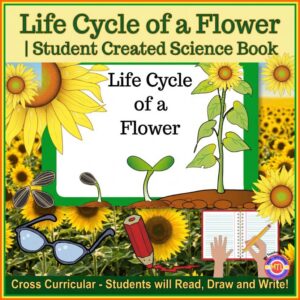
This interactive, cross-curricular project blends Science and Literacy to help students master the plant life cycle while building essential writing and reading skills.
In this activity, students don’t just read about plants—they become the authors and illustrators of their very own science journals!
🔍 How It Works: The “Read, Draw, Write” Method
This resource uses a simple, research-based three-step process on every page to reinforce learning and accommodate different ability levels:
- Read It: Students read a short, informative sentence about a specific stage in the life cycle or a plant’s needs.
- Draw It: Students visualize the concept by illustrating the page, which helps increase retention of scientific information.
- Write It: Students practice fine motor skills and vocabulary by copying the text into the provided primary or standard lines.
🧪 Key Science Concepts Covered:
- What Plants Need: Students identify and record the four essentials for life: Soil, Water, Sun, and Air.
- The Life Cycle Stages: Step-by-step pages detailing the transformation from Seed to Sprout, then to Seedling, and finally to a Mature Flower.
❤️ Why You’ll LOVE This Resource:
- Cross-Curricular Magic: Effortlessly check off Next Generation Science Standards (NGSS) and Common Core ELA standards in one engaging activity.
- Perfect for Portfolios: Creates a tangible “keep-sake” book that students are proud to take home and read to their families.
- Low Prep & High Engagement: Just print, staple, and go!
- Differentiated for Early Learners: Great for Pre-K, Kindergarten, and 1st-grade writers practicing letter formation and scientific sequencing.
Tip: Pair this book with a hands-on bean planting activity! Students can use their “Student Created Science Book” to document the growth they see in their own real-life seeds.
Bring the beauty of Spring and new growth into your lesson plans today and let your students’ creativity bloom!
-
 $2.00Add to Cart
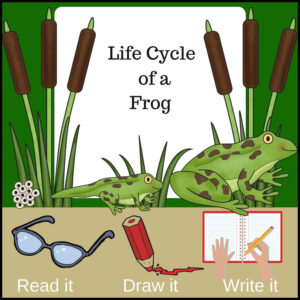
This cross-curricular (Science / Literacy – Writing ) product will have students creating their very own mini-books detailing the life cycle of a frog!
Knowledge students will learn:
The book will begin with the female frog laying her eggs near or in water. Students will then learn about the tadpole, what it looks like and what it eats and how it grows and turns into a froglet. They will learn how the froglet has developed the ability to breathe and live on land and then turns into a frog. Does a frog eat different things than a tadpole? Students will find out! At the end of the unit, there is also a coloring page of the different stages from egg to frog.
Students will: — read the text — draw a picture — write (copy) the written text
-
$3.50Add to Cart
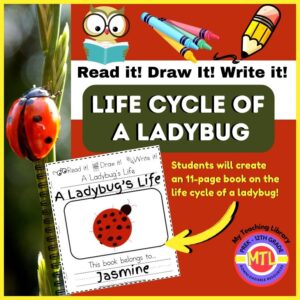
A cross-curricular (Science / Literacy – Writing) product that will have students creating their very own mini-books detailing the life cycle of a ladybug!
Knowledge students will learn:
- -The ladybug is a beetle
- -Mother ladybugs lay tiny yellow eggs in clusters under a leaf
- -When the larva hatches, it eats. What do ladybugs eat? Students will find out!
- -What the ladybug pupa looks like before attaching itself to a leaf
- -The pupa grows, molts and changes…emerging as a ladybug!
Students will:
- -Read the text
- -Draw a picture
- -Write (copy work) the written text.
Benefits of this resource:
- -Low prep – print and give to students
- -Children learn about the ladybug life cycle while reading, drawing and writing
- -Encourages fine motor skills through coloring and writing plus scissor skills as the cut out each page along the dotted lines
- -Encourages reading skills as students read and copy the text
- -Finished book can be a keepsake Science mini-book and added to end-of-the-end portfolio.
What is included? 11 ready-to-use student pages
⭐⭐Use along or with: Ladybug Life Cycle | Posters and Worksheets
-
$4.00Add to Cart
This Winter Reading and Writing resource (with a “Read it! Draw it! Write it!” section) covers a variety of vital Language Arts skills! Perfect to use in December, January, February and into March!
Includes:
- 12 “Read It! Draw It! Write it!” pages (Use individually or combined to complete a book for each student)
- Vocabulary Flashcards
- Compound Word Worksheet
- 3 Syllable Worksheets
- Long Vowel Worksheet
- Short Vowel Worksheet
- 4 Rhyming Worksheets
- 2 additional Writing Worksheets.
Vocabulary Words in this Winter Unit: window, snow, outside, door, pants, sweater, coat, boots, hat, scarf, mittens, five, snowball, snowangel, snowman, sled, hill, roll
“Read it! Draw it! Write it!” pages have been designed to engage students in an active reading. Students can use the symbols to help guide them on each page. On the “Write it!” portions, students are to copy the passage they just read. However, more advanced students may want to add to the story!