
Category: Earth Science
Showing 1–20 of 58 resultsSorted by latest
-
 $3.25Add to Cart
Transform your science lesson into an outdoor adventure with Creek Life! Science for Kids. 🌿 This comprehensive unit study is perfect for early elementary students, blending hands-on nature exploration with essential literacy and science skills.
📚 What’s Included?
This “child-centered” style learning bundle is packed with engaging, printable resources:
-
Informational Reader: Vibrant pages teaching kids about creek animals like the Great Blue Heron, Trout, and Painted Turtle, as well as plants like Duckweed and Cattails.
-
Science Concepts: Easy-to-understand lessons on Biotic (Alive) and Abiotic (Not Alive) elements of an ecosystem.
-
Handwriting & Literacy: Cross-curricular worksheets including “Creek Animals” matching, sentence copying, and vocabulary building.
-
Creative Expression: Drawing prompts and a “Day at the Creek” writing journal for students to record their own field observations.
-
Environmental Stewardship: A “Keeping It Clean” section that teaches kids how to protect local waterways.
✨ Why You’ll Love It
-
Cross-Curricular Learning: Seamlessly integrates science, reading, and fine motor skills (handwriting and drawing) in one unit.
-
Encourages Exploration: Gets kids out of the “box” and into nature to apply what they’ve learned in the real world.
-
Flexible & Engaging: Beautifully illustrated borders and clear, simple text keep young learners focused and excited. (Print in B/W to save ink cost)
-
Just print and go!
🎒 Ready to dive in?
Give your little learners the tools to become mini-scientists today! Purchase and download Creek Life! Science for Kids and start exploring! 🐢🐟☀️
-
-
$3.25Add to Cart
☁️ Your little meteorologists will love learning about clouds with this resource!
Bring the wonders of the sky right into lesson plans! This mini-unit is designed to transform “looking up” into a meaningful scientific discovery. Whether you are teaching a weather unit or just looking for a fun literacy-based science activity, this packet has everything you need to help young learners learn about the floating clouds above them!
📖 What’s Inside the Reader?
Our engaging, easy-to-read student book covers the “highs and lows” of cloud science:
- Cloud Basics: A clear explanation of what clouds actually are (hint: it’s more than just cotton candy!).
- The Three Levels: Learn where clouds “live”—High, Middle, and Low.
- Meet the Clouds: Detailed descriptions and visuals for 8 common cloud types:
- Cirrus, Cirrocumulus, Altocumulus, Altostratus, Cumulus, Stratocumulus, and the mighty Cumulonimbus.
- Visual Diagram: Specifically designed for visual learners to see the “layer cake” of our atmosphere.
- Weather Predictions: Learn what cloud tells us about the weather coming our way!
- Interactive Observation: A built-in drawing and writing activity where students step outside to observe and describe the sky in real-time. 🌤️
📝 The Worksheets
Reinforce learning and practice fine motor skills with four purposefully designed activity pages:
- Cloud Review: On the different types of clouds, whether they are high, middle or low and what each looks like.
- Handwriting & Copy Work: Students practice sentence writing while perfecting their print.
- Matching: A fun challenge to match cloud names with their pictures.
- The Artist’s Sky: A creative drawing activity where students illustrate their favorite cloud formations! 🎨
✨ Why Teachers & Parents Love It
- No-Prep: Just print and go!
- Cross-Curricular: Combines Science, Reading, and Handwriting.
- Age-Appropriate: Made approachable for primary learners through clear visuals and simple definitions.
🚀 Get Ready to Skyrocket Your Science Lesson!
Ready to turn your students into cloud experts? Add this “Learning About Clouds” unit to your curriculum today and watch their curiosity soar!
-
$2.75Add to Cart
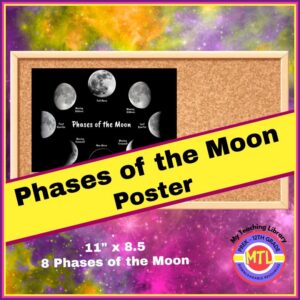
Teaching Earth and Space Science? Looking for a way to visually teach students the different phases of the moon? This “Phases of the Moon: Printable Poster” is for you!
✨ What’s Included:
- – A 1 page black and white, informative poster illustrating the eight phases of the moon.
- – Clear visual representations of the following phases: new moon, waxing crescent, first quarter, waxing gibbous, full moon, waning gibbous, last quarter, and waning crescent.
- – Perfect for a bulletin board display
✅ Perfect ror inspiring curiosity about Earth and space science.
-
$2.75Add to Cart
Looking for an effective way to teach the Phases of the Moon to your middle to high school students? Looking for a no-prep, printable resource that makes teaching space science a breeze? The Phases of the Moon Reading Comprehension (informational text) resource is your perfect solution! You’ll love the ability to use this resource as a one-day, quick lesson or how easily it can integrate into your existing curriculum, providing clear explanations and reinforcing key concepts.
✨ What’s Included:
- – Detailed reading passages explaining the phases of the moon: new moon, waxing crescent, first quarter, waxing gibbous, full moon, waning gibbous, last quarter, and waning crescent.
- – Information on the days to complete the cycle and the concepts of synchronous rotation and tidal locking.
- – A comprehensive assessment featuring short answer and multiple-choice quiz questions.
- – An easy-to-use answer key for quick grading.
✅ Perfect For…
- – Introducing or reviewing the Phases of the Moon in middle school science classes.
- – No-prep science lesson
- – Reinforcing reading comprehension skills within a science context.
This resource is built upon the pedagogical approach of making real-world connections to science. By explaining the observable phenomenon of the moon’s changing appearance, students can directly relate the concepts to their everyday experiences.
📚 Learning Objectives
- Students will be able to identify and describe the eight major phases of the moon.
- Students will understand the relationship between the Earth, Moon, and Sun that causes the different moon phases.
- Students will be able to explain the concept of synchronous rotation and tidal locking.
- Students will be able to determine the approximate duration of the lunar cycle.
- Students will improve their reading comprehension skills by extracting key information from scientific text.
-
Constellations | Astronomy – Space Science | Northern Hemisphere BUNDLE to Pinterest (opens in a new window)$11.00Add to Cart
Study the ⭐STARS ⭐with this constellation bundle! Includes a complete unit with informational text, visuals, flashcards and assessment quizzes. See description below for full details!
-
$2.00Add to Cart
Give students a fun, engaging mini-book to create to help them learn about recycling! Recycle – Reuse – Reduce!
⭐Perfect to use during any student of our environment, our impact on the world, or for Earth Day!
⭐Students will have pages to color and put together creating a book that teaches and that they can keep! They’ll learn…
- The definition of recycle
- The definition of reuse
- The definition of reduce
- How to do all three (recycle, reuse, reduce)
- Examples of items to recycle
-
$2.00Add to Cart
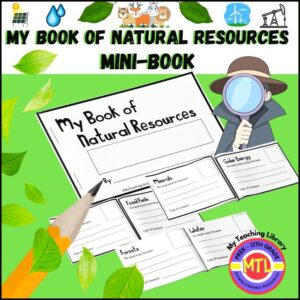
Give students a fun, engaging mini-book to create to help them demonstrate what they know (or are learning) about our natural resources!
⭐Perfect to use during any student of our environment, our impact on the world, or for Earth Day!
⭐Students will have pages for the following topics:
- Forests
- Soil
- Water
- Minerals
- Solar Energy
- Air
- Plants
- Animals
- Fossil Fuels
⭐On each page, students will be asked to answer the following:
- We need (topic) because?
- What type of resource? (renewable or non-renewable)
Related product: Earth Day Activities | Cross-Curricular | Multiple Learning Styles
-
Lunar Eclipse Mini Book: Earth Science – Learning about the Moon to Pinterest (opens in a new window)$2.75Add to Cart
Looking for a fun way to teach students about the captivating phenomenon of a lunar eclipse? Add “Lunar Eclipse Mini Book: Earth Science – Learning about the Moon,” to your cart today, download and print! This resource will make complex space science accessible and exciting for young learners.
✨ What’s Included:
- – Five printable PDF pages that transform into a 10-page, student-created mini book.
- – Kid-friendly explanations of lunar eclipses, perfect for comprehension.
- – A dedicated page for students to illustrate their own lunar eclipse drawing.
📚 Learning Objectives
- – Students will be able to identify when a lunar eclipse can occur.
- – Students will understand the concepts of the umbra and penumbra shadows.
- – Students will be able to describe the conditions necessary for a total lunar eclipse.
- – Students will learn why total lunar eclipses can exhibit colorful hues.
- – Students will recognize and name the different phases of a lunar eclipse.
-
Sale!Original price was: $3.00.$2.25Current price is: $2.25.Add to Cart
Hands on learning! This BUNDLE includes two products that will help students gain an understanding of what happens during a solar eclipse!
What’s included:
-
– A solar eclipse activity designed to help students visualize a solar eclipse through using common objects to actually demonstrate one.
-
– A solar eclipse activity designed to help students visualize a solar eclipse by creating a simple paper model of an eclipse.
-
-
$2.50Add to Cart
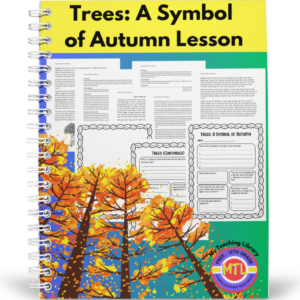
A multi-age lesson to teach students (1st – 5th grades) about trees! The lesson is designed as a Fall (Autumn) outdoor/indoor activity lesson as the leaves are changing colors but can be easily converted to an indoor activity only. If using as an indoor only activity, be sure to have photos of trees to incorporate into the lesson.
Students will learn about:-
What trees provide
-
Aspects of a ‘living’ tree (how they get water, nutrients and breathe)
-
Parts (and their function) of a tree: roots, trunk, bark, branches, leaves
-
How leaves make food
-
Types of trees: deciduous and evergreen
Includes:
– Teacher lesson notes (guide)
– Student informational text
– Student activity worksheet pages
– Answer keys -
-
$55.00Add to Cart
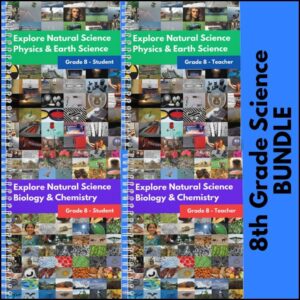
This complete bundle is a full year of 8th grade science! Comes complete with two student textbooks and two teacher editions:
Natural Science: Biology & Chemistry – Grade 8 (Student Edition)
Natural Science: Biology & Chemistry – Grade 8 (Teacher’s Edition)
Natural Science: Physics & Earth Science – Grade 8 (Student Edition)
Natural Science: Physics & Earth Science – Grade 8 (Teacher’s Edition)Preview video of one of the student textbooks: Biology & Chemistry
See the table of contents for each student edition below:
-
$55.00Add to Cart
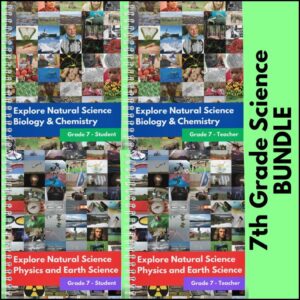
This complete bundle is a full year of 7th grade science! Comes complete with two student textbooks and two teacher editions:
Natural Science: Physics & Earth Science – Grade 7 (Student Edition)
Natural Science: Physics & Earth Science – Grade 7 (Teacher’s Edition)
Natural Science: Biology & Chemistry – Grade 7 (Student Edition)
Natural Science: Biology & Chemistry – Grade 7 (Teacher’s Edition)Watch a short video preview of the Physics & Earth Science student edition here.
See the table of contents for each student edition below:
-
$1.25Add to Cart
Studying fossils? With this fun activity, students will create a variety of ‘fossils’ while learning how to make observations, inferences and how to distinguish between the two!
Includes- Student and teacher pages:
– Student “how to” activity pages
– Student data worksheet
– Student critical thinking worksheet
– Teacher pages and answer keys -
$1.75Add to Cart
This elementary resource is designed to teach students about fossils. In this ‘Copy and Learn’ product, students will learn what fossils are made of, two types of fossils (body and trace) and how they form.
Included: 6 Copy and Learn pages and 1 fossils photo page. -
$2.50Add to Cart
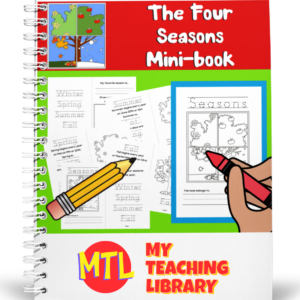
Students will learn about the four seasons, (winter, spring, summer and fall) while creating a cherished 12 page science mini-book! For each season, students will learn when that season begins and a fact about it.
Example: For spring, students will learn that spring begins every year on March 19th or 20th and that spring is warm and flowers begin to grow. Whey will be coloring, as well as tracing words and pictures! (Some seasons have more than one date when it may begin, as you see in the spring example. This allows this resource to be used every year and can be a springboard to a discussion as to why this is true if appropriate.)
-
$2.00Add to Cart
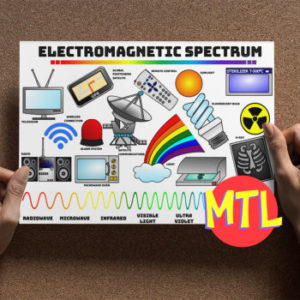
Give students a visual representation of the electromagnetic spectrum from the radiowave to gamma rays with this classroom Science poster.
-
Sale!Original price was: $15.00.$12.00Current price is: $12.00.Add to Cart
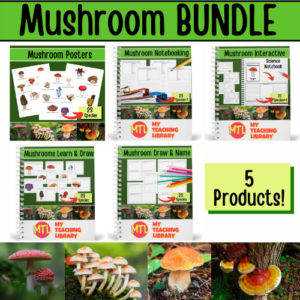
My Teaching Library has bundled 5 MUSHROOM products to help you SAVE and have a variety of fantastic classroom resources to help you teach…
- – If you teach Science for 6th-12th grades, this bundle is for you!
- – If you teach an outdoor nature-based class, this bundle is for you!
- – If you want to give your student(s) a fun, research-based unit study, this bundle is for you!
-
$3.00Add to Cart
This Mushroom Types product is designed to use with Science interactive notebooks. Perfect for Science and Biology classrooms studying fungi!
There are 24 templates (23 given species + one template that can be used again and again to add different species. )
-
$2.00Add to Cart
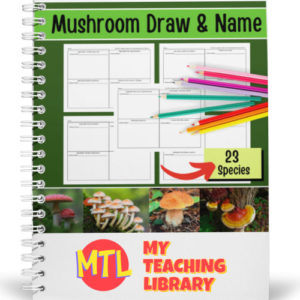
Mushroom worksheets designed for students to draw and write the common name of 23 given species. Perfect for any Science or Biology classroom studying fungi!
There are 6 worksheets (5 with 4 named species and 1 with 3). On each worksheets, students are to write the common name of the given species and draw a picture.
-
$4.00Add to Cart
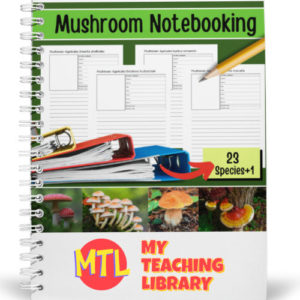
Students will use these notebooking pages to record information about 23 different species of mushrooms. Perfect for a Science or Biology classroom studying fungi!
In addition to the named 23 species, student are given an extra page to add additional species if they choose (or if you instruct them to add others).
On each page, students will draw a picture of the species, give the complete scientific classification and record additional information they learn through research, reading books or using the current curriculum.