
Category: Life Science
Showing 1–20 of 42 resultsSorted by latest
-
 $3.25Add to Cart
Transform your science lesson into an outdoor adventure with Creek Life! Science for Kids. 🌿 This comprehensive unit study is perfect for early elementary students, blending hands-on nature exploration with essential literacy and science skills.
📚 What’s Included?
This “child-centered” style learning bundle is packed with engaging, printable resources:
-
Informational Reader: Vibrant pages teaching kids about creek animals like the Great Blue Heron, Trout, and Painted Turtle, as well as plants like Duckweed and Cattails.
-
Science Concepts: Easy-to-understand lessons on Biotic (Alive) and Abiotic (Not Alive) elements of an ecosystem.
-
Handwriting & Literacy: Cross-curricular worksheets including “Creek Animals” matching, sentence copying, and vocabulary building.
-
Creative Expression: Drawing prompts and a “Day at the Creek” writing journal for students to record their own field observations.
-
Environmental Stewardship: A “Keeping It Clean” section that teaches kids how to protect local waterways.
✨ Why You’ll Love It
-
Cross-Curricular Learning: Seamlessly integrates science, reading, and fine motor skills (handwriting and drawing) in one unit.
-
Encourages Exploration: Gets kids out of the “box” and into nature to apply what they’ve learned in the real world.
-
Flexible & Engaging: Beautifully illustrated borders and clear, simple text keep young learners focused and excited. (Print in B/W to save ink cost)
-
Just print and go!
🎒 Ready to dive in?
Give your little learners the tools to become mini-scientists today! Purchase and download Creek Life! Science for Kids and start exploring! 🐢🐟☀️
-
-
Nonfiction Insect Mini-Book | Easy Reader Printable Science Activity to Pinterest (opens in a new window)$3.00Add to Cart
Looking for a print and go, 1st, 2nd, and 3rd grade science activity that makes learning about insects a blast? Get ready to buzz with excitement! Your search is over with this “Nonfiction Insect Mini-Book | Easy Reader Printable Science Activity.” It’s the perfect way to spark curiosity and make nonfiction science accessible and fun for your young learners.
✨ What’s Included:
- – A super fun, printable insect mini-book for students to create!
- – Engaging nonfiction content about where insects live, their body parts, and their impact on our environment.
- – Opportunities for students to color, draw, and write to deepen understanding and creativity.
- – Activities that help distinguish common insects from other creatures.
- – A wonderful way to create a special, keepsake mini-book that celebrates learning.
✅ Perfect For…
- – Introducing insects and their habitats.
- – Engaging emergent readers with nonfiction text.
- – Creating exciting project-based learning experiences.
- – Inspiring young scientists in 1st grade, 2nd grade, and 3rd grade.
This resource is crafted with a passion for making science come alive through real-world connections. My Teaching Library believes in the power of project-based learning and hands-on activities to foster a deep love for science. By allowing students to actively create, explore, and express their learning, this mini-book transforms abstract concepts into tangible, memorable experiences. It empowers students to become active learners and critical thinkers, building confidence as they discover the amazing world of insects!
📚 Learning Objectives
- – Students will be able to identify and describe the basic body parts of an insect.
- – Students will be able to explain where common insects can be found.
- – Students will be able to understand how insects impact our environment.
- – Students will be able to differentiate between common insects and other small creatures.
- – Students will practice reading comprehension and writing skills through nonfiction text.
-
$3.00Add to Cart
This unit is full of hands-on, interactive science exploration and discovery! Students will work with 4 items commonly associated with autumn: a pumpkin, an apple, an acorn and a gourd.
Using each, they will be guided through several activities to observe, hypothesize, describe and explore the items. They will also draw, color and write throughout. Fall fun activities that will excite your young scientists. (14 pages)
-
$2.50Add to Cart
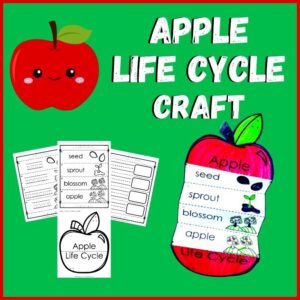
Students will explore the stages of an apple tree’s life cycle with this differentiated foldable craft activity! Fun and engaging!
-
$2.50Add to Cart
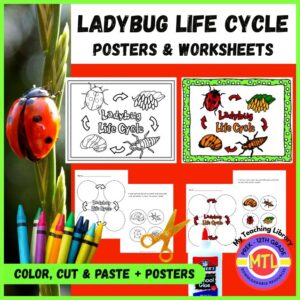
A great resource to display and to get students hands-on putting together their own life cycle of the ladybug!
⭐Benefits of this resource:
- -Low prep – print and use/
- -Children learn about the ladybug life cycle both visually (poster) and in a fun and hands-on way as they color, cut and glue (worksheets).
- -Can be used to introduce the life cycle, or as a review/assessment to check understanding.
- -Encourages fine motor/scissor skills and sequencing.
- -Differentiated can be achieved by deciding if students are allowed to have the poster as a reference when completing their own life cycle.
- -Finished worksheets can be inserted into an interactive notebook.
⭐What else is included?
- -2 Life cycle posters (Color and Black/White) You can always allow students to color the b/w poster and keep.
- -2 student pages (worksheets). Students will color and cut out the 4 stages of the ladybug life cycle from the first page and glue in the correct sequence on the second page.
-
$2.50Add to Cart
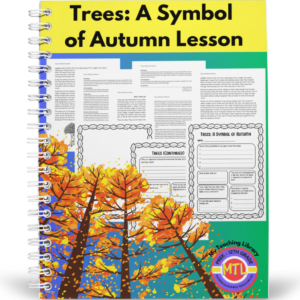
A multi-age lesson to teach students (1st – 5th grades) about trees! The lesson is designed as a Fall (Autumn) outdoor/indoor activity lesson as the leaves are changing colors but can be easily converted to an indoor activity only. If using as an indoor only activity, be sure to have photos of trees to incorporate into the lesson.
Students will learn about:-
What trees provide
-
Aspects of a ‘living’ tree (how they get water, nutrients and breathe)
-
Parts (and their function) of a tree: roots, trunk, bark, branches, leaves
-
How leaves make food
-
Types of trees: deciduous and evergreen
Includes:
– Teacher lesson notes (guide)
– Student informational text
– Student activity worksheet pages
– Answer keys -
-
$3.00Add to Cart
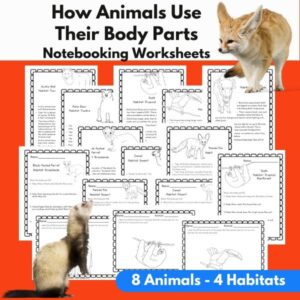
In this unit study, students will learn how 8 different animals (4 different habitats) use many of their body parts to live and survive. For each animal, students will be given a fact sheet, a short answer worksheet and a worksheet on which they will label and describe the specific body parts and how they are used.
Animals covered in this unit are:
– Desert Habitat: Camel, Fennec Fox
– Grasslands: Black-footed Ferret, Bison
– Tropical Rainforest: Sloth, Toucan
– Tundra: Polar Bear, Arctic Wolf -
$2.50Add to Cart
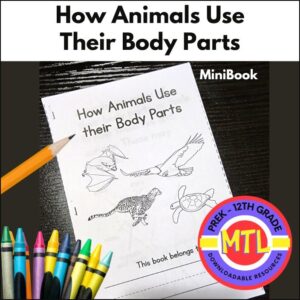
A fun to create, Science mini-book teaching students how different animals use their body parts as tools to live and survive! Once students finish creating this 10 page mini-book, they will be able to give examples of how 7 animals use their body parts to get nourished, move within its environment and even stay protected from predators!
Animals included in this project are the cheetah, bat, loggerhead turtle, badger, kangaroo, deer and tundra swan. There is also a image of a wolf with showing various body parts often used to accomplish an animal’s survival.
Students will color, draw and write to complete the book.
-
$2.25Add to Cart
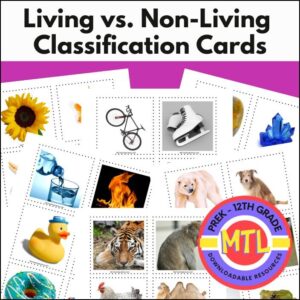
Here is a set of 36 science classification cards to give students the ability to classify living and nonliving things! These cards include beautiful color photos of 36 different items plus two sets of classification mats.
-
$2.25Add to Cart
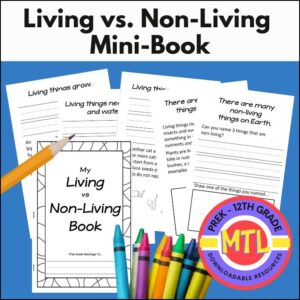
This living vs. nonliving booklet is perfect for kindergarten and 1st grade students just learning the science concept. It includes a cover page and 5 inside pages that will teach students that living things grow, need food and water as well as reproduce.
-
$4.00Add to Cart
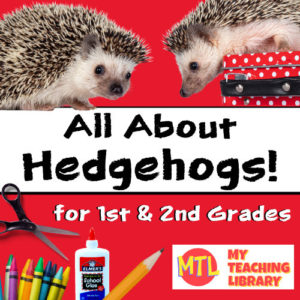
Students will learn all about hedgehogs, their life, habitats, life cycle and more with these activities and worksheets!
They will learn about where they live (habitats) their life cycle, that they are mammals, omnivores, nocturnal and about hibernation! This unit includes informational text with questions, tracing and copy work, creative and expository writing, plus activities including mini-book creation, ‘cut and glue’, drawing and more. All designed for the 1st and 2nd grader in mind to help build vital language arts skills as well as geography and science knowledge.
-
$2.50Add to Cart
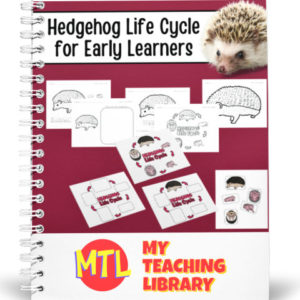
This hedgehog resource has been designed to help early learners (PreK – Kindergarten) to learn about the life cycle of a hedgehog! It includes a life cycle poster, a hands-on activity that can be used with students at different levels and several worksheets. These worksheets will have students coloring, tracing words and drawing!
-
$2.00Add to Cart
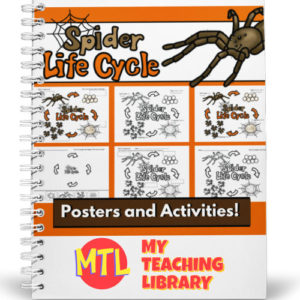
Want to study the life cycle of a spider? Here is a resource for you!
Includes:
– 2 labeled posters (color and b/w)
– life cycle coloring page
– colorful center activity
– 2 cut-n-paste worksheetsUse as a standalone resource or combine with:
-
$1.75Add to Cart
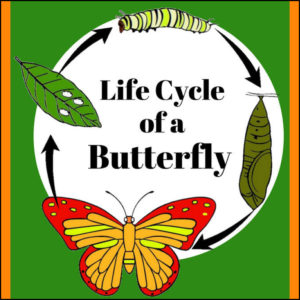
This Science resource will teach students the Life Cycle of a Butterfly and includes:
- * 2 color posters of the life cycle (1 with added details)
- * 1 b/w poster (for students to color),
- * 4 picture/information cards for each stage of the life cycle
- * 3 life cycle worksheets
-
$2.00Add to Cart
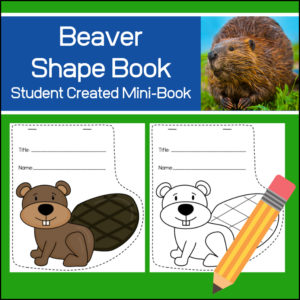
Studying Beavers? Students will love to self-publish their own work in this cute Beaver shape book! Not only can they write creative stories or poems, but you can also have them use these templates to convey what they’ve learned (comprehension) from a book or from their own research! Template size: 7.5″ tall x 7″ wide.
Includes:
- 6 possible covers
- 13 different inside pages
I’ve created pages with both dotted-dashed lines as well as single lines so that you can use what best fits the level of your students.
-
$2.00Add to Cart
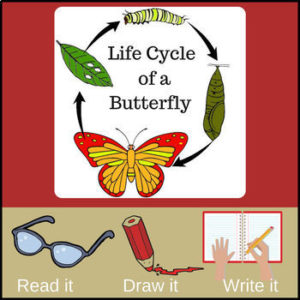
This Science – Language Arts resource with have students creating their very own mini-book of the life cycle of a butterfly!
Knowledge students will learn: The book will begin with the butterfly laying an egg on a leaf and continue as a caterpillar begins to grow in the egg, hatches and begins to eat. Students will learn what the caterpillar eats and that it is a type of larva. As the book progresses, students will write about the caterpillar building a cocoon and it’s life as a pupa (and a chrysalis) before emerging as a beautiful butterfly!
On each page, students will … read the text, draw a picture and then write (copy) the written text.
-
$2.50Add to Cart
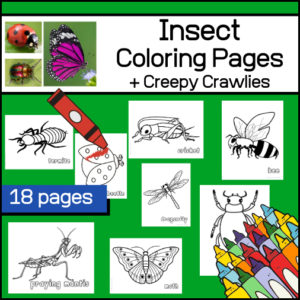
This resource is a print and go resource offering 18 coloring pages of insects plus a couple creepy crawlies! Each page has a large picture to color and the name of the ‘bug’ in font that are also ready to color.
-
$4.99Add to Cart
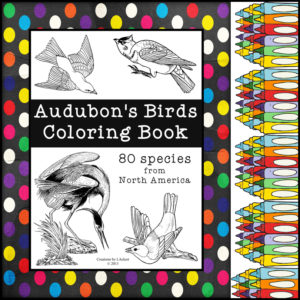
Studying birds? Ornithology? Perhaps you are simply looking for coloring pages of beautiful birds? Here is a resource that would be a good addition to your classroom. Some of the birds included: American Kestrel, Nighthawk, Mourning Dove, Barn Swallow, White-breasted Nuthatch, Blue Jay, Cardinal, Baltimore Oriole and many, many more!
*** 80 coloring pages, each with a different North American species! ***
Each page features a large b/w illustration of one bird and the type of bird that is displayed.
-
$3.00Add to Cart
Young learners will love this Sea Life – Ocean themed unit where they can cut, color, paste, and trace!
24 pages of learning and practicing fine motor skills:
- 10 trace the picture and word, write the word and color worksheets
- 5 trace and color the ocean scene worksheets
- 9 trace and color the picture, cut out and glue the letters to spell the word worksheets
Vocabulary includes:
- fish
- whale
- clown fish
- dolphin
- jellyfish
- octopus
- shark
- shrimp
- starfish
- coral
-
$2.75Add to Cart
🌻 Watch their knowledge grow!
This interactive, cross-curricular project blends Science and Literacy to help students master the plant life cycle while building essential writing and reading skills.
In this activity, students don’t just read about plants—they become the authors and illustrators of their very own science journals!
🔍 How It Works: The “Read, Draw, Write” Method
This resource uses a simple, research-based three-step process on every page to reinforce learning and accommodate different ability levels:
- Read It: Students read a short, informative sentence about a specific stage in the life cycle or a plant’s needs.
- Draw It: Students visualize the concept by illustrating the page, which helps increase retention of scientific information.
- Write It: Students practice fine motor skills and vocabulary by copying the text into the provided primary or standard lines.
🧪 Key Science Concepts Covered:
- What Plants Need: Students identify and record the four essentials for life: Soil, Water, Sun, and Air.
- The Life Cycle Stages: Step-by-step pages detailing the transformation from Seed to Sprout, then to Seedling, and finally to a Mature Flower.
❤️ Why You’ll LOVE This Resource:
- Cross-Curricular Magic: Effortlessly check off Next Generation Science Standards (NGSS) and Common Core ELA standards in one engaging activity.
- Perfect for Portfolios: Creates a tangible “keep-sake” book that students are proud to take home and read to their families.
- Low Prep & High Engagement: Just print, staple, and go!
- Differentiated for Early Learners: Great for Pre-K, Kindergarten, and 1st-grade writers practicing letter formation and scientific sequencing.
Tip: Pair this book with a hands-on bean planting activity! Students can use their “Student Created Science Book” to document the growth they see in their own real-life seeds.
Bring the beauty of Spring and new growth into your lesson plans today and let your students’ creativity bloom!




&url=https://myteachinglibrary.com/product/audubons-birds-coloring-book-80-species/&media=https://myteachinglibrary.com/wp-content/uploads/2019/08/wy-460-a.jpg)

