
Category: Earth Science
Showing 1–20 of 24 resultsSorted by latest
-
Dinosaurs A-Z | Research, Report, Notebooking, Project Pages | Multi-Grade to Pinterest (opens in a new window)
 $6.75Add to Cart
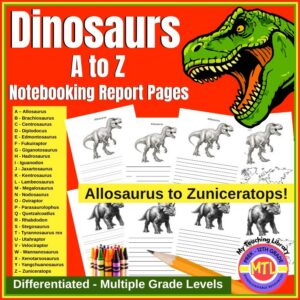
Have students wanting to learn about dinosaurs? Want to incorporate hands-on, project learning into your science lessons that will not only help student learning ‘stick’ but will allow students to walk away with beautiful projects? Get ready to roar with excitement because your problem is solved!
PLEASE NOTE: This resource does not mention the age of the earth or periods of time.
Get My Teaching Library’s “Dinosaurs A-Z | Research, Report, Notebooking, Project Pages | Multi-Grade” and watch students’ love of learning ignite!
Regardless of whether you are teaching 1st grade or 12th, this resource will work because it has been designed with pages for all ages – abilities – grades!
✨ What’s Included:
- – 4 pages for each of these dinosaurs (Multi-level, ability writing/reporting plus map work): A – Allosauru,s B – Brachiosaurus, C – Centrosaurus, D – Diplodocus, E – Edmontosaurus, F – Fukuiraptor, G – Giganotosaurus, H – Hadrosaurus, I – Iguanodon, J – Jaxartosaurus, K – Kentrosaurus, L – Lambeosaurus, M – Megalosaurus, N – Nodosaurus, O – Oviraptor, P – Parasaurolophus, Q – Quetzalcoatlus, R – Rhabdodon, S – Stegosaurus, T – Tyrannosaurus Rex, U – Utahraptor, V – Velociraptor, W – Wannanosaurus, X – Xenotarsosaurus, Y – Yangchuanosaurus ,Z – Zuniceratops
- – 5 extra pages to continue reporting on each dinosaur if needed (both writing and drawing pages).
✅ Perfect For…
- – Dinosaur enthusiasts of all ages who love to dive deep into research and creative reporting.
- – Project-based learning units focused on paleontology.
- – Inspiring hands-on science activities that connect real-world learning.
-
$2.75Add to Cart
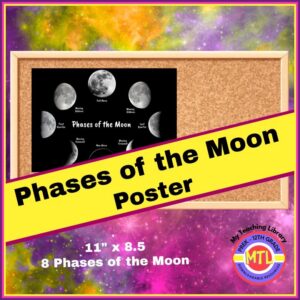
Teaching Earth and Space Science? Looking for a way to visually teach students the different phases of the moon? This “Phases of the Moon: Printable Poster” is for you!
✨ What’s Included:
- – A 1 page black and white, informative poster illustrating the eight phases of the moon.
- – Clear visual representations of the following phases: new moon, waxing crescent, first quarter, waxing gibbous, full moon, waning gibbous, last quarter, and waning crescent.
- – Perfect for a bulletin board display
✅ Perfect ror inspiring curiosity about Earth and space science.
-
Lunar Eclipse Mini Book: Earth Science – Learning about the Moon to Pinterest (opens in a new window)$2.75Add to Cart
Looking for a fun way to teach students about the captivating phenomenon of a lunar eclipse? Add “Lunar Eclipse Mini Book: Earth Science – Learning about the Moon,” to your cart today, download and print! This resource will make complex space science accessible and exciting for young learners.
✨ What’s Included:
- – Five printable PDF pages that transform into a 10-page, student-created mini book.
- – Kid-friendly explanations of lunar eclipses, perfect for comprehension.
- – A dedicated page for students to illustrate their own lunar eclipse drawing.
📚 Learning Objectives
- – Students will be able to identify when a lunar eclipse can occur.
- – Students will understand the concepts of the umbra and penumbra shadows.
- – Students will be able to describe the conditions necessary for a total lunar eclipse.
- – Students will learn why total lunar eclipses can exhibit colorful hues.
- – Students will recognize and name the different phases of a lunar eclipse.
-
Sale!Original price was: $3.00.$2.25Current price is: $2.25.Add to Cart
Hands on learning! This BUNDLE includes two products that will help students gain an understanding of what happens during a solar eclipse!
What’s included:
-
– A solar eclipse activity designed to help students visualize a solar eclipse through using common objects to actually demonstrate one.
-
– A solar eclipse activity designed to help students visualize a solar eclipse by creating a simple paper model of an eclipse.
-
-
$2.50Add to Cart
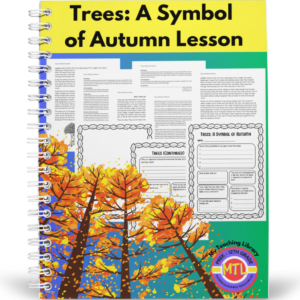
A multi-age lesson to teach students (1st – 5th grades) about trees! The lesson is designed as a Fall (Autumn) outdoor/indoor activity lesson as the leaves are changing colors but can be easily converted to an indoor activity only. If using as an indoor only activity, be sure to have photos of trees to incorporate into the lesson.
Students will learn about:-
What trees provide
-
Aspects of a ‘living’ tree (how they get water, nutrients and breathe)
-
Parts (and their function) of a tree: roots, trunk, bark, branches, leaves
-
How leaves make food
-
Types of trees: deciduous and evergreen
Includes:
– Teacher lesson notes (guide)
– Student informational text
– Student activity worksheet pages
– Answer keys -
-
$5.00Add to Cart
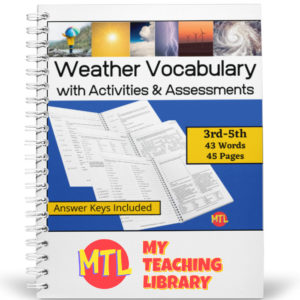
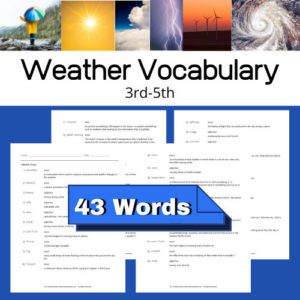
This weather vocabulary unit with activities is designed for 3rd-5th grade classrooms studying weather terms. It includes 43 weather terms with definitions (+ part of speech) plus the following types of activities to help students learn the words and their meanings:
* Vocabulary study sheet
* Spelling Challenge
* Word Jumble
* Alphabetical Order
* Alphabetical Order + Decoder Ring
* Word Search | Wacky Trails
* Word Frameup Puzzle
* Crossword Puzzle
* Weather Term Definitions | Optional assessment
* Weather Multiple Choice | Optional assessment
* 7 Additional “Suggested Ideas” for additional learning
See description below for details! -
$1.50Add to Cart
This weather resource includes 43 vocabulary words with definitions and an identified part of speech.
(See description below for included words)
-
$3.00Add to Cart
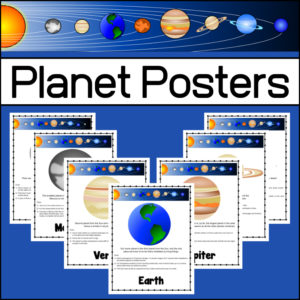
Create excitement and interest about the planets of our solar system by displaying these colorful and informative posters!
I’ve included 2 sets (one with and one without Pluto)-
- – Set one: Mercury, Venus, Earth, Mars, Jupiter, Saturn, Uranus, Neptune
- – Set two: Mercury, Venus, Earth, Mars, Jupiter, Saturn, Uranus, Neptune, Pluto (described as now classified as a ‘dwarf planet’)
-
$3.50Add to Cart
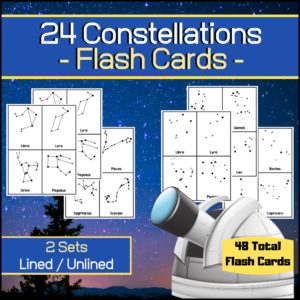
⭐This Astronomy / Science resource, Constellation Flashcards, contains 2 sets of 24 constellations found in the winter northern hemisphere sky.
- Set one has lines that show the stars connected to create the constellation.
- Set two shows only the stars of the constellation (no lines). You can use set two to have students learn the ‘grouping of the stars’ as they actually see them in the sky -or- you can allow students to actually draw the lines on each card to help learn the constellations.
-
$2.50Add to Cart
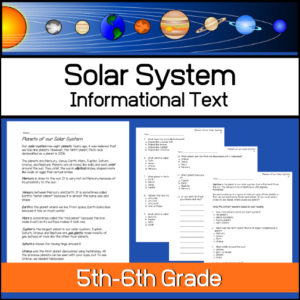
Help students develop their reading comprehension skills as they gain knowledge about the planets within our solar system with this informational article and assessment questions. This has been written for 5th-6th grade classrooms. The assessment includes 11 multiple choice questions, 1 opinion, short answer question and asks students to draw the planets in relation to the sun. Answer Key provided.
Flesch-Kincaid Grade Level: 6.5
Grade level: Sixth Grade
Automated Readability Index: 5.5
Grade level: 8-9 yrs. old (Fifth graders) -
FREEAdd to Cart
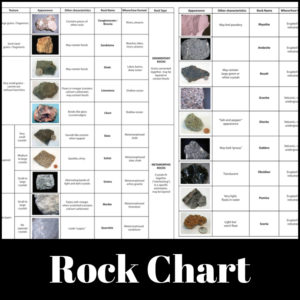
This free curriculum resource is from the Minerals Education Coalition.
-
$2.00Add to Cart
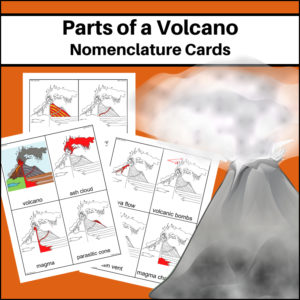
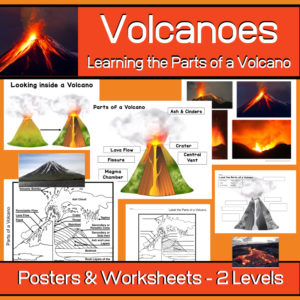
Parts of a Volcano – Nomenclature Cards – This resource will help students learn and study the various parts of a volcano: ash cloud, magma, parasitic cone, lava & ash layers, side vent, crater, pyroclastic flow, lava flow, volcanic bombs, main vent, and magma chamber.
-
$5.00Add to Cart
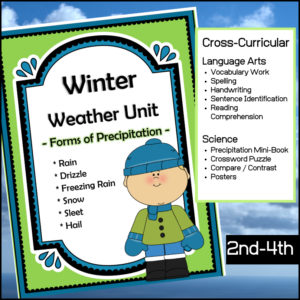
Your students will enjoy this cross-curricular resource, Winter Weather Unit – Forms of Precipitation, as they learn about the different forms of precipitation and related vocabulary! Students will be engaged in vocabulary work, spelling, handwriting, sentence identification, comparing / contrasting and more.
16 weather-related vocabulary words: precipitation, rain, drizzle, freezing rain, snow, sleet, hail, atmosphere, moisture, droplets, snowflake icy, crystals, frozen, updraft, and evaporation.
In this resource, you get:
- Word Wall cards
- Types of Precipitation Posters
- Weather Worksheets (both Language Arts & Science)
- Precipitation Mini-Book
- Puzzles
-
$1.25Add to Cart
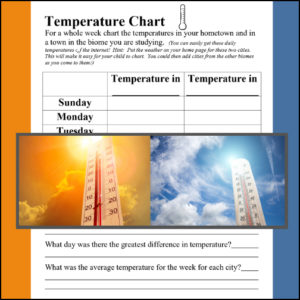
A biome is a large geographical area that contains distinct plant and animal groups which are adapted to live in that environment. There can be many different habitats in a biome. Some major biomes are tundra, taiga, grasslands, deciduous forest, fresh water, desert, alpine, rainforest and ocean. When studying a specific biome, use this temperature comparison chart to record the temperature in the student’s hometown and the biome of study for a week! (Use again and again with each biome studied)
Science meets Geography
-
$1.50Add to Cart
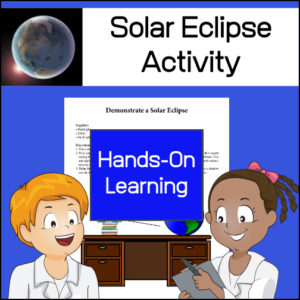
Hands on learning! A solar eclipse activity designed to help students visualize a solar eclipse through using common objects to actually demonstrate one.
-
$2.50Add to Cart
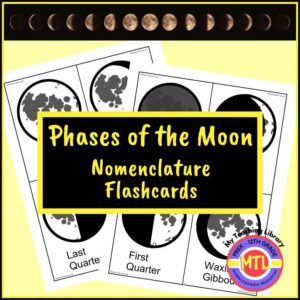
Teaching about the different phases of the moon? Get “Earth Science: Moon Phases Nomenclature Flashcards” to help students learn and identify the 8 different phases of the moon, regardless of grade level.
✨ What’s Included:
- Printable Nomenclature / flash cards for hands-on learning.
- Clear and concise labeled illustrations of each of the following moon phases: new moon, waxing moon, first quarter, waxing gibbous, full moon, waning gibbous, last quarter and waning crescent
✅ Perfect For…
- – Earth Science and general science lessons
- – Engaging students with moon phases and astronomy concepts.
This resource is built on the belief that understanding scientific terminology should be an active and interactive process. By utilizing a nomenclature-based approach, these flashcards encourage students to not only memorize terms but also to actively engage with the visual and conceptual aspects of moon phases. This method fosters deeper understanding and retention, making complex scientific ideas more accessible and memorable for every learner.
📚 Learning Objectives
- – Students will be able to identify and name the different moon phases.
- – Students will understand and define key Earth Science vocabulary related to the moon.
Transform your science lessons with these dynamic and effective Earth Science Vocabulary Moon Phases Nomenclature Flashcards! They are a fantastic tool to illuminate the wonders of space science for your students.
Click Add to Cart today!
-
$1.50Add to Cart
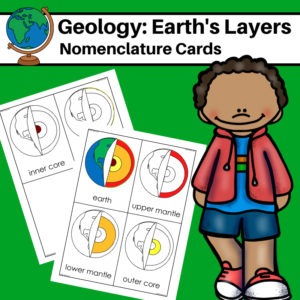
This resource, Earth’s Layers – Nomenclature Cards, will help your students learn the names of the layers of the Earth: upper mantle, lower mantle, outer core, inner core, and crust.
I’ve also included a set of blank cards for students to use and label themselves!
-
$0.50Add to Cart
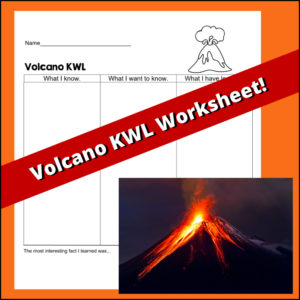
Here is a worksheet for students to use when the are learning about volcanoes! KWL worksheets are to be used at the beginning and end of any study.
K – What I know (Students list everything they already know – prior knowledge)
W – What I want to learn (Students begin thinking about what they don’t know and what they want to investigate about the given topic…i.e. volcanoes!)
L – What I’ve learned (After the study is complete, students will complete this section giving details about what ‘new’ things they have learned)
There is also a section for students to reveal what the most ‘interesting’ fact was that they learned. Your students will love the reflection and enjoy sharing their answers.
-
$3.00Add to Cart
Help students master their knowledge of the parts of a volcano with these posters, handouts and worksheets! This resource provides 2 levels of learning plus worksheets come with and without terms. (Landforms, Earth Science, Geology)