
Category: Monthly Topics
Showing 1–20 of 272 resultsSorted by latest
-
 $3.00Add to Cart
Looking for a Pumpkin Reading Comprehension activity for upper elementary? Look no further than “Let’s Learn About Pumpkins – Level B!” This resource is designed for upper elementary and middle school students and is a perfect cross-curricular (language arts and science) lesson. Text is written on a 6th grade reading level. If your student(s) are not reading at a 6th grade level, you challenge them to try. While they do, have them write down any words they may not know. They can then look those words up and continue reading! Win-Win!
What’s Included:
- In-Depth Nonfiction Text (Pages 1–2): A 545-word informational text spanning two full pages. Topics covered include:
- Botanical Taxonomy & Anatomy: The Cucurbitaceae family, botanical fruit classification (pepo), monoecious flowering (male vs. female blooms and insect pollination), and specialized structural adaptations (thigmotropic climbing tendrils).
- Biochemical Pigmentation: The seasonal degradation of chlorophyll and the emergence of fat-soluble carotenoids (beta-carotene) during ripening.
- Indigenous Agriculture: The history of the “Three Sisters” companion planting method (winter squash, maize, and climbing beans) developed by Native American agriculturalists.
- Nutritional Science: The human biological synthesis of Vitamin A from dietary plant carotenoids.
- 5 Multiple-Choice Questions (Page 3): Targets upper level/middle school reading skills, including interpreting domain-specific scientific vocabulary in context, identifying reciprocal ecological relationships, and analyzing authorial purpose.
- 3 Open-Ended Questions (Page 4): Prompts students to synthesize concepts (e.g., explaining symbiotic companion planting mechanics, describing biochemical ripening transitions).
- Complete Teacher Answer Key (Page 5)
Standards & Skills Covered:
- Reading Informational Text (CCSS.ELA-LITERACY.RI.6.1, RI.6.2, RI.6.4): Citing textual evidence to support inferences, summarizing central scientific concepts, and interpreting domain-specific terminology.
- Next Generation Science Standards (NGSS MS-LS1-4, MS-LS1-5, MS-LS2-2): Specialized plant reproductive structures, factors influencing growth, and mutually beneficial interspecies interactions in agricultural ecosystems.
- Writing (CCSS.ELA-LITERACY.W.6.9): Drawing evidence from informational texts to support analytical short-answer explanations.
Download yours today!
- In-Depth Nonfiction Text (Pages 1–2): A 545-word informational text spanning two full pages. Topics covered include:
-
$2.75Add to Cart
Looking for a Pumpkin Reading Comprehension activity? Look no further than “Let’s Learn About Pumpkins!” This resource is designed for lower elementary students and is a perfect cross-curricular (language arts and science) lesson. Text is written on a 3rd grade reading level. If your student(s) are not reading at a 3rd grade level, you can use this by reading the passage to them and openly discuss what they’ve learned!
What’s Included:
- Informational Reading Passage (Page 1): A 222-word, 3rd-grade leveled nonfiction text covering key pumpkin concepts: botanical classification (squash/gourd family), vine growth and tendrils, life cycle stages from seed to harvest, and practical uses. Includes a student name/date header and accent line art.
- 5 Multiple-Choice Questions (Page 2): Assesses core reading comprehension skills, including identifying the main idea, vocabulary in context, finding text evidence, and recall of key scientific details.
- 3 Extended Short-Answer Questions (Page 3): Encourages critical thinking and written expression.
- Complete Teacher Answer Key (Page 4):
Standards & Skills Addressed:
- Reading Informational Text (RI.3.1, RI.3.2, RI.3.4): Asking and answering questions using direct text evidence, determining central messages, and defining domain-specific vocabulary.
- Science Connections: Plant life cycles, botanical structures (vines, seeds, fruit vs. vegetable classification), and seasonal growth.
Download yours today!
-
Christmas Around the World | 6 Continents, 24 Places, Reading, Recipes and Crafts to Pinterest (opens in a new window)
 $12.97Add to Cart
Take your students on an unforgettable journey across 6 continents to discover how Christmas is celebrated worldwide! This complete global studies unit invites learners to explore holiday history, geography, and diverse cultural traditions through reading, hands-on crafts, authentic recipes, and targeted assessments.
📦 What’s Included: This all-in-one printable curriculum covers 24 select places around the world:
- Europe: Germany, Sweden, Denmark, Switzerland, Vatican City, Lapland (Finland), United Kingdom, France, Italy, Spain, Norway
- The Americas: Mexico, Brazil, El Salvador, Canada, United States
- Asia & Oceania: Philippines, Japan, Australia
- Middle East & Africa: Bethlehem (West Bank), Egypt, Ethiopia, Uganda, South Africa
Every Single Study Includes:
- Informational Reading Passage: Engaging text blending historical origins, religious observances, and cultural holiday customs.
- Authentic Recipe: Kid-friendly, traditional culinary dishes complete with clear ingredient lists and step-by-step cooking/baking directions (e.g., Mexican Buñuelos, German Lebkuchen, Swedish Pepparkakor, Australian Pavlova).
- Festive Craft or Activity: Hands-on cultural projects designed with accessible materials and detailed steps (e.g., Danish pleated hearts, Filipino paról stars, Italian Befana stockings).
- Sectional Reading Checks: 3 short-answer comprehension questions with generous, 2.5-spaced solid writing lines for handwriting, plus 2 multiple-choice questions for every place!
Comprehensive Final Review:
- 48-Question Cumulative Assessment: A mixed-review multiple-choice exam (2 questions per country) testing retention and compare-and-contrast reasoning.
- Complete Master Answer Key: Fast, stress-free grading.
- Printer-Friendly Formatting: Clean, black-and-white text layout. Colored recipe and craft images are included but can be printed in all black and white.
💡 Versatile Ways to Use This Unit
- Holiday “Flight” or Passport Stations: Set up rotating stations where students “travel” to 1–2 countries per day throughout December.
- Daily Advent / December Bell Ringer: Read one country study each morning as an interactive read-aloud or independent warm-up.
- Multi-Sensory Unit Study: Dive deep by reading the lesson, cooking the featured dish for lunch or dinner, and crafting.
- Holiday Cultural Fair / Jigsaw Project: Assign students or small groups (classroom or co-op) a specific country to research, prepare the craft, and present to classmates or parents.
- Independent Work: Print individual country packets for seamless, zero-prep reading comprehension during the busy holiday season.
🌟 Why This Unit Is Important
Holiday seasons provide an authentic, high-interest doorway into global learning. Rather than treating holiday celebrations as one-size-fits-all, this curriculum broadens students’ worldviews by highlighting:
- How geography and climate shape traditions (such as summer Christmas in the Southern Hemisphere).
- The rich variety of folklore, religious roots, and cultural storytelling around the globe.
- Universal human themes—kindness, community, charity, family, and light—that bridge different cultures.
🎯 Skills Developed
- Reading for Information: Locating text evidence, identifying main ideas, and summarizing cultural details.
- Written Expression: Formulating complete-sentence short answers using textual details.
- Comparative Thinking: Comparing and contrasting traditions across different hemispheres and continents.
- Procedural Literacy: Following multi-step sequential instructions in recipes and craft tutorials.
- Fine Motor & Culinary Application: Measuring, cutting, folding, and basic kitchen participation.
How to use in different grade levels/abilities:
Grades 1–2 (Early Elementary / Multi-Age Homeschool)
- Read-Aloud & Shared Listening: Use the informational texts as teacher- or parent-led read-alouds, pausing to highlight unfamiliar terms and point out locations on a world map or globe.
- Oral Comprehension: Rather than having students write out the short-answer responses on the lines, ask the questions aloud and have students answer verbally or draw their responses on paper.
- Sensory & Fine Motor Focus: Center the lessons around the hands-on crafts (cutting, folding, and gluing) and sensory kitchen experiences with the recipes.
- Simplified Assessment: Use the multiple-choice questions as group voting games (e.g., “Thumbs up for A, thumbs down for B”) rather than formal written quizzes.
Grade 3 (Approaching Grade-Level Reading)
- Paired / Partner Reading: Have students read the country passages with a reading buddy, alternating paragraphs to build fluency and confidence.
- Scaffolded Short Answers: Use the short-answer sections to practice restating the question and finding explicit text evidence together as a class or in small guided reading groups.
- Passport Booklet: Have students assemble a mini “passport” or notebook, stamping or coloring a flag for each country after completing the reading check.
- Selected Assessment: Use the country-level multiple-choice questions for formative checks, while using the final 48-question exam as an open-book scavenger hunt.
Grades 5–6 (Upper Elementary / Middle School Transition)
- Independent Research & Jigsaw Teaching: Assign small groups or individuals 2–3 countries to study independently. Have students prepare the craft or recipe at home and “teach” their assigned country’s traditions to the rest of the class if using in a traditional classroom setting.
- Comparative Geography & Writing Extensions: Have students compare two regions across different hemispheres (e.g., Australia vs. Norway, or Mexico vs. Japan) in a multi-paragraph Venn diagram or essay analyzing how climate, geography, and religion shape holiday customs.
- Culinary Math & Science: Have older students scale the recipes up or down (halving or doubling fractions) or research the food science behind specific cooking methods (like leavening in gingerbread or egg whites in meringue).
- Strict Independent Assessment: Administer the 48-question cumulative exam closed-book as a formal test of reading retention and social studies recall.
Multi-Grade Homeschooling & Co-Ops
- One Core Spine for the Whole Family: Gather all ages together for the daily country reading and mapping activity.
- Tiered Output: Older siblings complete the independent reading, short-answer questions, and final exam; younger siblings participate in the discussion, follow along with the craft tutorial, and assist with measuring and mixing in the kitchen.
- End-of-Unit Cultural Showcase: Wrap up the unit by hosting a family or co-op “Global Holiday Feast,” preparing 3–4 dishes from the unit and displaying the crafts made throughout December.📚 Common Core State Standards (CCSS) Covered (Written on a 4th grade reading level)
- CCSS.ELA-LITERACY.RI.4.1: Refer to details and examples in a text when explaining what the text says explicitly and when drawing inferences.
- CCSS.ELA-LITERACY.RI.4.2: Determine the main idea of a text and explain how it is supported by key details; summarize the text.
- CCSS.ELA-LITERACY.RI.4.3: Explain events, procedures, ideas, or concepts in a historical, scientific, or technical text, including what happened and why, based on specific information in the text.
- CCSS.ELA-LITERACY.RI.4.4: Determine the meaning of general academic and domain-specific words or phrases in a text relevant to a grade 4 topic.
- CCSS.ELA-LITERACY.W.4.9: Draw evidence from literary or informational texts to support analysis, reflection, and research.
🛒 Ready to Pack Your Bags? Bring the wonder of global holiday traditions straight to your classroom or homeschool table!
👉 Download your copy of Christmas Around the World today!
-
$5.00Add to Cart
Bring history and civic appreciation to life with an engaging, ready-to-print informational text unit designed specifically for elementary learners! ✨✏️ Most elementary students look forward to Labor Day weekend as a welcome day off from school and a time for backyard cookouts 🍔🌭. But do they understand why we celebrate? 🤔💭
“Let’s Learn About Labor Day!” is an 11-page printable learning packet written at an accessible 3rd-grade reading level. Designed for teachers, tutors, and homeschooling families 🍎🏡, this resource walks 2nd through 4th graders through the rich history of the American worker—from difficult 19th-century factory conditions to the first parades and the holiday’s ongoing significance today.Built-in comprehension checks at every step, this unit is engineered to support developing writers and build strong non-fiction reading skills without overwhelm! 📝🌟
🌟 Why This Unit Matters ❤️
Teaching civic holidays in the primary grades often stops at surface-level symbols 🎈. This packet bridges social studies and literacy by connecting past events to daily modern life:- 🕰️ Puts History into Context: Helps students appreciate rights we take for granted—like 8-hour workdays, two-day weekends, and safe schools—by explaining how workers joined together in the 1800s.
- 🤝 Fosters Gratitude & Community Awareness: Encourages children to recognize and value everyday community helpers—such as bus drivers 🚌, builders 🏗️, sanitation workers 👷, teachers 🧑🏫, and medical staff 🩺.
- ✍️ Tailored for Early Writers: Standard worksheet lines can frustrate young learners 😣. Our generous 3.0 line spacing provides ample room for developing handwriting, tall ascenders, and descenders!
📦 What’s Included in This 11-Page Packet 📄✨
This complete, no-prep instructional packet is structured into sequential, standalone pages:- 📖 Vocabulary Foundation (Pages 1 & 2):
- 8 core vocabulary terms introduced with kid-friendly definitions: Labor, Wage, Condition, Factory, Strike, Union, Parade, Holiday.
- Two wide, 3.0-spaced handwriting lines beneath each word for vocabulary-in-context sentence writing.
- 📜 Manageable Informational Text Sections (Pages 3–6):
- Each passage begins on a clean page and features bolded vocabulary words:
- 🏭 Section 1: Working Long Ago in the 1800s (Factory conditions, long workweeks, low wages, and child labor).
- 🥁 Section 2: The First Labor Day Parade (The Central Labor Union, the September 5, 1882 NYC parade of 10,000 workers, and Wendell’s Elm Park picnic).
- 🏛️ Section 3: Becoming an Official National Holiday (Oregon leading as the first state in 1887, the Pullman Strike of 1894, and President Grover Cleveland signing federal legislation).
- 🎆 Section 4: Celebrating Labor Day Today (Modern family traditions, the unofficial end of summer, and recognizing everyday community workers).
- ❓ Targeted Comprehension Checks: 3 short-answer questions placed beneath every section, paired with 2 lines of 3.0-spaced response lines!
- Each passage begins on a clean page and features bolded vocabulary words:
- 📝 15-Question Multiple-Choice Assessment (Pages 7–9):
- Divided into bite-sized segments of 5 questions per page to eliminate visual fatigue 👀.
- Large, clear A/B/C/D answer formatting covering key dates, historical figures, core vocabulary, and central ideas.
- 🔑 Complete Teacher & Parent Answer Key (Pages 10 & 11):
- 📋 Page 10: Model answers for all 12 section short-answer questions.
- 💡 Page 11: Answer key for all 15 assessment questions, plus classroom discussion prompts and hands-on extension ideas (such as community thank-you cards and 1880 vs. today compare/contrast T-charts)!
🎯 Key Skills Covered 🧠💡
- 🔍 Informational Text Comprehension: Locating key details, identifying the main idea, and explaining historical cause and effect.
- 📚 Vocabulary Acquisition & Use: Determining word meaning from context and writing original sentences using domain-specific words.
- ✏️ Sentence Construction & Penmanship: Formulating complete, text-based written answers with developmentally appropriate spacing.
- 📊 Standardized Test Familiarity: Practicing multi-page, multiple-choice assessment formats.
- Social Studies & Civics: Understanding labor history, the legislative process of national holidays, and the role of community workers.
💡 Suggestion on how to use for 5 days of learning:🏫🎒
📅 Week-Long Mini-Unit:
🟡 Monday: Complete Vocabulary Pages 1 & 2 📝.
🟢 Tuesday: Read Section 1 & complete the comprehension check 🏭.
🔵 Wednesday: Read Section 2 & complete the comprehension check.
🟣 Thursday: Read Sections 3 & 4 with checks.
🔴 Friday: Administer the 15-question assessment and complete an extension activity 🎉!Ways to use:
📋 Use as your main lessons for a week/Sub Plans / Emergency Packets: Self-contained, sequential, and includes complete answer keys for you, a substitute or a co-op teacher!
👥 Literacy Centers & Small-Group Work: Great for guided reading, social studies integration blocks, or independent close reading 📖.
🧺 Morning Basket: An easy, grab-and-go seasonal study to kick off your back-to-school fall routine 🍂.
📌 Product Details ℹ️
- 🎒 Grade Range:
– 2nd Grade (advanced/guided)
– 3rd Grade (on-level/independent)
– 4th Grade (review/intervention) - 📥 File Format: Downloadable PDF
- ⚡ ZERO Prep Required: Just print and teach 🖨️🙌
🛒 Ready to Make Labor Day Meaningful? 🚀
Give your students a deeper understanding of the hardworking people who helped build our country! 🛠️👉 Get yours today!
-
$6.75Add to Cart
Move beyond the elementary myths and engage your middle and high school students with a strictly factual exploration of the 1621 Plymouth feast and how it evolved into what we celebrate today.
Written on a 9th-grade reading level, this comprehensive, no-prep unit challenges the popular narrative of the “First Thanksgiving” by diving into primary sources, demographic shifts, and the complex diplomatic alliance between the English Separatists and the Wampanoag people.
Whether you are teaching in a traditional classroom or facilitating a flexible, child-centered learning journey at home, this unit provides an objective, neutral, and highly detailed historical account.
📖 What is Covered?
This unit is broken down into 6 detailed reading sections, perfectly chunked for deep learning and retention:
- Origins of Thanksgiving Celebrations: Indigenous agricultural traditions (The Three Sisters) and early European harvest festivals.
- The 1621 Plymouth Feast: The factual timeline of the three-day diplomatic gathering, native crop yields, and historical menus.
- The Wampanoag & The English: The devastating impact of the “Great Dying” (1616-1619) and the strategic 1621 mutual defense treaty.
- The Evolution of the Holiday: How regional colonial prayer days evolved into a national holiday under George Washington and Abraham Lincoln.
- Broader Historical Context: Economic shifts, land demands, and the eruption of King Philip’s War (1675).
- Historical Source Analysis: Understanding the events of 1621 through the primary accounts of William Bradford and Edward Winslow.
📝 Types of Activities Included:
- Detailed Reading Passages: 6 highly focused, neutral, and fact-based sections.
- Short Answer Comprehension: 5 dedicated short-answer questions immediately following every single section to check for understanding.
- Timeline: Key events spanning from the 1500s to 1863.
- Comprehensive End-of-Unit Assessment: Includes Multiple Choice, True/False, and Short Answer questions.
- Essay Prompts: 3 distinct analytical essay choices.
- Enrichment Activities: 3 extended learning options (Primary Source Transcription, Agricultural Modeling, and Demographic Graphing).
- Complete Answer Key: A full teacher key for all section questions, assessments, and grading rubrics for essay questions.
💡 How to Use This Resource:
- Independent Study: Perfect for homeschoolers who thrive on independent, self-paced reading and research.
- Whole-Class Instruction: Read sections together and use the essay prompts for vibrant classroom debates and discussions.
- Station Work: Break the 6 sections into different classroom or co-op stations for collaborative group learning.
⭐ Benefits of Use:
- Zero Prep: Simply print and hand out. The student sections include no background shading or boxes means it is incredibly printer-friendly! Primary resource documents will have minimal shading to highlight specific sections.
- Strictly Factual & Objective: Relies entirely on historical data, crop yields, and primary source timelines without leaning into modern political or cultural opinions.
- Encourages Critical Thinking: Pushes older students to analyze how history is recorded, adapted, and remembered.
- Highly Flexible: Easily adaptable to fit a strict daily classroom schedule or a customized homeschooling pace.
📚 Core Standards Covered:
This unit aligns seamlessly with High School Common Core State Standards for Literacy in History/Social Studies:
- CCSS.ELA-LITERACY.RH.9-10.1: Cite specific textual evidence to support analysis of primary and secondary sources, attending to such features as the date and origin of the information.
- CCSS.ELA-LITERACY.RH.9-10.2: Determine the central ideas or information of a primary or secondary source; provide an accurate summary of how key events or ideas develop over the course of the text.
- CCSS.ELA-LITERACY.RH.9-10.9: Compare and contrast treatments of the same topic in several primary and secondary sources.
🛒 Ready to bring rigorous, factual history into your lesson plans? Buy now!
-
March St. Patrick’s Day Crossword Puzzle: Fun Holiday Activity: 3rd – 5th Grades to Pinterest (opens in a new window)$1.35Add to CartLooking for a fun St. Patrick’s Day activity that will captivate your 3rd, 4th, and 5th graders while seamlessly boosting their English Language Arts skills while challenged them to think critically and apply their knowledge? Introducing the “March St. Patrick’s Day Crossword Puzzle: Fun Holiday Activity | 3rd – 5th Grades“!This St. Patrick’s Day crossword puzzle is thoughtfully crafted to ignite students’ natural curiosity and encourage active learning. By engaging with the festive clues, students are challenged to think critically and apply their knowledge. Crossword puzzles inherently support vocabulary acquisition and reinforce key language arts concepts in a playful, memorable way.
-
St. Patrick’s Day No-Prep Math & ELA Activity Pack: 2nd & 3rd Grade to Pinterest (opens in a new window)$2.75Add to Cart
Introducing the 2nd-3rd Grade St. Patrick’s Day – March Math and ELA Activities No-Prep Pack, a delightful St. Patrick’s Day and shamrock-themed resource designed specifically for students working on 2nd Grade and 3rd Grade levels.
✨ What’s Included:
- – Engaging shamrock-themed ELA and Math activity sheets.
- – Printable worksheets with answer keys for easy assessment.
- – A variety of PDF documents packed with fun learning opportunities.
- – 17 Student activity pages – Selected Answer Keys
✅ Perfect For…
- – No prep activities.
- – Enhancing ELA and Math intervention.
- – Boosting student engagement with thematic learning.
- – Homeschooling families seeking fun, educational resources.
- – Reviewing essential 2nd and 3rd grade skills in a festive way.
By incorporating a strong problem-solving focus and making real-world connections, students are encouraged to think critically and apply their learning in meaningful ways.
📚 Learning Objectives
- – Students will practice identifying and using adjectives and verbs (present tense).
- – Students will explore and apply concepts of alliteration and hyperbole in writing.
- – Students will reinforce fact families and foundational multiplication skills.
- – Students will develop problem-solving strategies through engaging math puzzles and word problems.
- – Students will practice telling time to the 5 minutes.
- – Students will strengthen understanding of place value concepts.
- – Students will practice identifying fractions
-
$1.00Add to Cart
Valentine’s Day activities for students – Includes a word search puzzle (20 holiday related words) and a paragraph writing activity. Students will first find all twenty words in the puzzle before selecting eight of the words. Once words are selected, students will write a paragraph about the holiday using their chosen words. Fun!
-
$1.00Add to Cart
Six Valentine’s Day holiday-themed math worksheets which include mixed 2nd and 3rd grade math concepts and skills: place value, time, money, addition and subtraction, greater and less than, fractions and geometry (shapes).
You may also like:
- Candy Box Directed Drawing | Holiday Edition: Valentine’s Day
- February Math | 2nd and 3rd Grades
- February Math Graphing | Heart Craft Activities
-
$1.00Add to Cart
Four Valentine’s Day holiday-themed math worksheets which include mixed 1st grade math concepts and skills: addition, number ordering, recognition of odd numbers, finding the missing numbers, adding 100 and subtracting 10, and graphing.
You may also like:
-
FREEAdd to Cart
A fun, word search puzzle with dental health and teeth as the theme! Terms include dental hygienist, dental assistant, operators chair, permanent teeth, twenty primary, dental lab tech, sharp incisor, dental chair, night guard, dental unit, retainers, premolars, cementum, dentures, canines, enamel, dentist, crowns, molars, dentin, pulp.
Use in February for dental health month or anytime!
-
FREEAdd to Cart
Here is a fun, word search puzzle with teeth as the theme! Words include: gum, teeth, paste, floss, molar, loose, tooth, fruit, sugar, cavity, dentist, filling, brushing, mouthwash, toothfairy, vegetables.
Use in February for dental health month or anytime!
-
$1.50Add to Cart
26-word, printable Fall – Autumn Word Search puzzle!
Words:
corn maze
pumpkin pie
chocolate
season
apple
hayride
apple cider
pinecone
football
turkey
acorn
autumnal equinox
October
November
cornucopia
cranberry
harvest
autumn
corn
thanksgiving
scarecrow
squash
feast
nuts -
$3.00Add to Cart
Looking for a fun and creative pumpkin themed activity? This resource will excite and motivate students to write. With 6 funny pumpkin faces and 3 differentiated writing papers, students will love writing and publishing an imaginative story.
-
$5.00Add to Cart
Twelve fun seek and find picture puzzles, each with a monthly theme! Similar to “I Spy”, each worksheet has 7 different images. Students will find, count and record the number of times each image is spotted! Print and go to give each student a worksheet or laminate to use again and again!
Answer keys included
-
Women in U.S. History – 15 Projects | Research – Writing – Presentation to Pinterest (opens in a new window)$42.00Add to Cart
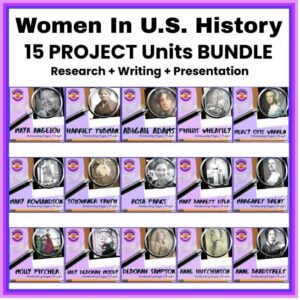
✏️Student-centered units that includes 15 projects surrounding important women in U.S. History. These units will help students learn and practice research skills, report writing, project and presentation skills.
✏️Students will use these 15 project-based units to learn about and create reports and presentations on the following people:
- Anne Hutchinson
- Anne Bradstreet
- Deborah Sampson
- Lady Deborah Moody
- Molly Pitcher
- Mary Barrett Dyer
- Margaret Brent
- Sojourner Truth
- Rosa Park
- Mary Rowlandson
- Mercy Otis Warren
- Phillis Wheatley
- Abigail Adams
- Harriet Tubman
- Maya Angelo
✏️These notebooking projects can be assigned individually or within cooperative groups. Use them within a Language Arts classroom or a Social Studies / U.S. History classroom. Very flexible and cross-curricular!
After completing the written portion of each resource, you can grade it (or) assign students to do an oral and/or audio-visual presentation based on their findings/work.
✏️What is in each unit?
- Student instructions for using biographical notebooking, project pages
- Suggested research questions
- Student notebooking, project pages (includes covers, KWL, reference recording, report writing, and more)
- Teacher pages (instructions, assignment, evaluation)
-
Christmas Themed Reading Comprehension | Fiction and Nonfiction to Pinterest (opens in a new window)$3.25Add to Cart
Two Christmas themed reading comprehension activities that can be used for extra practice or as an assessment on student ability to comprehend what they read.
Includes both a fiction and a nonfiction passages!Fiction passage title: Nobel Fir|A Christmas Tree
Nonfiction passage title: Christmas SymbolsAfter students read a passage, they will answer either multiple choice or short answer questions. A FUN maze is also included for each!
-
$3.25Add to Cart
This November, give students the opportunity to reflect on gratitude! “My Gratitude Book” is a 10-page gratitude journal that is designed to help students reflect on what they are thankful for while they color, write, draw and even complete mazes! Preview video is available.
-
$2.50Add to Cart
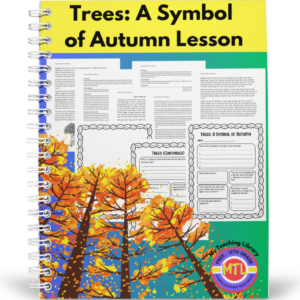
A multi-age lesson to teach students (1st – 5th grades) about trees! The lesson is designed as a Fall (Autumn) outdoor/indoor activity lesson as the leaves are changing colors but can be easily converted to an indoor activity only. If using as an indoor only activity, be sure to have photos of trees to incorporate into the lesson.
Students will learn about:-
What trees provide
-
Aspects of a ‘living’ tree (how they get water, nutrients and breathe)
-
Parts (and their function) of a tree: roots, trunk, bark, branches, leaves
-
How leaves make food
-
Types of trees: deciduous and evergreen
Includes:
– Teacher lesson notes (guide)
– Student informational text
– Student activity worksheet pages
– Answer keys -
-
Fall-Themed Haiku Poetry Writing Pack | Visual Prompts & Publishing Pages to Pinterest (opens in a new window)$5.75Add to Cart
Bring the beauty, colors, and rhythm of autumn into your writing block! This comprehensive Fall-Themed Haiku Poetry Pack is designed to teach students the traditional art of haiku poetry while sparking their creativity through vibrant, nature-inspired visual prompts. From colorful foliage and forest wildlife to pumpkin patches and harvest tables, this resource gives learners everything they need to brainstorm, draft, and publish their own seasonal masterpieces.
📦 What’s Included in This Resource?
- Haiku Instruction & Anchor Chart Page: A clear, student-friendly reference guide breaking down the origins of Japanese haiku, the traditional focus on nature, the 5-7-5 syllable structure, and mentor poem examples.
- 20 Full-Color Photo Prompts: Breathtaking, autumn-themed photography prompts featuring winding forest boardwalks, mountain foliage, waterfalls, wildlife (owls, deer, wolves, foxes/cats, wild turkeys, squirrels), orchard harvests, trains through autumn trees, and Thanksgiving displays.
- 11 Student Drawing & Writing Template Pages: Formatted drawing pages where students can sketch, illustrate, or paste their own fall observations before writing.
- 26 Additional Themed Publishing Pages:
- 9 Full-Color Pages with Borders and/or Images: Illustrated pages featuring vibrant autumn leaves, seasonal berries, harvest motifs, and arched window frames.
- 17 Black-and-White Color-In Pages: Engaging line art featuring pumpkins, autumn leaves swirling in the wind, scarecrows, acorns, pinecones, cozy hedgehogs, turkeys, bare trees, and Thanksgiving harvest feasts.
✨ Benefits of Using This Resource
- Eliminates Writer’s Block: High-quality visual prompts immediately trigger sensory details, making it easy for reluctant writers to find words and imagery.
- Strengthens Syllabication & Phonological Awareness: Counting out the 5-7-5 syllable pattern builds word awareness, pronunciation skills, and intentional vocabulary selection.
- Multi-Age & Differentiated Friendly: Simple enough for early elementary students learning basic syllable counts, yet rich enough for middle-grade writers refining figurative language and concise imagery.
- Display-Ready Work: The decorative color and color-in publishing sheets double as beautiful bulletin board displays, portfolio additions, or keepsake poetry gifts for families.
- Zero Prep: Just print and teach!
🎯 Common Core Standards Covered
- CCSS.ELA-LITERACY.RF.1.3 / RF.2.3 / RF.3.3: Phonological Awareness & Word Recognition (identifying syllables, breaking words into syllable segments).
- CCSS.ELA-LITERACY.W.1.5 / W.2.5 / W.3.5 / W.4.5: Writing Process (planning, drafting, revising, and focusing on concise word choice).
- CCSS.ELA-LITERACY.RL.2.4 / RL.3.4 / RL.4.4: Craft and Structure (identifying how rhythm, structure, and poetic forms create imagery and meaning).
- CCSS.ELA-LITERACY.L.3.5 / L.4.5 / L.5.5: Vocabulary Acquisition and Use (exploring figurative language, sensory descriptions, and word nuances).
✏️ How to Use in the Classroom or Homeschool
- Introduce & Model: Display the introductory reference sheet. Review the 5-7-5 syllable rule and clap out syllables together using the mentor examples.
- Brainstorm with Visuals: Project one of the 20 photo prompt cards or pass them out to small groups. Have students jot down descriptive adjectives, autumn verbs, and sensory words based on what they see.
- Draft & Count: Students arrange their ideas into three distinct lines, tapping or clapping to verify their syllable counts.
- Publish & Illustrate: Choose from the full-color decorative pages or let students personalize one of the black-and-white coloring pages to frame their finished haiku. Alternatively, use the blank frame sheets for an outdoor nature-walk sketch activity!
🛒 Ready to Inspire Your Young Poets? Add a splash of autumn wonder to your language arts lessons today!
👉 Download your Fall-Themed Haiku Poetry Pack now and watch your students’ seasonal creativity take flight! 🍁📝✨