
Category: Space Science
Showing all 10 resultsSorted by latest
-
 $2.75Add to Cart
Looking for a fun way to teach students about the captivating phenomenon of a lunar eclipse? Add “Lunar Eclipse Mini Book: Earth Science – Learning about the Moon,” to your cart today, download and print! This resource will make complex space science accessible and exciting for young learners.
✨ What’s Included:
- – Five printable PDF pages that transform into a 10-page, student-created mini book.
- – Kid-friendly explanations of lunar eclipses, perfect for comprehension.
- – A dedicated page for students to illustrate their own lunar eclipse drawing.
📚 Learning Objectives
- – Students will be able to identify when a lunar eclipse can occur.
- – Students will understand the concepts of the umbra and penumbra shadows.
- – Students will be able to describe the conditions necessary for a total lunar eclipse.
- – Students will learn why total lunar eclipses can exhibit colorful hues.
- – Students will recognize and name the different phases of a lunar eclipse.
-
Sale!Original price was: $3.00.$2.25Current price is: $2.25.Add to Cart
Hands on learning! This BUNDLE includes two products that will help students gain an understanding of what happens during a solar eclipse!
What’s included:
-
– A solar eclipse activity designed to help students visualize a solar eclipse through using common objects to actually demonstrate one.
-
– A solar eclipse activity designed to help students visualize a solar eclipse by creating a simple paper model of an eclipse.
-
-
$3.00Add to Cart
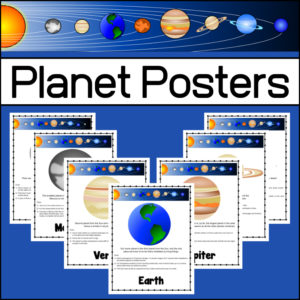
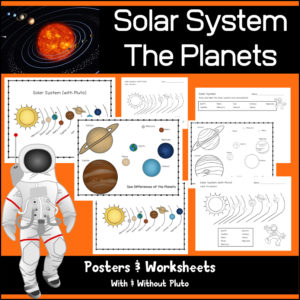
Create excitement and interest about the planets of our solar system by displaying these colorful and informative posters!
I’ve included 2 sets (one with and one without Pluto)-
- – Set one: Mercury, Venus, Earth, Mars, Jupiter, Saturn, Uranus, Neptune
- – Set two: Mercury, Venus, Earth, Mars, Jupiter, Saturn, Uranus, Neptune, Pluto (described as now classified as a ‘dwarf planet’)
-
$3.50Add to Cart
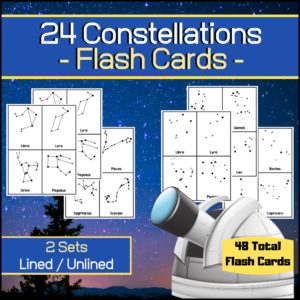
⭐This Astronomy / Science resource, Constellation Flashcards, contains 2 sets of 24 constellations found in the winter northern hemisphere sky.
- Set one has lines that show the stars connected to create the constellation.
- Set two shows only the stars of the constellation (no lines). You can use set two to have students learn the ‘grouping of the stars’ as they actually see them in the sky -or- you can allow students to actually draw the lines on each card to help learn the constellations.
-
$2.50Add to Cart
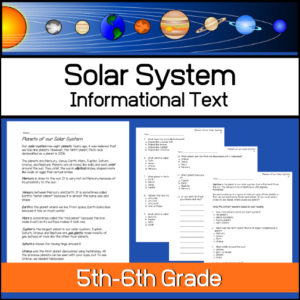
Help students develop their reading comprehension skills as they gain knowledge about the planets within our solar system with this informational article and assessment questions. This has been written for 5th-6th grade classrooms. The assessment includes 11 multiple choice questions, 1 opinion, short answer question and asks students to draw the planets in relation to the sun. Answer Key provided.
Flesch-Kincaid Grade Level: 6.5
Grade level: Sixth Grade
Automated Readability Index: 5.5
Grade level: 8-9 yrs. old (Fifth graders) -
$1.50Add to Cart
Hands on learning! A solar eclipse activity designed to help students visualize a solar eclipse through using common objects to actually demonstrate one.
-
$2.50Add to Cart
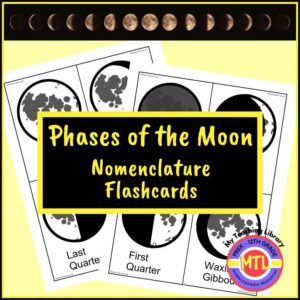
Teaching about the different phases of the moon? Get “Earth Science: Moon Phases Nomenclature Flashcards” to help students learn and identify the 8 different phases of the moon, regardless of grade level.
✨ What’s Included:
- Printable Nomenclature / flash cards for hands-on learning.
- Clear and concise labeled illustrations of each of the following moon phases: new moon, waxing moon, first quarter, waxing gibbous, full moon, waning gibbous, last quarter and waning crescent
✅ Perfect For…
- – Earth Science and general science lessons
- – Engaging students with moon phases and astronomy concepts.
This resource is built on the belief that understanding scientific terminology should be an active and interactive process. By utilizing a nomenclature-based approach, these flashcards encourage students to not only memorize terms but also to actively engage with the visual and conceptual aspects of moon phases. This method fosters deeper understanding and retention, making complex scientific ideas more accessible and memorable for every learner.
📚 Learning Objectives
- – Students will be able to identify and name the different moon phases.
- – Students will understand and define key Earth Science vocabulary related to the moon.
Transform your science lessons with these dynamic and effective Earth Science Vocabulary Moon Phases Nomenclature Flashcards! They are a fantastic tool to illuminate the wonders of space science for your students.
Click Add to Cart today!
-
$3.00Add to Cart
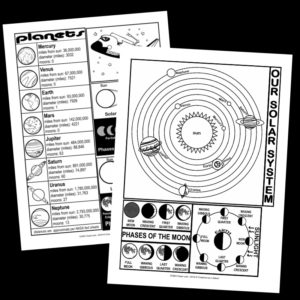
This Solar System product will help students learn and reinforce their knowledge of the order of the planets and to be able to visual size differences of the planets! Each color poster has a duplicate b/w poster that can be used as a student handout. There are also worksheets for students to complete (with and without word banks). This resource provides 2 sets of all resources – One which includes the dwarf planet of Pluto and one that does not.
-
$1.50Add to Cart
Hands-on learning! This solar eclipse activity has been designed to help students visualize a solar eclipse by creating a simple paper model of one.