
Category: Reading
Showing 321–340 of 354 resultsSorted by latest
-
 $5.00Add to CartNovember NO PREP Print and Go Learning Pack for 1st Grade! Over 90 worksheet pages of learning.Math: Fractions, Patterns, Counting, Place Value, Skip Counting, Counting Money (Nickels and Quarters), Word Problems, Reading Graphs/Coordinates, Single digit addition and subtraction, Telling timeLanguage Arts: Writing, Reading Skills, Rhyming, Phonics, Syllables, ABC Order, Critical Thinking Skills with November themed puzzles, Crafts…and more!!
-
$1.50Add to Cart
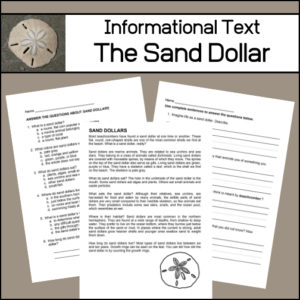
This informational article will teach students about the sand dollar. They will learn that the little round, coin-shaped shell found on the beach is actually part of a marine animal, related to sea urchins and sea stars. They will also learn how living sand dollars move, that they aren’t ‘white’, how and what they eat and much more. After reading, students will complete two worksheets (multiple choice and short answer) to assess their comprehension / understanding of the material. Answer Key is provided.
Automated Readability Index: 4.8
Grade level: 8-9 yrs. old (Fourth and Fifth graders)
Linsear Write Formula : 5.6
Grade level: Sixth Grade. -
FREEAdd to Cart
This is a free downloadable book: The Adventures of Jerry Muskrat
28 pages – Story only (no illustrations) – Preview images show the first two pages. -
$3.50Add to Cart
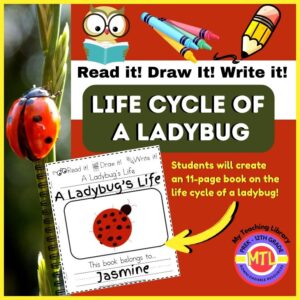
A cross-curricular (Science / Literacy – Writing) product that will have students creating their very own mini-books detailing the life cycle of a ladybug!
Knowledge students will learn:
- -The ladybug is a beetle
- -Mother ladybugs lay tiny yellow eggs in clusters under a leaf
- -When the larva hatches, it eats. What do ladybugs eat? Students will find out!
- -What the ladybug pupa looks like before attaching itself to a leaf
- -The pupa grows, molts and changes…emerging as a ladybug!
Students will:
- -Read the text
- -Draw a picture
- -Write (copy work) the written text.
Benefits of this resource:
- -Low prep – print and give to students
- -Children learn about the ladybug life cycle while reading, drawing and writing
- -Encourages fine motor skills through coloring and writing plus scissor skills as the cut out each page along the dotted lines
- -Encourages reading skills as students read and copy the text
- -Finished book can be a keepsake Science mini-book and added to end-of-the-end portfolio.
What is included? 11 ready-to-use student pages
⭐⭐Use along or with: Ladybug Life Cycle | Posters and Worksheets
-
$8.00Add to Cart
Students LOVE these printables and will be excited to get started every morning. Using these pages will allow students to ease into their routine for the day as they work on developing important kindergarten skills.
⭐Is included in our money saving BUNDLE: Kindergarten Daily Worksheets | Full Year BUNDLE
⭐ What’s Included: 96 student pages
⭐ Skills covered:
- – Letter recognition and identification (upper and lower case)
- – Letter tracing
- – Letter sounds
- – Number recognition and identification (1-10)
- – Number tracing
- – Counting skills
- – Number word recognition
- – Number line work
- – Basic math (before and after)
- – Shapes
- – Colors
- – Fine motor skill practice (tracing, coloring, drawing)
- – Following directions
⭐ Print and Go!
-
$5.00Add to Cart
This workbook includes 50 fun and engaging pages (a page for each of the 2nd 50 Fry sight words)… Students will learn sight words by tracing, coloring, and writing the words as well as identifying and build each word (cutting & pasting)!
-
$2.00Add to Cart
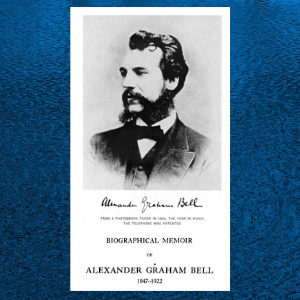
This is a downloadable copy of the book. (30 pages)
Excerpt from the book: Alexander Graham Bell – teacher, scientist, inventor, gentleman – was one whose life was devoted to the benefit of mankind with unusual success. Known throughout the world as the inventor of the telephone, he also made other inventions and scientific discovers of first importance, greatly advanced the methods and practices for teach the deaf and came to be admired and loved throughout the world for his accuracy of thought and expression.
-
$2.50Add to Cart
This is a downloadable copy of the book.
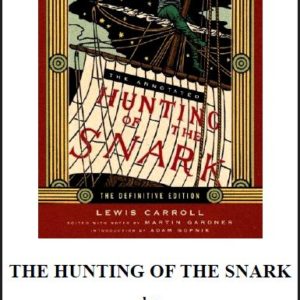
About the book: A poem typically categorized as a nonsense poem. Written from 1874 to 1876, the poem borrows the setting, some creatures, and eight portmanteau words from Carroll’s earlier poem “Jabberwocky” in his children’s novel Through the Looking-Glass (1871).About the Author: Lewis Carroll, was an English writer of world-famous children’s fiction, notably Alice’s Adventures in Wonderland and its sequel Through the Looking-Glass. He was noted for his facility at word play, logic, and fantasy. The poems Jabberwocky and The Hunting of the Snark are classified in the genre of literary nonsense. He was also a mathematician, photographer, and Anglican deacon. (Lewis Carroll is a pen name – Given name was Charles Lutwidge Dodgson)
-
 $2.50Add to Cart
This is a downloadable. pdf copy of the book.
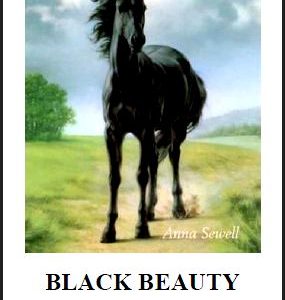
About the book: The story is narrated in the first person as an autobiographical memoir told by the titular horse named Black Beauty—beginning with his carefree days as a colt on an English farm with his mother, to his difficult life pulling cabs in London, to his happy retirement in the country. Along the way, he meets with many hardships and recounts many tales of cruelty and kindness. Each short chapter recounts an incident in Black Beauty’s life containing a lesson or moral typically related to the kindness, sympathy, and understanding treatment of horses, with Sewell’s detailed observations and extensive descriptions of horse behavior lending the novel a good deal of verisimilitude.
About the Author: Anna Sewell was an English novelist. She is well known as the author of the 1877 novel Black Beauty, which is now considered one of the top ten bestselling novels for children ever written, although it was intended at the time for an adult audience.
-
$2.50Add to Cart
Activities to complete after students read the book, A Ball for Daisy. A Ball for Daisy is a Caldecott winning book by Chris Rashcka! Designed for 1st, 2nd and 3rd Grades, it includes activities to spur critical thinking, narrative and opinion writing and art.
Example activities include:
- Writing a story for the book in the student’s own words.
- Answering the questions: Why do you think there are no words to this story? Would you rather make up the story in your own words or read the words? Explain.
- Describing the characters.
- A problem-solving question – Find a solution!
Since this has been created for 1st, 2nd and 3rd grades, I’ve included 2 copies of each worksheet with differing lines: mid-dashed line and single line pages.
-
$1.75Add to Cart
This phonics poster will give students a visual aid to help them learn and remember long vowel sounds. Includes colorful pictures with words for each vowel sound.
-
$4.50Add to Cart
This engaging and fun Tales of a Fourth Grade Nothing (by Judy Blume) book study is filled with reading, vocabulary and extended activities.
Includes:
- Daily reading journal – Students will be asked to journal new or important words, characters in that day’s reading, a summary of what happened, to make a prediction of what will happen next and additional notes.
- Vocabulary word wall (60 Words)
- Vocabulary definitions worksheet
- Crossword puzzle
- 2 Analogy worksheets
- 2 Different comprehension assessments (can use one or both)
– The first assessment is all multiple choice and covers basic story details.
– The second assessment is more extensive and includes multiple choice, short and extended answer questions, an essay question, a character match and a fill-in the blanks! - Answer keys
About the book: Fourth grader Peter Hatcher has a terrible problem – his little brother Fudge! The first in a very funny five book series.
“Will bring a chorus of laughter from sympathetic readers.” –Publishers Weekly
-
$4.00Add to Cart
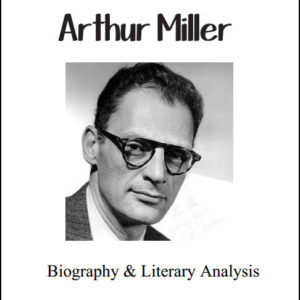
Biography & Literary Analysis – Arthur Miller
517 pages -
$2.00Add to Cart
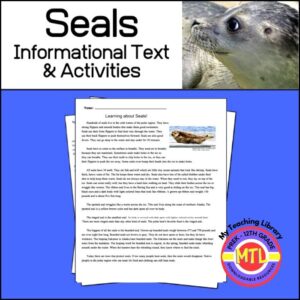
This informational text article is all about seals, where they live, their physical characteristics and about several different types of this cold-water mammal. After reading, students will complete a reading comprehension worksheet and (optional) write a story! Answer key provided.
-
$2.00Add to Cart
This is a downloadable copy of the book.
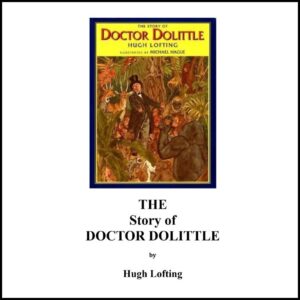
About the book: The Story of Doctor Dolittle, (Being the History of His Peculiar Life at Home and Astonishing Adventures in Foreign Parts) (1920), written and illustrated by the British author Hugh Lofting, is the first of his Doctor Dolittle books, a series of children’s novels about a man who learns to talk to animals and becomes their champion around the world. It was one of the novels in the series which was adapted into the film Doctor Dolittle.About the Author: Hugh John Lofting was an English author trained as a civil engineer, who created the classic children’s character of Doctor Dolittle. Dolittle first appeared in Lofting’s illustrated letters to his children, written from the British Army trenches in World War I. He travelled widely as a civil engineer, before enlisting in the Irish Guards regiment of the British Army to serve in the First World War. Not wishing to write to his children about the brutality of the war, he wrote imaginative letters which later became the foundation of the successful Doctor Dolittle novels for children.
-
$2.50Add to Cart
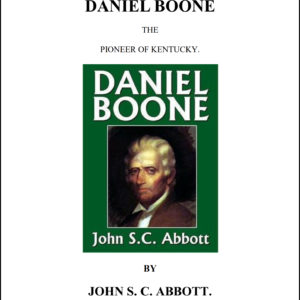
Daniel Boone is regarded as the first real American folk hero. Without his cunning bravery, settlement west of the Appalachians may not have been made possible for years. Boone’s Wilderness Road, which is still used today, helped bridge the Cumberland Gap, granting access to the state of Kentucky from Pennsylvania.
Thanks to the writing of John S. C. Abbot, the life and genius of Boone can truly be appreciated through Daniel Boone: The Pioneer of Kentucky. Find out just how Boone crafted his Wilderness Trail, what he did to make it happen, and how he overcame the struggles of life in late eighteenth century America.
-
$8.00Add to Cart
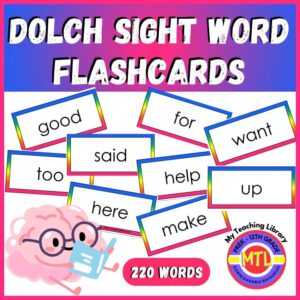
We have now combined all 220 Dolch sight words into one bundle! So, with this purchase, you’ll not only get the 2nd grade Dolch sight words but all 220 words: Pre-Primer, Primer, 1st grade, 2nd grade and 3rd grade.
Dolch Sight Words have been found to be the most frequently used words in reading and writing. They include pronouns, adjectives, adverbs, prepositions, conjunctions and verbs that are difficult to sound out and are best learned by sight and repetition. By learning and practicing these words, children will enhance their reading skills and build confidence while doing so.
-
$4.00Add to Cart
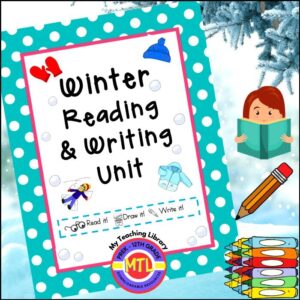
This Winter Reading and Writing resource (with a “Read it! Draw it! Write it!” section) covers a variety of vital Language Arts skills! Perfect to use in December, January, February and into March!
Includes:
- 12 “Read It! Draw It! Write it!” pages (Use individually or combined to complete a book for each student)
- Vocabulary Flashcards
- Compound Word Worksheet
- 3 Syllable Worksheets
- Long Vowel Worksheet
- Short Vowel Worksheet
- 4 Rhyming Worksheets
- 2 additional Writing Worksheets.
Vocabulary Words in this Winter Unit: window, snow, outside, door, pants, sweater, coat, boots, hat, scarf, mittens, five, snowball, snowangel, snowman, sled, hill, roll
“Read it! Draw it! Write it!” pages have been designed to engage students in an active reading. Students can use the symbols to help guide them on each page. On the “Write it!” portions, students are to copy the passage they just read. However, more advanced students may want to add to the story!
-
$1.50Add to Cart
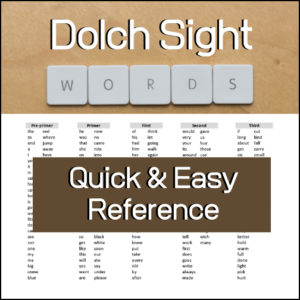
Here is a quick and easy, one page reference which lists all of the Dolch sight words for: Pre-primer, Primer, 1st, 2nd and 3rd grades.
-
$3.75Add to Cart
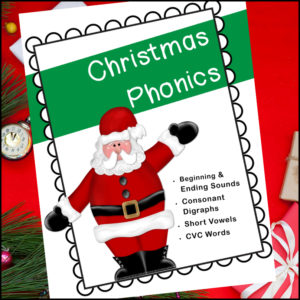
Holiday / Christmas Themes run throughout this download providing students with fun, NO PREP worksheets to practice phonics skills.
— 52 Student pages – A enough for the entire month of December!
Skills include:
- Recognizing beginning and ending sounds
- Recognizing sounds of various consonant digraphs
- Identifying short vowel sounds
- Completing CVC words
** JUST PRINT AND GO **