
Only logged in customers who have purchased this product may leave a review.
Products
Five Themes of Geography
$3.50
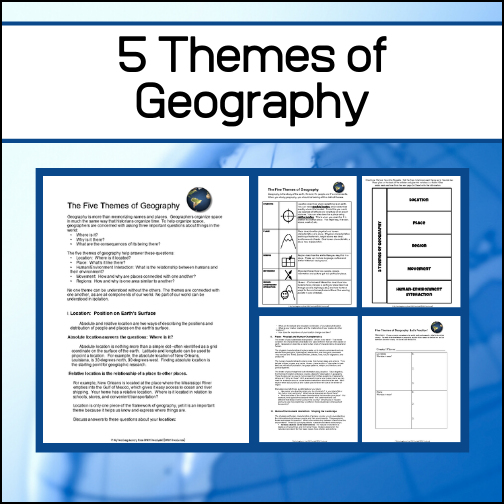
In geography, students should learn the five themes of geography. Learning these themes will help students begin to think like geographers…organizing space (i.e. ‘the world’) in much the same way as historians organize time. This resource will teach students the five themes plus gives them the opportunity to practice using them!
Includes:
– 4.5 pages of informational text explaining the themes in detail
– A notebooking template and explanation strips for students to use as a study aid
– An activity that can be used again and again so students can put into practice what they have learned
Related products
-
 $6.00Add to Cart
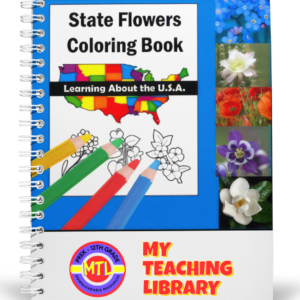
A U.S.A. state flowers coloring book that students will truly enjoy. Students will color each state flower and have the opportunity to write about each.
Each page has a large state flower to color + the state name. Also included: 2 notebooking / report pages for students to use (optional) so they can write a little about each flower. Whether you are studying each state or simply want to provide some coloring fun with an educational twist to your day, students will enjoy this resource!
-
$7.00Add to Cart
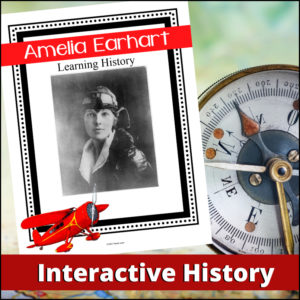
Cross-curricular and engaging, this Amelia Earhart project-based unit will have students using a variety of Language Arts skills as they learn about history!
Includes:
- * A brief history of her life story with reading comprehension questions
- * A detailed timeline from which the students are asked to pull the most important events and create a graphic timeline
- * 30 Vocabulary words (with assignments)
- * Research questions (for further thought, research and essays)
- * Additional project ideas
- * Photos for projects
-
$3.00Add to Cart
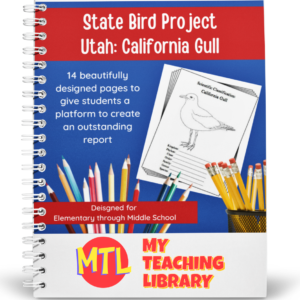
Studying the state of Utah and state symbols? What is the state bird of Utah ?
This project-based unit is designed to help students study and record information about Utah ’s state bird: California Gull
What type of pages are contained in this set:
– A map page (for the state)
– Scientific classification page
– A page for students to give details about the bird’s physical description, habitat, diet, life span and reproduction
– A page where students will do additional map work to show where in the U.S. the bird lives in addition to migration information
– Coloring page
– Several pages on which students can use for expository and/or creative writing as well as sections in which students may draw.14 pages in all and is designed for different levels / abilities.
My Teaching Library has a notebooking set for each of all 50 states. In addition, you can get all of them bundled!
Here are other bird related products you’ll love…
-
$15.00Add to Cart
This 150+ page unit is perfect for any study of the American Revolution offering a variety of engaging activities! Designed for 4th-8th Grades.
Includes:
- – Unit Vocabulary and Word Wall Cards
- – Notebooking / Report pages
- – Handouts: Overview of Colonization & Overview of the American Revolution
- – Worksheets: What Came First?, The Regions of Colonial America, Characteristics of the Colonies, Roles of Colonial Life, Comparing Venn Diagram, American Revolution Cause & Effect, Major Battles of the American Revolution, Who Am I?
- – Reading Comprehension: Causes of the American Revolution, The Boston Massacre, The Boston Tea Party, Declaration of Independence, Colonial Leaders of the American Revolution, British Leaders of the American Revolution, American Victories of the Revolutionary War, Independence from Great Britain, The Treaty of Paris, Articles of Confederation, Women of the American Revolution
- – People of the American Revolution Crossword Puzzle
- – Flash Cards: Revolutionary Figures, Other Historical Figures
- – American Revolution Photos and Maps
- – Photos of American Revolutionary Uniforms
- – Complete Lapbook project
- – Answer Keys!


Reviews
There are no reviews yet.