
Category: Animals
Showing 21–32 of 32 resultsSorted by latest
-
 $1.50Add to Cart
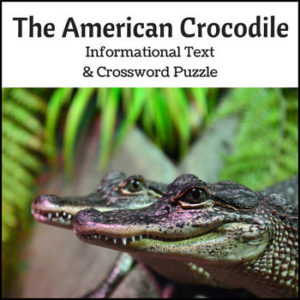
Designed for 5th-8th grade students, American Crocodile Informational Text and Crossword Puzzle will provide students with details about the only crocodile native to the Americas in the following categories:
* Appearance
* Differences from alligators
* Distribution and Habitat
* Food and Growth
* ReproductionAfter reading the text (3 pages), students are to complete the crossword puzzle. Answer Key provided.
-
$2.25Add to Cart
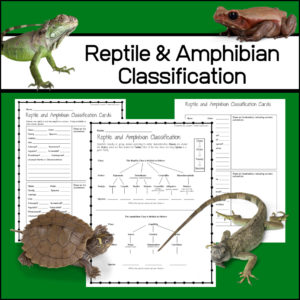
This Science / Biology resource includes 2 student exercises plus classification card templates that can be used for centers, projects and more.
-
$2.25Add to Cart
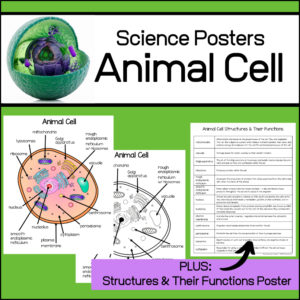
This Science / Biology resource offers 2 labeled posters showing the structures and organelles of an animal cell! I’ve also included a handout detailing the major function(s) of each structure/organelle. Structures and organelles include: centrosome, plasma membrane, mitochondria, vacuole, Golgi apparatus, ribosome, lysosomes, rough endoplasmic reticulum, smooth endoplasmic reticulum, nucleus, nucleolus, peroxisome, cytoplasm
-
$4.50Add to Cart
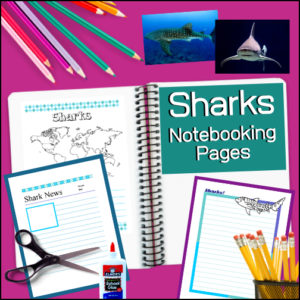
There are over 500 known species of sharks in the world! Most students love studying sharks and this unit has been created to help students record the knowledge they learn during a study on sharks as well as personal reflections of what has been learned.
This resource includes:
- – Creating a Notebooking Project…What is Notebookiing?
- – Supply list
- – Teacher pages
- – Student organizational pages
- -‘Jump off’ Questions designed to get students thinking about the different shark related questions they can research
- – 32 Notebooking pages
Notebooking is a coined term for what can also be referred to as educational journaling or scrapbooking.
-
$2.75Add to Cart
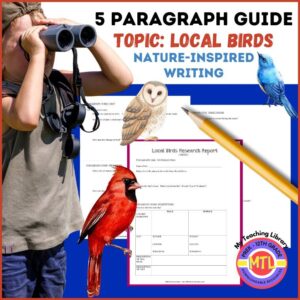
Easy-to-use, step-by-step, print-and-go guide for students to use as they learn to write a 5-paragraph essay! This nature-themed resource has a local bird focus and guides students as they research, observe and write about one bird species that lives in their local area.
This 3-page resource outlines paragraph by paragraph what to include and gives space for students to write detailed notes.
What will students learn and observe about a bird species before they begin writing?
– where the bird geographically lives
– habitat(s) where they are most likely found
– physical characteristics (coloring, markings, size, bill, feet)
– diet (herbivore, carnivore, omnivore) and where/how they find/gather their food
– predators and self-protection
– interesting factsPlus, this guide will encourage students to reflect on what they have learned.
Once completed, students will be able to take the guide and their notes and write amazing 5-paragraph essays!
Use once as one assignment for one bird of their choice or use again and again to create an entire collection of essays on local birds. Regardless of where you live, these pages will have students observing and learning about local birds.
-
$4.00Add to Cart
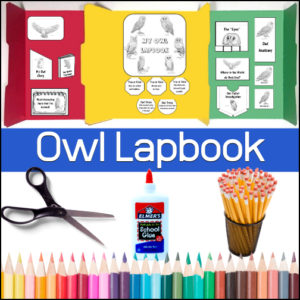
This engaging, hands-on project will give students the materials necessary to learn all about owls and create a great project to display their learning!
Suggested for 3rd-6th grades. (See description for more information)
-
$2.00Add to Cart
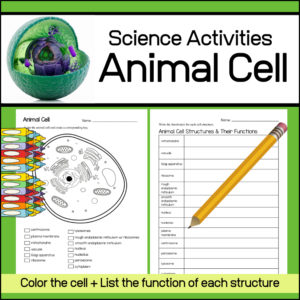
This Science / Biology resource includes 2 activity worksheets for students to help them review the structures / organelles of an animal cell and the main function(s) of each. Structures /organelles include: centrosome, plasma membrane, mitochondria, vacuole, Golgi apparatus, ribosome, lysosomes, rough endoplasmic reticulum, smooth endoplasmic reticulum, nucleus, nucleolus, peroxisome, cytoplasm
-
$1.50Add to Cart
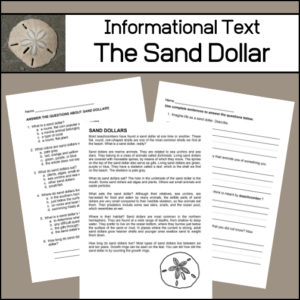
This informational article will teach students about the sand dollar. They will learn that the little round, coin-shaped shell found on the beach is actually part of a marine animal, related to sea urchins and sea stars. They will also learn how living sand dollars move, that they aren’t ‘white’, how and what they eat and much more. After reading, students will complete two worksheets (multiple choice and short answer) to assess their comprehension / understanding of the material. Answer Key is provided.
Automated Readability Index: 4.8
Grade level: 8-9 yrs. old (Fourth and Fifth graders)
Linsear Write Formula : 5.6
Grade level: Sixth Grade. -
$8.00Add to Cart
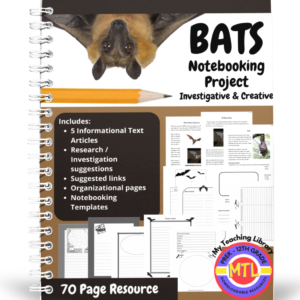
Studying bats? Here is a resource that will allow students to create a beautiful project that will show off what they’ve learned. This 70 page project unit can be used as a fully contained project resource (with no needed outside information required) or can be a launch for a full-blown research project using additional resources and includes:
- – Explanation page about creating a notebooking project
- – Suggested supply list
- – Evaluation rubric
- – Assignment page
- – Table of contents pages
- – Vocabulary & Reference pages
- – List of bat related vocabulary
- – Suggested links (optional)
- – Research / Notebooking questions/investigation suggestion handouts
- – 5 Informational text articles
- – Project KWL
- – Notebooking template pages
- – Bat pictures
-
$2.00Add to Cart
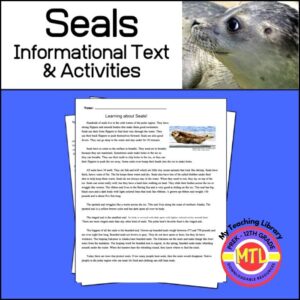
This informational text article is all about seals, where they live, their physical characteristics and about several different types of this cold-water mammal. After reading, students will complete a reading comprehension worksheet and (optional) write a story! Answer key provided.
-
$3.25Add to Cart
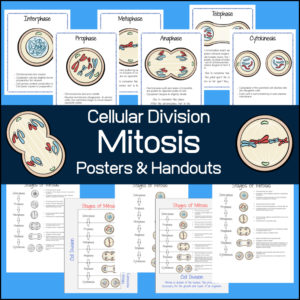
Let’s face it: Trying to explain the “dance of the chromosomes” without clear visuals is a recipe for confused faces. This resource simplifies the complex process of cellular division into digestible, visually engaging steps.
🔍 What’s Inside?
This resource covers the full cycle of mitosis, ensuring your students see the “big picture” of how cells replicate.
The Phases Outlined:
- Interphase: The prep work (DNA replication).
- Prophase: Chromosomes condense and the party starts.
- Metaphase: Everyone aligns in the middle.
- Anaphase: The great separation.
- Telophase: Two new nuclei form.
- Cytokinesis: The final split!
Included Versions:
- 🎨 Full Color: Perfect for high-impact classroom decor or digital presentations.
- 🗒️ Black & White: Ideal for student handouts, coloring activities, or saving on ink.
- ✍️ With Explanations: Includes detailed text describing the events of each phase.
💡 Why You’ll Love This
1. Visual Clarity for Abstract Concepts Mitosis is hard to visualize! These posters provide a clear “anchor” for students to refer back to when they get stuck on the difference between anaphase and telophase.
2. Differentiation Made Easy With both “labeled” and “blank” versions, you can easily scaffold your instruction. Use the labeled version for an introductory lecture and the blank version for a formative assessment.
3. Saves You Prep Time Stop scouring the internet for clear, high-quality diagrams. These are ready to print and use immediately. ☕🏫 Suggested Grade Levels & Subjects
- Grades: 6th – 10th Grade
- Subjects: Life Science, General Science, and Biology