
Tag: Treasures of the Past
Showing all 2 resultsSorted by latest
-
 $3.00Add to Cart
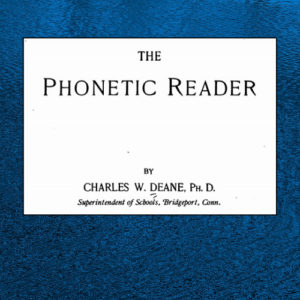
This is a downloadable copy of the book. (186 pages)
Excerpt from the book: The plan of this book makes phonics the basis of word getting, giving exercises for the ready recognition of words by all the devices of the word method, and insists ,from the beginning, upon the unity of the sentence. (Copyright 1896) -
$3.75Add to Cart
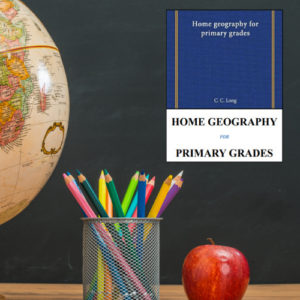
This book, Home Geography for Primary Grades by C. C. Long, Ph.D., is an educational text designed to introduce foundational geographical concepts to young children through direct observation and experience. This classic (original is out-of-print) text may be found on Amazon at a higher price than My Teaching Library is offering it to you.
Core Educational Philosophy
The book is built on the premise that geography is best understood in two stages:
- Direct Observation (The Home): Students begin by studying the immediate environment “at their doors,” such as local streams, slopes, and valleys, using these to build a basis for understanding the wider world.
- Imaginative Expansion (The World): Once elementary ideas are anchored in personal experience, the book teaches students to use their imagination to construct mental pictures of distant, unseen geographical features.
Key Learning Features
- Conversational Tone: Lessons are structured as natural, conversational dialogues rather than dense, “science-heavy” lectures, aimed at stimulating interest and active thought rather than just rote memorization.
- Active Learning & Expression: The book emphasizes that knowledge should be tested through expression. Students are encouraged to:
- Model landscapes using sand or clay.
- Draw what they observe to learn how to “see well”.
- Describe findings orally and in writing.
- Conduct independent “searching” to report results back to the class.
- Practical Application: The text uses familiar, concrete examples to teach abstract concepts. For example, it utilizes a kettle to explain vapor and a boy’s drawing of his house to introduce the difference between a picture and a “plan” (or map) .
Structure & Content
The curriculum guides students through a logical progression of topics:
- Fundamentals of Direction and Distance: Lessons cover using the sun, stars, and compass to find direction and tools for measuring distance.
- Landforms and Systems: Detailed lessons explore plains, deserts, oases, hills, mountains, valleys, and the life cycle of rivers.
- Environmental & Human Geography: The book connects natural phenomena (rain, snow, wind) to human life, covering agriculture (vegetables, grains) , resources (forest trees, minerals, metals, and various human occupations.
- Illustrations: The text is heavily supported by numerous instructional illustrations (black and white), helping students visualize concepts ranging from celestial bodies and landscapes to agricultural practices and industrial settings.
Home Geography for Primary Grades serves as a practical, hands-on resource that encourages children to become active observers of their world, bridging the gap between their local surroundings and the broader geography of the earth.