

Only logged in customers who have purchased this product may leave a review.
Products
Anatomy | Parts of the Ear
$1.50
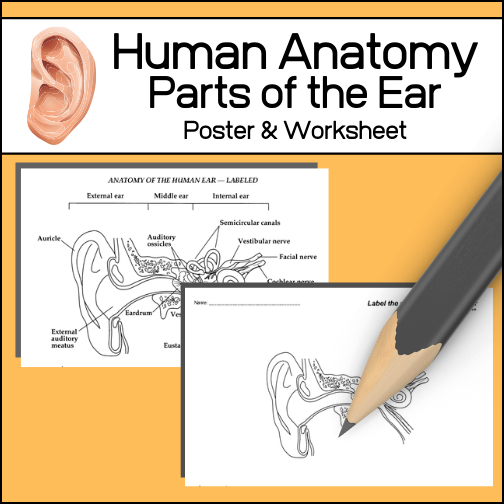
Studying the human ear? This resource includes…
- – Poster with the following parts labeled (auricle, auditory ossicles, semicircular canals, vestibule nerve, facial nerve, cochlear nerve cochlea, vestibule, eardrum, Eustachian tube, external auditory meatus)
- – Student worksheet to label
Related products
-
 $2.25Add to Cart
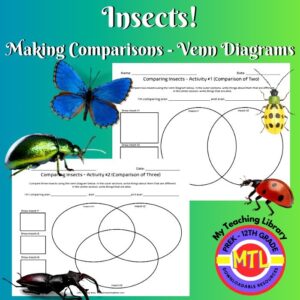
TWO ready to use Venn Diagram Science activities for students to use to compare 2 or 3 insects. On each, students will list the insects they will compare and contrast, draw a picture of each and then complete the Venn Diagram.
Extend the activity by asking students to write a paragraph or short report about their discoveries!
-
 $2.50Add to Cart
This is a downloadable .pdf copy of the book.
About the book: The Second Jungle Book is a sequel to The Jungle Book. First published in 1895, it features five stories about Mowgli and three unrelated stories, all but one set in India,
About the Author: Joseph Rudyard Kipling was an English journalist, short-story writer, poet, and novelist. He was born in India, which inspired much of his work. Kipling in the late 19th and early 20th centuries was among the United Kingdom’s most popular writers. In 1907, he was awarded the Nobel Prize in Literature, as the first English-language writer to receive the prize, and at 41, its youngest recipient to date. He was also sounded for the British Poet Laureateship and several times for a knighthood but declined both. Following his death in 1936, his ashes were interred at Poets’ Corner, part of the South Transept of Westminster Abbey.
-
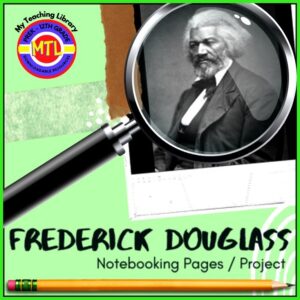
Frederick Douglass Project-Based Unit | Research – Writing – Presentation to Pinterest (opens in a new window)$3.00Add to Cart
✏️A student-centered resource to help students learn and practice research skills, report writing, project and presentation skills.
Students will use this project-based unit to learn about and report on Frederick Douglass. Frederick Douglass was an American social reformer, abolitionist, orator, writer, and statesman. After escaping from slavery in Maryland, he became a national leader of the abolitionist movement in Massachusetts and New York, gaining note for his oratory and incisive antislavery writings.
✏️This notebooking project unit can be assigned individually or within cooperative groups. Use it within a Language Arts classroom or a Social Studies / U.S. History classroom. Very flexible and cross-curricular! After completing the written portion of this resource, you can grade it (or) assign students to do an oral and/or audio-visual presentation based on their findings/work.
✏️What is in this resource?
- Student instructions for using biographical notebooking, project pages
- Suggested research questions
- Student notebooking, project pages (includes covers, KWL, reference recording, report writing, and more)
- Teacher pages (instructions, assignment, evaluation)
-
$3.25Add to Cart
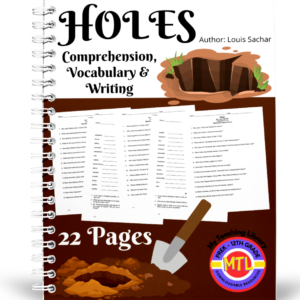
This book unit (Holes by Lousi Sachar) provides reading comprehension questions, vocabulary work and discussion questions in which students will be tasked with writing their answers.
There are 22 pages and split into groups of chapters for ease of assignment/use:
- Chapters 1-5
- Chapters 6-10
- Chapters 11-16
- Chapters 17-22
- Chapters 23-28
- Chapters 29-33
- Chapters 34-39
- Chapters 40-45
- Chapters 46-50
Also included: Extended activity ideas and answer keys
About the book:
Holes is a 1998 novel written by Louis Sachar. It won the 1998 U.S. National Book Award for Young People’s Literature and the 1999 Newbery Medal for the year’s “most distinguished contribution to American literature for children”. The story centers on an unlucky teenage boy named Stanley Yelnats, who is sent to Camp Green Lake, a juvenile corrections facility in a desert in Texas, after being falsely accused of theft. The plot explores the history of the area and how the actions of several characters in the past have affected Stanley’s life in the present. These interconnecting stories touch on themes such as racism, homelessness, illiteracy, and arranged marriage.Interest level:
Grades 4 – 8Reading level:
Grades 3 – 8


&url=https://myteachinglibrary.com/product/the-second-jungle-book-rudyard-kipling/&media=https://myteachinglibrary.com/wp-content/uploads/2019/08/wy-304-b.jpg)


Reviews
There are no reviews yet.