
Category: Science
Showing 41–60 of 152 resultsSorted by latest
-
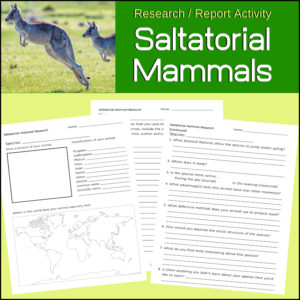
Saltatorial Mammals | Jumping or Leaping | Science Research and Report Activity to Pinterest (opens in a new window)
 $2.50Add to CartOne way of categorizing animals is how they move. Mammals that are designed to jump, hop, gallop, or leap are called Saltatorial mammals such as the kangaroo, leopard, rabbit, horse, antelope and many others! This product is perfect to use as a research and report assignment to have students study mammals that jump, hop, gallop and/or leap! It will guide students through their research and can be used as the end reporting tool!
 -
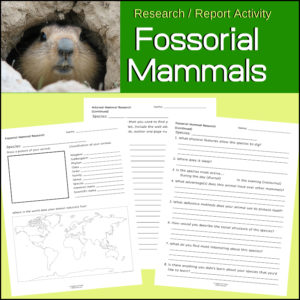
Fossorial Mammals | Ground Dwelling | Science Research and Report Activity to Pinterest (opens in a new window)$2.50Add to Cart
Burrowing, ground dwelling mammals are known as fossorial mammals. Fossorial comes from the Latin fossor, meaning “digger”, thus mammals such as groundhogs, gophers, moles, rabbits and others are in this group. This resource will help students research and report on fossorial mammals as it guides students through their research and can be used as the end reporting tool!
-
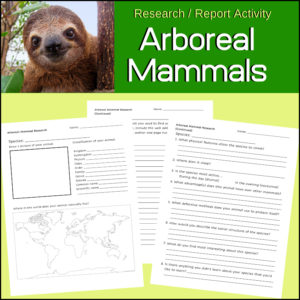
Arboreal Mammals | Tree Dwelling Animals | Science Research and Report Activity to Pinterest (opens in a new window)$2.50Add to Cart
During a study of animals (specifically tree-dwelling, arboreal mammals), students can use this product to research and report on animals such as the koala, monkey, sloth or possum. Any tree dwelling mammal is considered arboreal. Students can use this product as both a guide to their research as well as the end reporting tool!
-
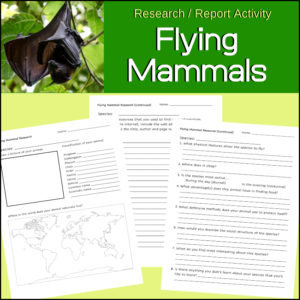
$2.50Add to Cart
In the Science field of Zoology there is a group of mammals that are considered ‘flying’ mammals. This product makes it easy to assign students to research and report on one of these ‘flying’ mammals! Students will be able to use the product to both guide their research and use as their reporting tool.
-
$1.25Add to Cart
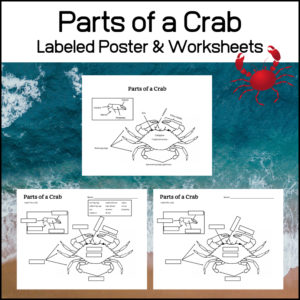
Is your Science class studying (or preparing to study) ocean life, crustaceans or the phylum Arthropoda? This resource, Parts of a Crab – Poster & Worksheets, includes a labeled poster of a crab and 2 worksheets (or quizzes).
-
$3.50Add to Cart
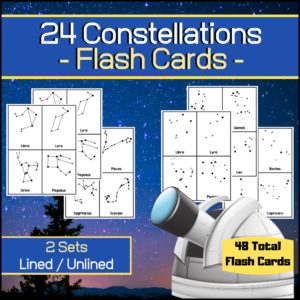
⭐This Astronomy / Science resource, Constellation Flashcards, contains 2 sets of 24 constellations found in the winter northern hemisphere sky.
- Set one has lines that show the stars connected to create the constellation.
- Set two shows only the stars of the constellation (no lines). You can use set two to have students learn the ‘grouping of the stars’ as they actually see them in the sky -or- you can allow students to actually draw the lines on each card to help learn the constellations.
-
$1.00Add to Cart
Easy to use, just print and go…This Vocabulary Terms Definitions Worksheet resource provides a template for students to use time and time again with any subject for any vocabulary that you are asking them to study.
Each page provides space for 5 words. Students will write each terms to be studied and a definition. (Option: If appropriate to the lesson(s), you can assign students to write synonyms or antonyms on the last line as there is plenty of space to do that!)
Use for Language Arts, Science, Social Studies, Math – ANY SUBJECT!
-
Turkey Lapbook | Thanksgiving Science & Fall Interactive Project to Pinterest (opens in a new window)$5.00Add to Cart
Transform your science and seasonal lessons into an engaging, interactive adventure with the Turkeys Lapbooking Unit! Perfect for classroom teachers, homeschool families, and co-op instructors, this 31-page hands-on resource turns ordinary learning into an interactive showcase of student discovery.
From wild turkey biology, classification, and anatomy to holiday traditions, history, and Thanksgiving reflections, this unit bridges life science and social studies in a format students are proud to keep.
Designed with complete instructional flexibility, it empowers educators to scale content up or down depending on the student’s grade, interest, and ability level. Rather than dictating rigid placement, this resource encourages learners to design, organize, and construct their own custom lapbook—fostering ownership, fine motor skills, and organizational thinking.
What’s Included
This 31-page downloadable PDF package is fully stocked with ready-to-print templates, informational reading sheets, and decorative assets:
- Teacher & Student Setup Guides: Easy-to-follow visual instructions for building single-folder, single tri-fold, or expanded double tri-fold lapbook bases.
- Planning & Assessment Tools: A teacher-directed assignment checklist with due dates form and a complete grading rubric.
- Comprehensive Turkey Fact Sheets: High-interest informational reading covering scientific classification, life spans, diets, habitats, reproduction, flight capabilities, senses, and Thanksgiving traditions.
- Vocabulary & Terminology Resources: Curated turkey terminology (poults, hens, toms, rafters, snoods, caruncles, wattles) alongside recommended reading lists.
- Diagrams & Visual Reference: Detailed labeled diagrams illustrating wild turkey anatomy and the physiological differences between hens and gobblers.
- Interactive Mini-Books & Foldables:
- Anatomy flaps and cut-and-paste labeling diagrams
- Question flap-books exploring habitats, predators, diet, flight abilities, and historical trivia
- Pentagonal and hexagonal foldables covering turkey tracks and Native American connections
- Interactive pockets for custom vocabulary flashcards and photo collections
- “Things I’m Thankful For…” craft foldables and reflective writing prompts
- Blank foldout templates for independent research, student-driven questions, and extra writing
- Full-Color Photos & Clipart: Vivid, high-resolution photographs of wild and domestic turkeys, silhouette cut-outs, decorative turkey track trails, and student coloring elements to personalize every project.
Key Educational Benefits
- Promotes Critical Thinking & Ownership: Instead of filling out cookie-cutter worksheets, students arrange and structure their own lapbooks, building real-world spatial planning and organizational skills.
- Multi-Age & Multi-Level Flexibility: Easily adapt the depth of study by selecting the specific mini-books that best match your students’ learning styles, from early elementary to middle school.
- Cross-Curricular Integration: Seamlessly weaves life science, scientific taxonomy, reading comprehension, descriptive writing, and American history into one unified unit.
- High-Engagement, Tactile Learning: Kinesthetic cutting, folding, gluing, and coloring keep active learners focused and excited about biological science.
- All-in-One Convenience: Includes instructional reading, activities, art elements, assignment tracking, and rubrics—cutting down prep time while delivering an enriched educational experience.
How to Use This Resource
- Thanksgiving Themed Unit Study: Dive into the history, folklore, and biology behind North America’s most iconic bird during the weeks leading up to Thanksgiving.
- Hands-On Science Center: Set up printed templates, scissors, and reference books at a classroom station where students complete individual flaps throughout your bird or zoology unit.
- Homeschool Portfolio Project: Guide your child through the research sheets and foldables over a one- or two-week block, creating a keepsake lapbook to showcase in your end-of-year homeschool portfolio.
- Co-Op Science Presentations: Have students research different turkey subspecies, build their lapbooks, and present their finished tri-folds to the group using the included rubric for evaluation.
- Independent Extension: Use the included blank foldables for advanced learners to conduct open-ended library research on wild turkey conservation or behavior.
Get Started Today
Inspire a passion for wildlife science and hands-on discovery in your learning space!
Download the Turkeys Lapbooking Unit today and watch your students create an interactive learning keepsake they will be proud to share!
-
$2.50Add to Cart
Experiments in this book involve Magnets, Air, Electricity,Water, Sound, Sight, Machines, Heat, Chemistry and Plants.The many illustrations are self-explanatory– a great book for budding scientists and teachers.
-
$8.00Add to Cart
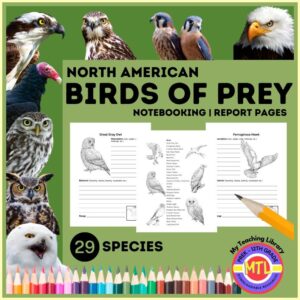
‘North American Birds of Prey’ is a 41-page resource designed to help students organize and present reports for each 29 different birds of prey species!
Each species-specific page includes the name of the bird, an illustration and the following sections: description (size, weight, color, markings, etc.), behavior (breeding, nesting, feeding, vocalization, etc.) and range plus a map of North America.
In addition to the species-specific pages, there are ten additional pages on which students can included additional information, draw their own illustrations, plus add additional species to their projects.
Use alone or add to your lessons: North American Birds of Prey Cards
This resource includes pages for the following birds:
• Great Gray Owl
• Ferruginous Hawk
• Common Black Hawk
• Red-Tailed Hawk
• Barred Owl
• Barn Owl
• Short-Eared Owl
• Prairie Falcon
• Swainson’s Hawk
• Snowy Owl
• Turkey Vulture
• Eastern Screech Owl
• Burrowing Owl
• American Swallow-Tailed Kite
• Elf Owl
• Osprey
• American Kestrel
• Peregrine Falcon
• Bald Eagle
• Northern Goshawk
• Merlin
• Golden Eagle
• Northern Harrier
• Northern Saw-Whet Owl
• Crested Caracara
• Great Horned Owl
• Sharp-Shinned Hawk
• Harris Hawk
• Long-Eared Owl -
$1.50Add to Cart
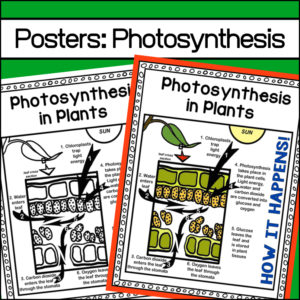
Here are 2 posters (b/w and color) of the process of photosynthesis.
-
$4.50Add to Cart
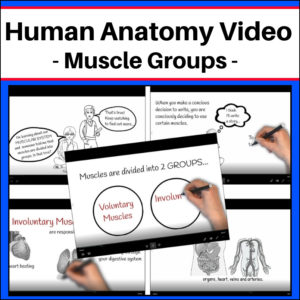
Human Anatomy – Muscle Groups Video has been created to introduce, explain and/or review voluntary and involuntary muscles in the human body. Each group is defined, explained and definitions given. This is great for visual learners!
To add student interest, one student is helping another student learn, interesting graphics have been added and upbeat music fills the background. (Music is easily muted if needed.)
-
$1.50Add to Cart
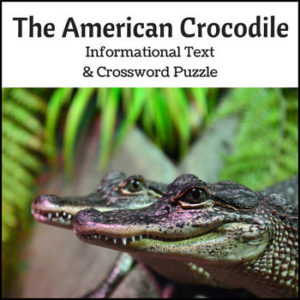
Designed for 5th-8th grade students, American Crocodile Informational Text and Crossword Puzzle will provide students with details about the only crocodile native to the Americas in the following categories:
* Appearance
* Differences from alligators
* Distribution and Habitat
* Food and Growth
* ReproductionAfter reading the text (3 pages), students are to complete the crossword puzzle. Answer Key provided.
-
$8.00Add to Cart
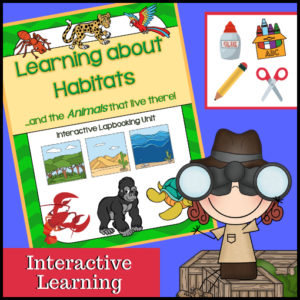
This unit on habitats and the animals that live in each is an interactive learning unit that allows students to be hands-on and create a beautiful project be the completion of the study! Use as a mini-course, in a Science center or in conjunction with another habitat study.
Use the complete unit (or) use only parts of it. Designed for 2nd-4th grades so it has been designed to work well with multiple ages/grades.
Includes:
– Instructions
– Informational text (Definition of habitat plus information on these 8 different habitats: desert, forest, ocean, arctic, wetlands, grasslands, rainforest and jungle)
– Suggested book recommendations for further study
– Project pieces (cover pages, vocabulary, definitions, habitat cards, mini-book, habitat flapbooks, habitat pockets to insert included animal cards, basic needs spinning template, favorite animal templates plus clip art)Comes in both black/white pages as well as color (so you decide if you want to print using color ink or not as well as if you want your students to color or not).
See included habitats and animals in description below.
-
$3.00Add to Cart
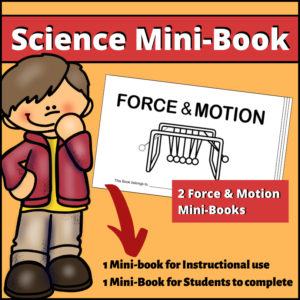
Studying ‘Force & Motion‘ in your classroom? This resource has been designed to help students gain a greater understanding as well as to help them retain the information they are learning!
Includes 2 Mini-Books:
- 1 for instructional Use (Will help with understanding)
- 1 for students to complete (Will help with retention of knowledge)
-
$2.00Add to Cart
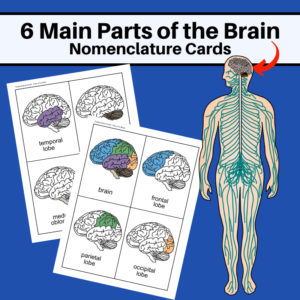
6 Main Parts of the Brain – Human Anatomy Nomenclature Cards – This resource will help students learn and study the following parts of the brain: frontal lobe, parietal lobe, occipital lobe, temporal lobe, cerebellum and the medulla oblongata.
-
$1.25Add to Cart
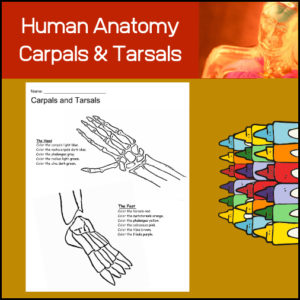
On this one page worksheet titled Carpals and Tarsals, students identify the bones of the hands (+ wrist and lower arm) and feet (+ lower leg): carpals, metacarpals, phalanges, radius, ulna, tarsals, metatarsals, phalanges, calcaneus, tibia and fibula.
Suggested uses: Use in a Science center when studying human anatomy, give as homework or use as a quick quiz. Answer key is provided.
-
$1.99Add to Cart
This cross-curricular resource will inform and assess students’ understanding of the basic process of photosynthesis. Includes both close reading and a cloze activity.