
Category: Earth Science
Showing all 13 resultsSorted by latest
-
 $2.75Buy Now
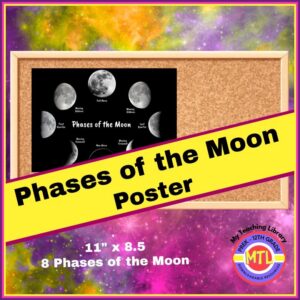
Teaching Earth and Space Science? Looking for a way to visually teach students the different phases of the moon? This “Phases of the Moon: Printable Poster” is for you!
✨ What’s Included:
- – A 1 page black and white, informative poster illustrating the eight phases of the moon.
- – Clear visual representations of the following phases: new moon, waxing crescent, first quarter, waxing gibbous, full moon, waning gibbous, last quarter, and waning crescent.
- – Perfect for a bulletin board display
✅ Perfect ror inspiring curiosity about Earth and space science.
-
 $2.75Buy Now
Looking for an effective way to teach the Phases of the Moon to your middle to high school students? Looking for a no-prep, printable resource that makes teaching space science a breeze? The Phases of the Moon Reading Comprehension (informational text) resource is your perfect solution! You’ll love the ability to use this resource as a one-day, quick lesson or how easily it can integrate into your existing curriculum, providing clear explanations and reinforcing key concepts.
✨ What’s Included:
- – Detailed reading passages explaining the phases of the moon: new moon, waxing crescent, first quarter, waxing gibbous, full moon, waning gibbous, last quarter, and waning crescent.
- – Information on the days to complete the cycle and the concepts of synchronous rotation and tidal locking.
- – A comprehensive assessment featuring short answer and multiple-choice quiz questions.
- – An easy-to-use answer key for quick grading.
✅ Perfect For…
- – Introducing or reviewing the Phases of the Moon in middle school science classes.
- – No-prep science lesson
- – Reinforcing reading comprehension skills within a science context.
This resource is built upon the pedagogical approach of making real-world connections to science. By explaining the observable phenomenon of the moon’s changing appearance, students can directly relate the concepts to their everyday experiences.
📚 Learning Objectives
- Students will be able to identify and describe the eight major phases of the moon.
- Students will understand the relationship between the Earth, Moon, and Sun that causes the different moon phases.
- Students will be able to explain the concept of synchronous rotation and tidal locking.
- Students will be able to determine the approximate duration of the lunar cycle.
- Students will improve their reading comprehension skills by extracting key information from scientific text.
-
 $11.00Buy Now
Study the ⭐STARS ⭐with this constellation bundle! Includes a complete unit with informational text, visuals, flashcards and assessment quizzes. See description below for full details!
-
$2.00Buy Now
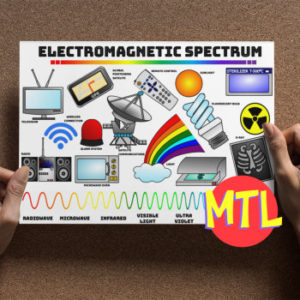
Give students a visual representation of the electromagnetic spectrum from the radiowave to gamma rays with this classroom Science poster.
-
Sale!Original price was: $15.00.$12.00Current price is: $12.00.Buy Now
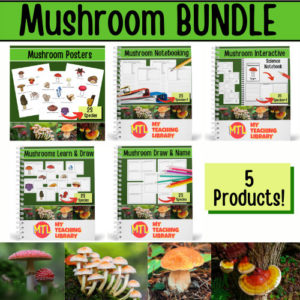
My Teaching Library has bundled 5 MUSHROOM products to help you SAVE and have a variety of fantastic classroom resources to help you teach…
- – If you teach Science for 6th-12th grades, this bundle is for you!
- – If you teach an outdoor nature-based class, this bundle is for you!
- – If you want to give your student(s) a fun, research-based unit study, this bundle is for you!
-
$2.00Buy Now
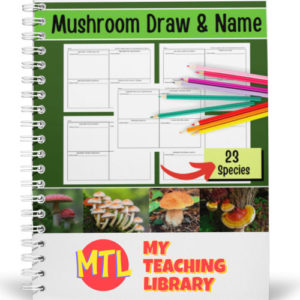
Mushroom worksheets designed for students to draw and write the common name of 23 given species. Perfect for any Science or Biology classroom studying fungi!
There are 6 worksheets (5 with 4 named species and 1 with 3). On each worksheets, students are to write the common name of the given species and draw a picture.
-
$4.00Buy Now
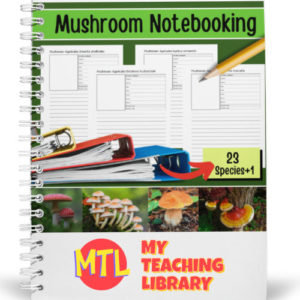
Students will use these notebooking pages to record information about 23 different species of mushrooms. Perfect for a Science or Biology classroom studying fungi!
In addition to the named 23 species, student are given an extra page to add additional species if they choose (or if you instruct them to add others).
On each page, students will draw a picture of the species, give the complete scientific classification and record additional information they learn through research, reading books or using the current curriculum.
-
$3.50Buy Now
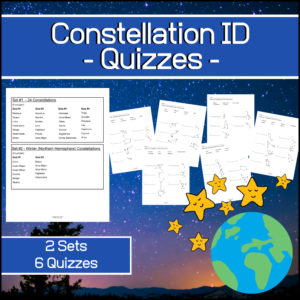
⭐Use this resource, Constellation Quizzes, to assess student knowledge of the constellations as they appear in the winter northern hemisphere sky. I’ve included 2 sets (with a total of 6 quizzes).
⭐Northern Hemisphere – Winter Constellations
⭐Each quiz will give students pictures and names of constellations and students will need to identify (match) each.
-
$3.50Buy Now
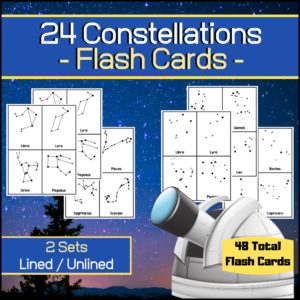
⭐This Astronomy / Science resource, Constellation Flashcards, contains 2 sets of 24 constellations found in the winter northern hemisphere sky.
- Set one has lines that show the stars connected to create the constellation.
- Set two shows only the stars of the constellation (no lines). You can use set two to have students learn the ‘grouping of the stars’ as they actually see them in the sky -or- you can allow students to actually draw the lines on each card to help learn the constellations.
-
$1.50Buy Now
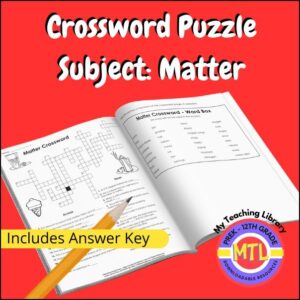
This fun crossword puzzle is a great way for students to review what they know about matter! If students need help, page 2 contains a ‘word box’ to give students terms from which to choose! Answer Key also provided.
Sample clues:
- At 32 degrees Fahrenheit, water ___.
- This is a very light gas found in some balloons.
- The amount of matter something contains is its ___.
-
FREEBuy Now
This free curriculum resource is from the Minerals Education Coalition.
-
$1.00Buy Now
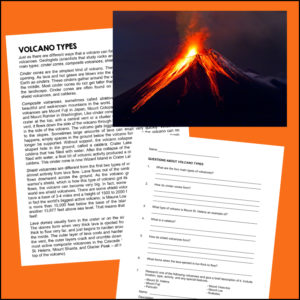
Here is a one page informational article to help students (6th-9th grades) learn about the various types of volcanoes and characteristics of each. After reading the text, student will answer questions to assess their comprehension.
-
$4.50Buy Now
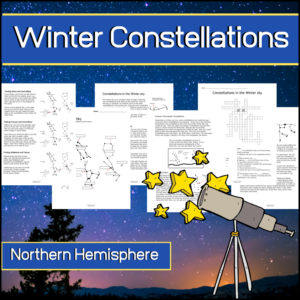
Explore the Northern Hemisphere’s Winter constellations with this resource! Students will learn…
- What are the major constellations?
- What is the Greek Mythology behind them?
- What major stars will help guide them through the night sky?
- How is Orion the ‘key’ to locating the main constellations?
- What is the name of the North Star, and which constellation is it in?
- What is the brightest star in the sky?
Students will learn about the following constellations:
- Orion
- Canis Major
- Canis Minor
- Gemini
- Auriga
- Pleiades
- Taurus
- Draco
- Ursa
- Major
- Ursa Minor
- Cepheus
- Cassiopeia
They will learn the location of the following stars:
- Pollux
- Castor
- Capella
- Procyon
- Sirius
- Betelgeuse
- Rigel
- Aldebaran
- Capella
- Polaris
They will also learn which constellations are called the Northern Circumpolar constellations PLUS the Greek Mythology behind these major constellations!
Student activity sheets include:
- Fill in the blank (constellation and star names for the ‘Winter Sky’)
- Draw and name (the five circumpolar constellations and the North Star)
- Crossword Puzzle (in which they will use the information within the resource to gather answers)
Suggested follow up activities:
- Assign students to go outside after dark, find and draw the constellations they see and can identify.
- Visit a local planetarium