
Category: 6th-8th
Showing 81–100 of 145 resultsSorted by latest
-
 $2.00Add to Cart
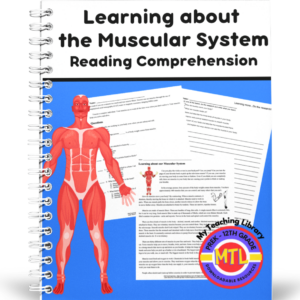
Students will read about the muscular system and learn facts such as how many muscles are in the body, what are muscle fibers, the three different types of muscles and much more. After reading and learning about the body / human anatomy, students will answer multiple choice questions.
Also included: A research and writing activity that may be assigned at your discretion!
Answer Key provided.
Reading level:
Flesch-Kincaid Grade Level: 5.3
Linsear Write Formula : 5.1 -
$3.00Add to Cart
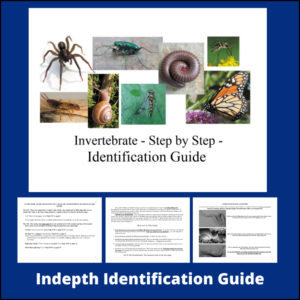
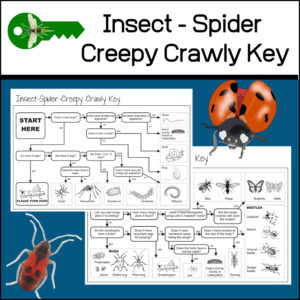
This 21 page resource will take students step by step through a guided identification process for invertebrates. This key is designed for 6th – 12th grades.
-
$1.00Add to Cart
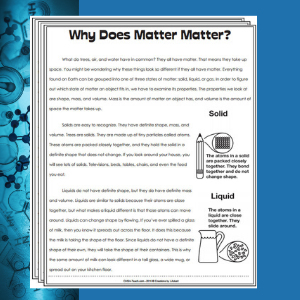
This informational text will help define matter and its 3 main stages (solid, liquid and gas). After students read the article, they will be asked comprehension questions to assess their understanding. Answer Key also included.
-
FREEAdd to Cart
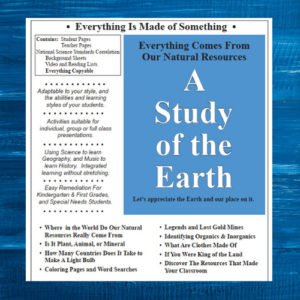
This free curriculum resource is from the Minerals Education Coalition.
-
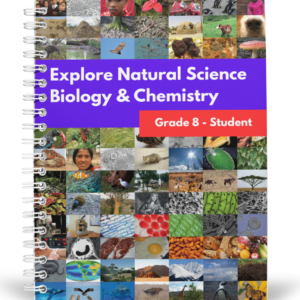
Natural Science: Biology & Chemistry – Grade 8 (Student Edition) to Pinterest (opens in a new window)$15.00Add to Cart
This Biology and Chemistry student textbook is designed to use with middle school students (specifically those learning at or ready for 8th grade work). View the table of contents in the description below.
Watch a video preview of this product here.
Get the TEACHER’S EDITION here!
Bundle and Save: 8th Grade Science Curriculum Bundle
-
$2.00Add to Cart
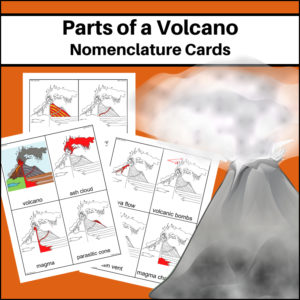
Parts of a Volcano – Nomenclature Cards – This resource will help students learn and study the various parts of a volcano: ash cloud, magma, parasitic cone, lava & ash layers, side vent, crater, pyroclastic flow, lava flow, volcanic bombs, main vent, and magma chamber.
-
$4.50Add to Cart
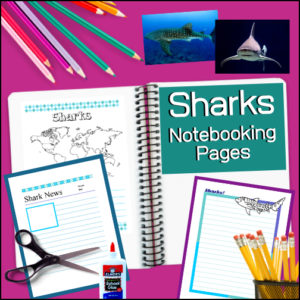
There are over 500 known species of sharks in the world! Most students love studying sharks and this unit has been created to help students record the knowledge they learn during a study on sharks as well as personal reflections of what has been learned.
This resource includes:
- – Creating a Notebooking Project…What is Notebookiing?
- – Supply list
- – Teacher pages
- – Student organizational pages
- -‘Jump off’ Questions designed to get students thinking about the different shark related questions they can research
- – 32 Notebooking pages
Notebooking is a coined term for what can also be referred to as educational journaling or scrapbooking.
-
Botany & Plant Science Unit Study: Interactive Project-Based Learning for Grades 2-6 to Pinterest (opens in a new window)$10.00Add to Cart
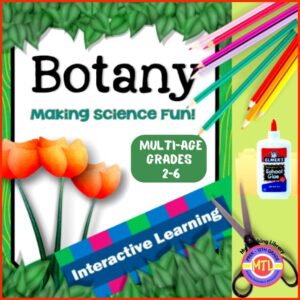
🌿 Botany – Plants | Interactive Learning Unit 🪴
Transform your science lessons into a hands-on adventure!
Ready to turn your science lesson plans into a thriving garden of knowledge? This Interactive, Project-Based Botany Unit is the ultimate resource for parents and educators looking to make science come alive. Designed with flexibility in mind, this resource grows with your students, making it perfect for multi-age learning environments (Grades 2nd–6th).
🍃 What’s Inside?
Give your students an engaging, deep dive into the world of plants. This resource covers everything from the microscopic details of a cell to the fascinating world of carnivorous plants:
-
Classification 🗂️: Learn how scientists group the green world.
-
Photosynthesis ☀️: Discover the magic of how plants turn sunlight into food.
-
The Plant Cell 🔬: A closer look at the building blocks of life.
-
Parts of the Plant 🌱: From roots to petals, understand how every part has a job.
-
Needs for Growth 💧: Exploration of the essential elements: water, light, soil, and air.
-
The Life Cycle 🔄: Follow the journey from a tiny seed to a mature plant.
-
Leaf Study 🍃: Diving into the shapes, functions, and beauty of foliage.
-
Specialty Species 🌵: Explore the “wild side” with non-flowering, carnivorous, and poisonous plants!
✨ Why You’ll Love It:
From a homeschooling parent: “Finally, a resource that works for my whole family! I can teach my 2nd grader and 5th grader at the same time with activities that challenge them both.”
From a classroom teacher: “Perfect for differentiated learning!“-
Project-Based Learning: Move beyond the worksheet! Students engage in hands-on projects that solidify their understanding.
-
Differentiated for Grades 2–6: The content is adaptable, allowing you to scale the complexity up or down depending on your students’ needs.
-
Interactive & Engaging: Keeps “boredom” at bay with activities that encourage curiosity and scientific inquiry.
-
No-Prep & Easy to Use: Whether you are in a traditional classroom or at the kitchen table, this unit is organized and ready to go.
Get ready to watch your students’ curiosity bloom! 🌸
-
-
$1.25Add to Cart
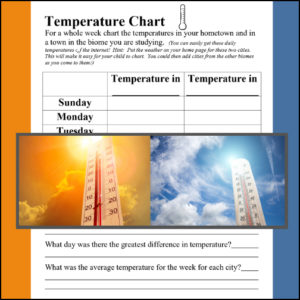
A biome is a large geographical area that contains distinct plant and animal groups which are adapted to live in that environment. There can be many different habitats in a biome. Some major biomes are tundra, taiga, grasslands, deciduous forest, fresh water, desert, alpine, rainforest and ocean. When studying a specific biome, use this temperature comparison chart to record the temperature in the student’s hometown and the biome of study for a week! (Use again and again with each biome studied)
Science meets Geography
-
$9.75Add to Cart
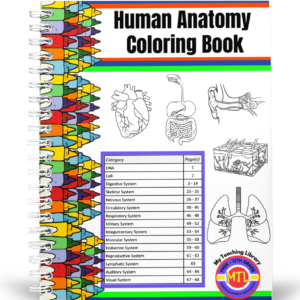
This 68-page anatomy coloring book has been designed for 5th-12th grade classrooms (Health, Science, Anatomy, Biology, Physiology).
Categories:
- DNA
- Cell
- Digestive System
- Skeletal System
- Nervous System
- Circulatory System
- Respiratory System
- Urinary System
- Integumentary System
- Muscular System
- Endocrine System
- Reproductive System
- Lymphatic System
- Auditory System
- Visual System
-
$2.00Add to Cart
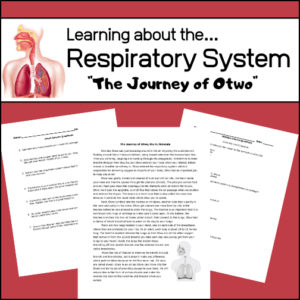
Students will learn about the respiratory system by following Otwo (the oxygen molecule) as he goes from bouncing around in the outside air into the human body! After reading the story, students will complete two worksheets (multiple choice and short answer) to access their understanding. Answer keys provided.
-
$1.00Add to Cart
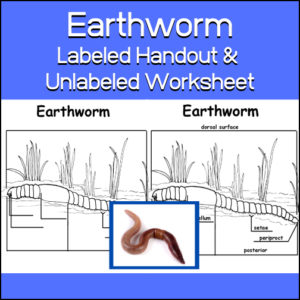
The earthworm is an annelid. The annelids , also known as the ringed worms or segmented worms, are a large phylum, with over 22,000 species which includes earthworms, ragworms, and leeches. This resource includes a labeled handout (showing the following parts: mouth, prostomium, clitellum, setae, periproct) and a worksheets for students to label.
-
$5.00Add to Cart
This BIOLOGY / HEALTH / ANATOMY / BODY SYSTEMS resource centers around the human nervous system and is a notebooking project unit. This interactive 56 page resource will require students to perform research and can be used independently or along side your curriculum.
-
$1.00Add to Cart
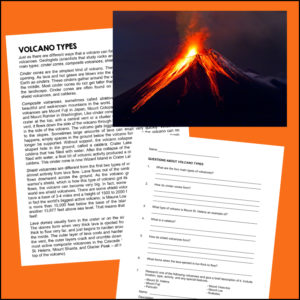
Here is a one page informational article to help students (6th-9th grades) learn about the various types of volcanoes and characteristics of each. After reading the text, student will answer questions to assess their comprehension.
-
$2.50Add to Cart
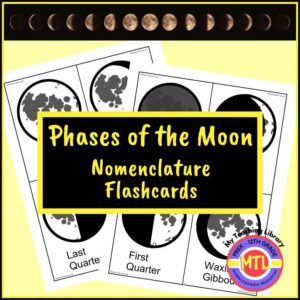
Teaching about the different phases of the moon? Get “Earth Science: Moon Phases Nomenclature Flashcards” to help students learn and identify the 8 different phases of the moon, regardless of grade level.
✨ What’s Included:
- Printable Nomenclature / flash cards for hands-on learning.
- Clear and concise labeled illustrations of each of the following moon phases: new moon, waxing moon, first quarter, waxing gibbous, full moon, waning gibbous, last quarter and waning crescent
✅ Perfect For…
- – Earth Science and general science lessons
- – Engaging students with moon phases and astronomy concepts.
This resource is built on the belief that understanding scientific terminology should be an active and interactive process. By utilizing a nomenclature-based approach, these flashcards encourage students to not only memorize terms but also to actively engage with the visual and conceptual aspects of moon phases. This method fosters deeper understanding and retention, making complex scientific ideas more accessible and memorable for every learner.
📚 Learning Objectives
- – Students will be able to identify and name the different moon phases.
- – Students will understand and define key Earth Science vocabulary related to the moon.
Transform your science lessons with these dynamic and effective Earth Science Vocabulary Moon Phases Nomenclature Flashcards! They are a fantastic tool to illuminate the wonders of space science for your students.
Click Add to Cart today!
-
$3.00Add to Cart
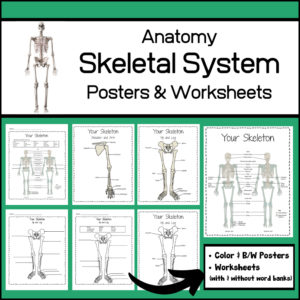
This ANATOMY / BIOLOGY / HEALTH resource includes 3 sets of human skeleton posters and worksheets to help you teach the names of major bones. Each set has a color poster (great for bulletin boards) and b/w poster (great for student handouts) and each worksheet comes with and without a word bank. Bones: Skull (cranial portion, facial portion), clavicle, scapula, sternum, ribs, vertebral column, hip bones (pelvic girdle), humerus, ulna, radius, carpals, metacarpals, phalanges, femur, patella, tibia, fibula, tarsals, metatarsals.
-
 $1.00Add to Cart
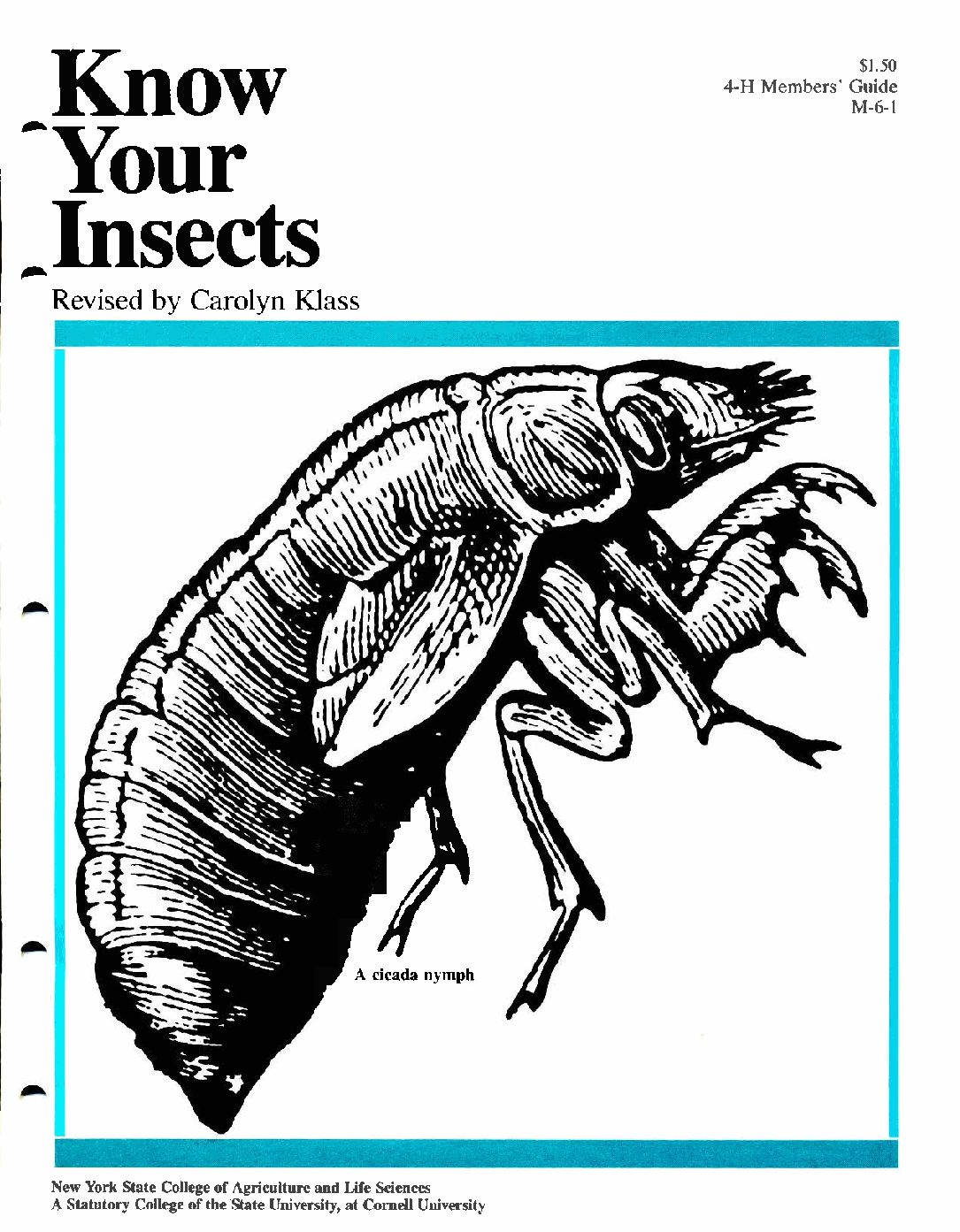
This is a small (15 page) old handout to help students learn basics about insects and how to mount them when creating an insect collection.
-
$1.00Add to Cart
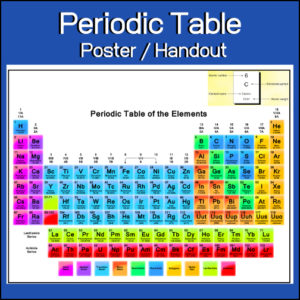
You can use this resource as a poster or a handout – the Periodic Table of Elements (with a ‘how to read each element’ visual model).
The table shows all elements through 103 Lr and is color coordinated showing:
– alkali metal
– alkaline earth
– transition metal
– basic metal
– semimetals
– nonmetals
– halogens
– noble gas
– langthanides
– actinides -
$2.75Add to Cart
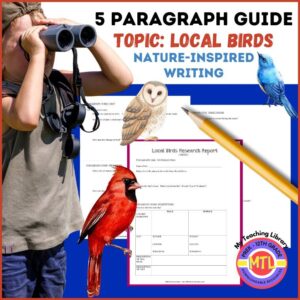
Easy-to-use, step-by-step, print-and-go guide for students to use as they learn to write a 5-paragraph essay! This nature-themed resource has a local bird focus and guides students as they research, observe and write about one bird species that lives in their local area.
This 3-page resource outlines paragraph by paragraph what to include and gives space for students to write detailed notes.
What will students learn and observe about a bird species before they begin writing?
– where the bird geographically lives
– habitat(s) where they are most likely found
– physical characteristics (coloring, markings, size, bill, feet)
– diet (herbivore, carnivore, omnivore) and where/how they find/gather their food
– predators and self-protection
– interesting factsPlus, this guide will encourage students to reflect on what they have learned.
Once completed, students will be able to take the guide and their notes and write amazing 5-paragraph essays!
Use once as one assignment for one bird of their choice or use again and again to create an entire collection of essays on local birds. Regardless of where you live, these pages will have students observing and learning about local birds.


&url=https://myteachinglibrary.com/product/natural-science-biology-chemistry-student-editi-2/&media=https://myteachinglibrary.com/wp-content/uploads/2019/08/Z-257-Biology-Chemistry-Grade-8-Student-1024x1024.png)


