
Category: Miscellaneous
Showing 761–780 of 850 resultsSorted by latest
-
 $4.99Add to Cart
This download contains 229 student pages PACKED with 1st Grade learning! In it, you’ll find a variety of fun and engaging worksheets, puzzles and activities that will allow students to learn, practice and review needed skills: Addition, Subtraction, Number Sense, Greater than / Less than, Fractions, Shapes, Patterns, Money, Writing, Rhyming, Classification, Phonics, Syllables, Reading, Sight Words and more!
-
 $3.00Add to Cart
National Arbor Day is celebrated every year on the last Friday in April; however some states have selected their own dates for Arbor Day. The customary observance is to plant a tree. On the first Arbor Day, April 10, 1872, an estimated one million trees were planted.
This 23 page resource has been designed for 2nd-3rd grades to learn more about arbor day and trees!
-
$0.50Add to Cart
Here is a FUN Veterans Day word search. Words: sacrifice, military, hero, veteran, November, country, honor, war, freedom, protect, serve, soldier, Air Force, Army, Coast Guard, Navy, Marines.
-
$6.99Add to Cart
Create a cute, colorful interactive bulletin board for your students. Change up on a daily basis teaching a variety of time and calendar Math skills!
-
$0.50Add to Cart
Designed for early readers (Kindergarten, 1st and 2nd grades), this reading log has space to log up to 10 books and is flexible as you choose if students turn it in based on every 10 books read or if it is used for a specific date range!
At the bottom of the form, students will record the title and author of their favorite book.
-
$1.25Add to Cart
When students are doing library research for articles to help with a project, they need to be able keep a record of articles they find and the correct citation for each. This worksheet has been designed to give them a tool to keep track of article citations and a quick reference for when they cite each within a project.
-
$3.00Add to Cart
⭐ Grammar QUICK Reference chart – Perfect to display in the classroom and/or give as a handout to students for a quick reference guide!
This 2-page reference defines and gives examples of:
- common nouns
- proper nouns
- plural nouns
- adjectives
- pronouns
- verbs (present and past)
- adverbs
- abbreviations and titles (language and math)
This is a color version / PRINT AND USE!
-
$3.00Add to Cart
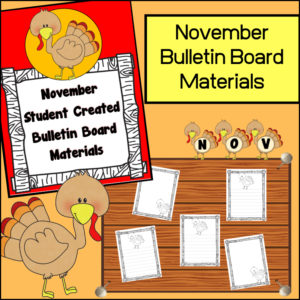
Create a FUN and COLORFUL November / Thanksgiving * Student – Created * Bulletin Board by displaying student published writing when using these materials.
See more information in description below.
-
$2.00Add to Cart
A fun Math graphing activity which will have students polling people they know about recycling habits and then graphing their results !
Suggested times to use:
- Students are learning to use tally marks
- Students need practice creating a graph
- An Earth Day project
- When learning about recycling
-
$7.00Add to Cart
Create multiple literacy centers with this gingerbread man themed resource! Use in the month of December if you want to make Christmas-themed centers or use anytime if you want to center it around the story of the Gingerbread Man.
Here is what you’ll get:
- – 3 Differentiated Unit Suggestions (for using with the very young learning their letters through using with students who can form words – both basic CVC words to words formed with digraphs and blends.)
- – 27 pages of letter and word family cards (for a total of 162 cards) –
Includes:
— Gingerbread man cards for the alphabet
— Gingerbread man cards for each of these word families: ab, at, ad, an, am, all, ack, age, ail, ain, ake, ale, ame, ank, ap, ar, ash, ate, aw, ay, eat, eel, eep, eet, ell, en, ent, est, ice, ick, ide, ife, ile, ill, in, ine, ing, ink, ip, it, oat, ock, og, oil, oke, oo, ood, oof, ook, oom, ool, oon, oop, oot, op, ore, orn, ot, out, ow, own, uck, ug, ump, un, unk
— Gingerbread man cards for common digraph and blend cards: bl, br, ch, cl, cr, dr, fl, fr, gl, gr, pl, pr, sc, sh, sk, sl, sm, sn, sp, st, sw, th, tr, tw, wh, wr, sch, scr, shr, sph, spl, spr, squ, str, thr
— Add blank cards (not included in the above total) - – Word Mat & Word recording worksheets
- – Themed word family posters: ack, ad, age, ail, ain, ake, ale, all, am, ame, an, ank, ap, ar, ash, at, ate, aw, ay, eat, eel, eep, eet, ell, en, ent, est, ice, ick, ide, ife, ile, ill, in, ine, ing, ink, ip, it, oat, ock, og, oil, oke, oo, ood, oof, ook, oom, ool, oon, oot, op, ore, orn, ot, out, ow, own, uck, ug, ump, un, unk
- – 2 Word making recording sheets
- – Word Mat
-
$3.00Add to Cart
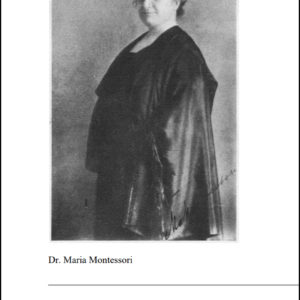
Maria Montessori educational methods: She adapted the traditional teacher-taught subjects in the arts and science so that the children could use materials to guide their open-ended research and to follow their individual interests, working to a much higher level than was previously (and is presently!) thought possible for children of this age. The elementary child, when allowed to work independently instead of being taught in groups led by a teacher, and in classes with a mixed age group of 6-12- year-old students inspiring and teaching each other, masters academic subjects usually not taught until middle or high school.
She believed that each child is born with a unique potential to be revealed, rather than as a “blank slate” waiting to be written upon. Her main contributions to the work of those of us raising and educating children are in these areas:
-
Preparing the most natural and life-supporting environments for the child
-
Observing the child living freely in this environment
-
Continually adapting the environment in order that the chid may fulfill his or her greatest potential, physically, mentally, emotionally, and spiritually.
-
-
$5.00Add to Cart
With this quick and easy download, you will have a coloring book that provides 1 coloring page for each president: Washington to (47) Trump!
-
$2.50Add to Cart
An informational text to both inform students about the first Thanksgiving as well as assess there reading comprehension.
The text gives students a clear understanding of the history behind the holiday we call ‘Thanksgiving’ as well as how it is a story of struggle, hope and resilience. Students will learn that many people groups (including Native Americans and Europeans) celebrated with harvest festivals for thousands of years before the Pilgrims arrived at Plymouth Rock. They will learn why history records the Pilgrims’ event as the ‘first Thanksgiving’ and what it symbolized for the people. They’ll also learn that Sarah Hale (during the Civil War) petitioned for a national celebration and which president declared it a national holiday and why!
This resource includes:
- -2 pages of informational text (Key ideas: harvest festivals, celebration of success, hope and gratitude / Historical references: Plymouth festival with the pilgrims and the Wampanoag, Sarah Hale (and her petition for a national celebration of Thanksgiving) as well as President Lincoln.)
- -3 pages to assess reading comprehension (short answer and short essay)
- -Answer key
Flesch Reading Ease score: 70.5 (text scale)
Flesch-Kincaid Grade Level: 7.9
Automated Readability Index: 9.1 -
$4.50Add to Cart
Looking for a meaningful and engaging way to observe Veterans Day with your students or group? Bring history and gratitude to life this November with this exciting Veterans Day Bingo Game! Perfectly designed for up to 30 players, this interactive activity is an exceptional educational tool to use just before or after the holiday. More than just a game, it serves as a dynamic vocabulary springboard, featuring a robust list of 36 essential terms ranging from historical concepts like armistice and alliance to core character values such as valor, courage, and sacrifice. Whether you are reinforcing a history unit or introducing younger learners to the vocabulary of respect, this B-I-N-G-O game offers a perfect blend of learning and seasonal fun that will keep participants enthusiastic and engaged.
-
$0.50Add to Cart
This recording tool can be used by teacher or student to record class scheduling for one quarter. It includes room for up to 5 ‘blocks’ with 9 rows under each block. It is set up so that it can be used to record different days and times for each block and is very flexible!
-
$3.00Add to Cart
✏️A student-centered resource to help students learn and practice research skills, report writing, project and presentation skills.
Students will use this project-based unit to learn about and report on Thurgood Marshall. Thurgood Marshall (son of a slave) was a lawyer, civil rights activist, and associate justice of the Supreme Court of the United States (1967–91), the first African American member of the Supreme Court. As an attorney, he successfully argued before the U.S. Supreme Court the case of Brown v. Board of Education of Topeka (1954), which declared unconstitutional racial segregation in American public schools.
✏️This notebooking project unit can be assigned individually or within cooperative groups. Use it within a Language Arts classroom or a Social Studies / U.S. History classroom. Very flexible and cross-curricular! After completing the written portion of this resource, you can grade it (or) assign students to do an oral and/or audio-visual presentation based on their findings/work.
✏️What is in this resource?
- Student instructions for using biographical notebooking, project pages
- Suggested research questions
- Student notebooking, project pages (includes covers, KWL, reference recording, report writing, and more)
- Teacher pages (instructions, assignment, evaluation)
-
$1.75Add to Cart
Fun, Spring-themed crossword puzzle for students to complete. There are two versions, one without and one with a word bank. Answer key included.
Why Crossword puzzles? Many word puzzles require not just a good vocabulary and a knack for spelling, but the ability to think logically and strategically. For example, crosswords make your child think about how the words interact on the grid. If students aren’t familiar with completing crossword puzzles, they often start out thinking that they can’t possibly do it, but by the time they’ve solved three or four clues, they’ve tuned in to what’s required. It encourages them to think outside the box as well as to stay focused.
-
$2.50Add to Cart
Maria Montessori educational methods: She adapted the traditional teacher-taught subjects in the arts and science so that the children could use materials to guide their open-ended research and to follow their individual interests, working to a much higher level than was previously (and is presently!) thought possible for children of this age. The elementary child, when allowed to work independently instead of being taught in groups led by a teacher, and in classes with a mixed age group of 6-12- year-old students inspiring and teaching each other, masters academic subjects usually not taught until middle or high school.
She believed that each child is born with a unique potential to be revealed, rather than as a “blank slate” waiting to be written upon. Her main contributions to the work of those of us raising and educating children are in these areas:
-
Preparing the most natural and life-supporting environments for the child
-
Observing the child living freely in this environment
-
Continually adapting the environment in order that the chid may fulfill his or her greatest potential, physically, mentally, emotionally, and spiritually.
-