
Tag: Earth Science
Showing all 17 resultsSorted by latest
-
 $5.75Add to Cart
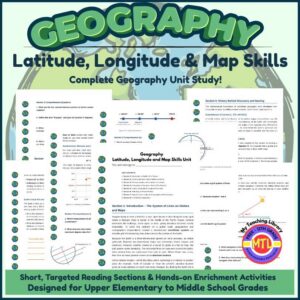
Take the Mystery Out of Map Coordinates!
Are your students struggling to understand how latitude and longitude work? Do they get confused between parallels and meridians, or mix up the coordinate order?
This comprehensive, ready-to-print geography unit provides an all-in-one solution for teaching global coordinates, navigational history, map grids, and climate zones! Designed specifically for 5th-8th grade level learners, this unit breaks down complex spatial concepts into clear, engaging, and scannable lessons accompanied by custom visual reference diagrams for every section.
📦 What’s Included in This Downloadable PDF Packet?
This Student Workbook & Teacher Resource includes everything you need for a full geography unit:
Section 1: Introduction – The System of Lines on Globes and Maps
- Covers why mapmakers created grid systems, how 3D spherical globes differ from flattened 2D maps, and the difference between absolute location and relative location.
- Includes Figure 1.1: Globe Grid Intersection Diagram.
Section 2: Drawing the Earth Grid & Reference Points
- Defines nature’s fixed reference points (North & South Poles), the Equator (), Northern/Southern Hemispheres, Parallels, and Meridians.
- Includes Figure 2.1: Reference Points & Parallel Lines Diagram.
Section 3: Finding Latitude and Longitude Coordinates
- Breaks down the mandatory (Latitude, Longitude) ordering rule, memory tricks (“Latitude = Ladder”), degree ranges (– N/S vs – E/W), and subdivisions into minutes () and seconds () using real examples like the Statue of Liberty.
- Includes Figure 3.1: Map Coordinate Grid Plotting Diagram.
Section 4: Navigation at Sea and in the Air (The Sextant)
- Explores celestial navigation, how sailors use a sextant to measure Polaris (the North Star) for latitude, combining solar angles with Greenwich Mean Time (GMT) for longitude, and why the U.S. Navy still teaches sextants today.
- Includes Figure 4.1: Celestial Navigation Sightline & Horizon Angle Diagram.
Section 5: History Behind Discovery and Naming
- Chronicles key historical figures: Eratosthenes (calculating Earth’s size), Hipparchus ( circle grid), Ptolemy (Geographia and Latin roots latitudo / longitudo), and John Harrison’s invention of the marine chronometer to solve the “Longitude Problem”.
- Includes Figure 5.1: Historical Discovery Timeline Diagram.
Section 6: How the Prime Meridian Was Selected
- Details the International Meridian Conference of 1884 in Washington, D.C., why Greenwich, England was chosen, and how the Prime Meridian defines the Eastern and Western Hemispheres.
- Includes Figure 6.1: Prime Meridian & Eastern/Western Hemispheres Diagram.
Section 7: Special Lines of Latitude & Longitude and the Seasons
- Connects geography to Earth science! Explores the Equator, Tropics of Cancer & Capricorn (), Arctic/Antarctic Circles (), climate boundaries ( and parallels), and how Earth’s axial tilt creates the four seasons.
- Includes Figure 7.1: Earth Axial Tilt & Special Lines Diagram.
Section 8: Full Geography Unit Review Assessment
- A unit test featuring Multiple Choice (Part I), True/False (Part II), and Short Answer & Hemisphere Identification (Part III).
Complete Teacher Answer Keys
- Contains full, detailed answer keys for all section comprehension questions as well as the complete review assessment test.
🧠 Core Social Studies & Map Skills Covered
- Spatial Thinking & Coordinate Plotting: Correctly reading, writing, and pinpointing coordinates in format.
- Absolute vs. Relative Location: Differentiating between permanent mathematical coordinates and landmark-based descriptions.
- Hemispheric Geography: Categorizing global positions across Northern, Southern, Eastern, and Western Hemispheres.
- Historical Inquiry & Technology: Understanding how human innovation (from Greek astronomy to 18th-century clocks and sextants) solved global navigation challenges.
- Integrated Earth Science: Analyzing how Earth’s rotational axis tilt () and solar ray directness create distinct seasonal and climate zones along specific parallels.
💡 Why You’ll Love This Unit
- Visual Learning Centered: Every lesson includes a dedicated reference diagram (globe grids, coordinate planes, horizon sightlines, timelines, axial tilts) so visual learners grasp abstract spatial concepts immediately.
- Built-in Student Worksheets: Every section ends with 4 short-answer comprehension questions that work as exit tickets, daily quizzes, or notebook prompts.
- Zero Prep Required: Open, print, and teach!
🎯 How to Use Suggestions
- 2-Week Unit Study: Teach 1 section per day. Have students read the section text, analyze the visual figure, and complete the 4 comprehension questions. Conclude the second week with the Section 8 Review Assessment.
- Independent Unit: Perfect for self-paced independent learning. Multi-grade classrooms or families can work through the readings together and use the visual diagrams to lead discussions.
🛒 Ready to Master Geography & Navigation?
Equip your students with lifetime map-reading confidence, historical context, and spatial reasoning skills!
Includes High-Value Components:-
Structured Content: 7 full instructional reading sections covering core concept skills, history, and real-world application (e.g., sextant navigation, Greenwich conference).
-
Built-in Assessment: Section-by-section comprehension questions plus a full unit review test.
-
Convenience: Complete answer keys for all sections and tests.
-
STEM / Hands-On Enrichment: Multi-sensory lab activities (cardboard sextant lab, edible orange-peel map projection, living history journal entry)
Get yours today!
-
$3.25Add to Cart
☁️ Your little meteorologists will love learning about clouds with this resource!
Bring the wonders of the sky right into lesson plans! This mini-unit is designed to transform “looking up” into a meaningful scientific discovery. Whether you are teaching a weather unit or just looking for a fun literacy-based science activity, this packet has everything you need to help young learners learn about the floating clouds above them!
📖 What’s Inside the Reader?
Our engaging, easy-to-read student book covers the “highs and lows” of cloud science:
- Cloud Basics: A clear explanation of what clouds actually are (hint: it’s more than just cotton candy!).
- The Three Levels: Learn where clouds “live”—High, Middle, and Low.
- Meet the Clouds: Detailed descriptions and visuals for 8 common cloud types:
- Cirrus, Cirrocumulus, Altocumulus, Altostratus, Cumulus, Stratocumulus, and the mighty Cumulonimbus.
- Visual Diagram: Specifically designed for visual learners to see the “layer cake” of our atmosphere.
- Weather Predictions: Learn what cloud tells us about the weather coming our way!
- Interactive Observation: A built-in drawing and writing activity where students step outside to observe and describe the sky in real-time. 🌤️
📝 The Worksheets
Reinforce learning and practice fine motor skills with four purposefully designed activity pages:
- Cloud Review: On the different types of clouds, whether they are high, middle or low and what each looks like.
- Handwriting & Copy Work: Students practice sentence writing while perfecting their print.
- Matching: A fun challenge to match cloud names with their pictures.
- The Artist’s Sky: A creative drawing activity where students illustrate their favorite cloud formations! 🎨
✨ Why Teachers & Parents Love It
- No-Prep: Just print and go!
- Cross-Curricular: Combines Science, Reading, and Handwriting.
- Age-Appropriate: Made approachable for primary learners through clear visuals and simple definitions.
🚀 Get Ready to Skyrocket Your Science Lesson!
Ready to turn your students into cloud experts? Add this “Learning About Clouds” unit to your curriculum today and watch their curiosity soar!
-
Lunar Eclipse Mini Book: Earth Science – Learning about the Moon to Pinterest (opens in a new window)$2.75Add to Cart
Looking for a fun way to teach students about the captivating phenomenon of a lunar eclipse? Add “Lunar Eclipse Mini Book: Earth Science – Learning about the Moon,” to your cart today, download and print! This resource will make complex space science accessible and exciting for young learners.
✨ What’s Included:
- – Five printable PDF pages that transform into a 10-page, student-created mini book.
- – Kid-friendly explanations of lunar eclipses, perfect for comprehension.
- – A dedicated page for students to illustrate their own lunar eclipse drawing.
📚 Learning Objectives
- – Students will be able to identify when a lunar eclipse can occur.
- – Students will understand the concepts of the umbra and penumbra shadows.
- – Students will be able to describe the conditions necessary for a total lunar eclipse.
- – Students will learn why total lunar eclipses can exhibit colorful hues.
- – Students will recognize and name the different phases of a lunar eclipse.
-
Sale!Original price was: $3.00.$2.25Current price is: $2.25.Add to Cart
Hands on learning! This BUNDLE includes two products that will help students gain an understanding of what happens during a solar eclipse!
What’s included:
-
– A solar eclipse activity designed to help students visualize a solar eclipse through using common objects to actually demonstrate one.
-
– A solar eclipse activity designed to help students visualize a solar eclipse by creating a simple paper model of an eclipse.
-
-
$55.00Add to Cart
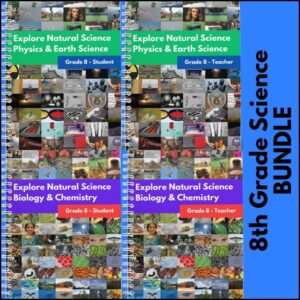
This complete bundle is a full year of 8th grade science! Comes complete with two student textbooks and two teacher editions:
Natural Science: Biology & Chemistry – Grade 8 (Student Edition)
Natural Science: Biology & Chemistry – Grade 8 (Teacher’s Edition)
Natural Science: Physics & Earth Science – Grade 8 (Student Edition)
Natural Science: Physics & Earth Science – Grade 8 (Teacher’s Edition)Preview video of one of the student textbooks: Biology & Chemistry
See the table of contents for each student edition below:
-
$55.00Add to Cart
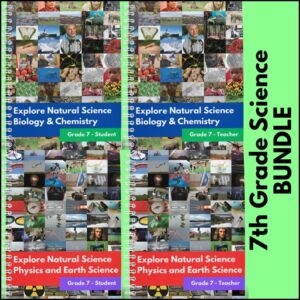
This complete bundle is a full year of 7th grade science! Comes complete with two student textbooks and two teacher editions:
Natural Science: Physics & Earth Science – Grade 7 (Student Edition)
Natural Science: Physics & Earth Science – Grade 7 (Teacher’s Edition)
Natural Science: Biology & Chemistry – Grade 7 (Student Edition)
Natural Science: Biology & Chemistry – Grade 7 (Teacher’s Edition)Watch a short video preview of the Physics & Earth Science student edition here.
See the table of contents for each student edition below:
-
$2.50Add to Cart
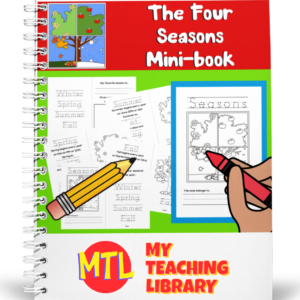
Students will learn about the four seasons, (winter, spring, summer and fall) while creating a cherished 12 page science mini-book! For each season, students will learn when that season begins and a fact about it.
Example: For spring, students will learn that spring begins every year on March 19th or 20th and that spring is warm and flowers begin to grow. Whey will be coloring, as well as tracing words and pictures! (Some seasons have more than one date when it may begin, as you see in the spring example. This allows this resource to be used every year and can be a springboard to a discussion as to why this is true if appropriate.)
-
$3.00Add to Cart
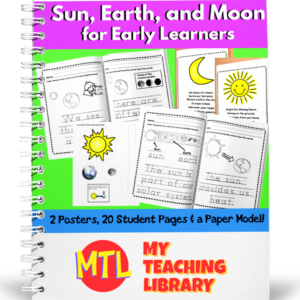
This unit is designed to help early learners learn about the sun, earth and moon through fun, engaging activities! Students will learn that the sun supplies heat and light to the earth, that the moon reflects light from the sun and rotates around the earth, that there are different phases of the moon (specifically in this unit: full, half and crescent), and more! Includes:
– 2 posters
– 20 student pages
– 1 interactive model craft -
$6.00Add to Cart
Whether you are simply looking for informational text resources or you are studying landforms, if your teaching grades 5th-8th, this resource is perfect! The resource includes 25 reading pages with questions about a given landform. Questions include both short answer and true/false.
Flesch-Kincaid levels range from 5.5 – 8.3
These are short reading passages with 5 – 7 questions after each.
-
$2.00Add to Cart
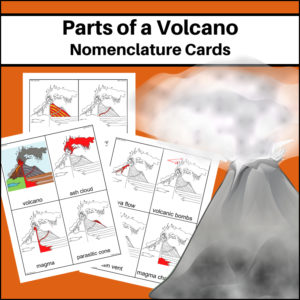
Parts of a Volcano – Nomenclature Cards – This resource will help students learn and study the various parts of a volcano: ash cloud, magma, parasitic cone, lava & ash layers, side vent, crater, pyroclastic flow, lava flow, volcanic bombs, main vent, and magma chamber.
-
$1.50Add to Cart
Hands on learning! A solar eclipse activity designed to help students visualize a solar eclipse through using common objects to actually demonstrate one.
-
$1.50Add to Cart
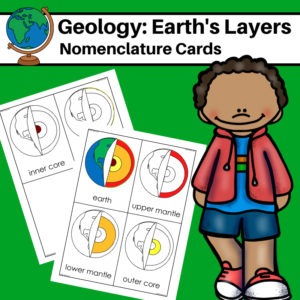
This resource, Earth’s Layers – Nomenclature Cards, will help your students learn the names of the layers of the Earth: upper mantle, lower mantle, outer core, inner core, and crust.
I’ve also included a set of blank cards for students to use and label themselves!
-
Natural Science: Physics & Earth Science – Grade 7 (Student Edition) to Pinterest (opens in a new window)$15.00Add to Cart
This physics and earth science student textbook is designed to use with middle school students (specifically those learning at or ready for 7th grade work). View the table of contents in the description below. Preview video here.
Get the TEACHER’S EDITION here!
Bundle and Save: 7th Grade Science Curriculum Bundle
-
$1.50Add to Cart
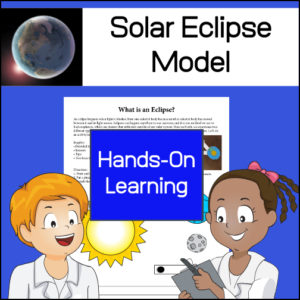
Hands-on learning! This solar eclipse activity has been designed to help students visualize a solar eclipse by creating a simple paper model of one.
-
Natural Science: Physics & Earth Science – Grade 7 (Teacher’s Edition) to Pinterest (opens in a new window)$15.00Add to Cart
This is the teacher’s edition for Natural Science: Physics & Earth Science – Grade 7 (Student Edition)
Preview the student edition here.
Bundle and Save: 7th Grade Science Curriculum Bundle
-
Natural Science: Physics & Earth Science – Grade 8 (Student Edition) to Pinterest (opens in a new window)$15.00Add to Cart
This Physics and Earth Science student textbook is designed to use with middle school students (specifically those learning at or ready for 8th grade work). View the table of contents in the description below.
Preview video of the companion 8th Grade Science: Biology & Chemistry textbook here.
Get the TEACHER’S EDITION here!
Bundle and Save: 8th Grade Science Curriculum Bundle




&url=https://myteachinglibrary.com/product/natural-science-physics-earth-sci-7th-student/&media=https://myteachinglibrary.com/wp-content/uploads/2019/08/Z-260-Natural-Science-Gr-7-Physics-Earth-Student-1024x1024.png)

&url=https://myteachinglibrary.com/product/natural-science-physics-earth-sci-7th-teacher/&media=https://myteachinglibrary.com/wp-content/uploads/2019/08/Z-260-Natural-Science-Gr-7-Physics-Earth-Teacher-1024x1024.png)
&url=https://myteachinglibrary.com/product/natural-science-physics-earth-sci-8th-student/&media=https://myteachinglibrary.com/wp-content/uploads/2019/08/Z-256-Physics-Earth-Science-8th-Grade-Student-1024x1024.png)