
Only logged in customers who have purchased this product may leave a review.
Products
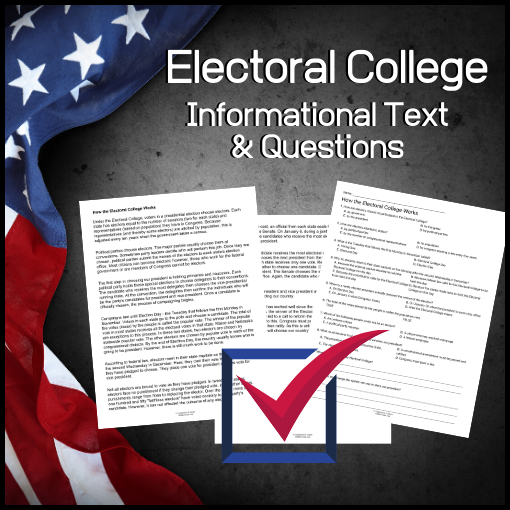
Electoral College | Informational Text
$1.50
Help your students understand the Electoral College and how it functions in the democratic process of electing a United States president. This resource explains the process, how electors are chosen, how many electors represent each state, what happens on election day as well as January 6th, the amendment that implemented the Electoral College and more.
After students read the passage, they will answer 7 multiple choice, 1 true/false and 2 short answer questions. Answer key provided.
Flesch-Kincaid Grade Level: 5.91
Fry Readability Grade Level: 6
Related products
-
 $4.50Add to Cart
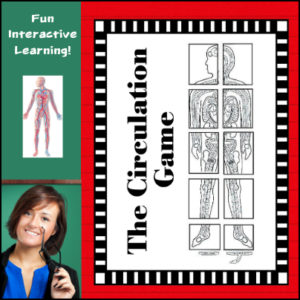
A fun, interactive game that will have students learn all about the circulatory system!
- – deliver oxygen and food to the cells
- – have oxygen and carbon dioxide ‘ride’ on red blood cells
- – circulate red blood cells throughout the body – through the circulatory system (arteries and veins)
The first team to get all their oxygen to the cells, all the food to the cells, all the wastes to the kidneys and all the carbon dioxides to the lungs, wins the game!
-
$3.25Add to Cart
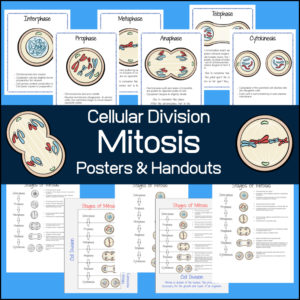
Let’s face it: Trying to explain the “dance of the chromosomes” without clear visuals is a recipe for confused faces. This resource simplifies the complex process of cellular division into digestible, visually engaging steps.
🔍 What’s Inside?
This resource covers the full cycle of mitosis, ensuring your students see the “big picture” of how cells replicate.
The Phases Outlined:
- Interphase: The prep work (DNA replication).
- Prophase: Chromosomes condense and the party starts.
- Metaphase: Everyone aligns in the middle.
- Anaphase: The great separation.
- Telophase: Two new nuclei form.
- Cytokinesis: The final split!
Included Versions:
- 🎨 Full Color: Perfect for high-impact classroom decor or digital presentations.
- 🗒️ Black & White: Ideal for student handouts, coloring activities, or saving on ink.
- ✍️ With Explanations: Includes detailed text describing the events of each phase.
💡 Why You’ll Love This
1. Visual Clarity for Abstract Concepts Mitosis is hard to visualize! These posters provide a clear “anchor” for students to refer back to when they get stuck on the difference between anaphase and telophase.
2. Differentiation Made Easy With both “labeled” and “blank” versions, you can easily scaffold your instruction. Use the labeled version for an introductory lecture and the blank version for a formative assessment.
3. Saves You Prep Time Stop scouring the internet for clear, high-quality diagrams. These are ready to print and use immediately. ☕🏫 Suggested Grade Levels & Subjects
- Grades: 6th – 10th Grade
- Subjects: Life Science, General Science, and Biology
-
$3.00Add to Cart
This resource is filled with fun activities for students to use whenever they are studying the presidents or for Presidents day! Activities include a word search, an acrostic poetry page, presidential trivia, a ‘Which President’ worksheet, two picture graphs (Washington and Lincoln) and report / notebooking pages. Answer Keys are provided!
Great for any classroom around Presidents Day in February (or) in a Government / Civics class (or) American History class anytime of the year. Designed for 5th, 6th, 7th, and 8th graders.
See description below for more info.
-
$3.25Add to Cart
This book unit (Holes by Lousi Sachar) provides reading comprehension questions, vocabulary work and discussion questions in which students will be tasked with writing their answers.
There are 22 pages and split into groups of chapters for ease of assignment/use:
- Chapters 1-5
- Chapters 6-10
- Chapters 11-16
- Chapters 17-22
- Chapters 23-28
- Chapters 29-33
- Chapters 34-39
- Chapters 40-45
- Chapters 46-50
Also included: Extended activity ideas and answer keys
About the book:
Holes is a 1998 novel written by Louis Sachar. It won the 1998 U.S. National Book Award for Young People’s Literature and the 1999 Newbery Medal for the year’s “most distinguished contribution to American literature for children”. The story centers on an unlucky teenage boy named Stanley Yelnats, who is sent to Camp Green Lake, a juvenile corrections facility in a desert in Texas, after being falsely accused of theft. The plot explores the history of the area and how the actions of several characters in the past have affected Stanley’s life in the present. These interconnecting stories touch on themes such as racism, homelessness, illiteracy, and arranged marriage.Interest level:
Grades 4 – 8Reading level:
Grades 3 – 8


Reviews
There are no reviews yet.