


Description
All-Access members do not pay for this or any resource.
Become an All-Access member today!
________________________
|
Get the MOST from My Teaching Library by connecting with us here: |

$3.00
Looking for a print and go, 1st, 2nd, and 3rd grade science activity that makes learning about insects a blast? Get ready to buzz with excitement! Your search is over with this “Nonfiction Insect Mini-Book | Easy Reader Printable Science Activity.” It’s the perfect way to spark curiosity and make nonfiction science accessible and fun for your young learners.
✨ What’s Included:
✅ Perfect For…
This resource is crafted with a passion for making science come alive through real-world connections. My Teaching Library believes in the power of project-based learning and hands-on activities to foster a deep love for science. By allowing students to actively create, explore, and express their learning, this mini-book transforms abstract concepts into tangible, memorable experiences. It empowers students to become active learners and critical thinkers, building confidence as they discover the amazing world of insects!
📚 Learning Objectives
All-Access members do not pay for this or any resource.
Become an All-Access member today!
________________________
|
Get the MOST from My Teaching Library by connecting with us here: |
Only logged in customers who have purchased this product may leave a review.
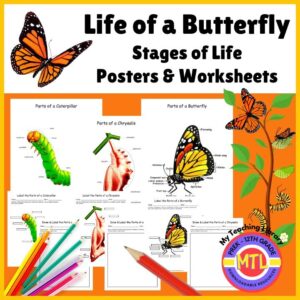
This Science / Biology resource provides colorful posters and worksheets for 3 stages of a butterfly’s life cycle: caterpillar, chrysalis, adult butterfly.
Each stage of life comes with a poster (labels showing the parts) and the following 3 worksheets:
#1: Students will label a picture of the specific stage and are given the names of the parts they are to label
#2: Students will label a picture of the specific stage but are not given the names of the parts (as they should have those memorized)
#3: Students are to both draw and label the specific stage. Parts they are to label of given.
What parts are labeled for each stage?
BONUS: All pages are also included in B/W format!
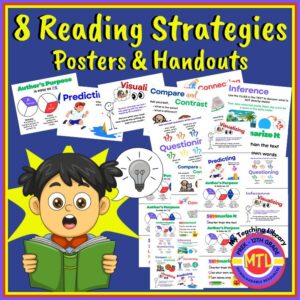
Colorful and eye-catching reading comprehension strategy posters and handouts that will help readers connect and understand what they are reading. When using these strategies, students will be actively engaged in and analyzing the written text. They will activate prior knowledge, seek to understand the author’s purpose, ask questions (about characters, setting and events), predicting, visualize, infer, summarize, compare and contrast and question.
This resource includes:
Strategies included:
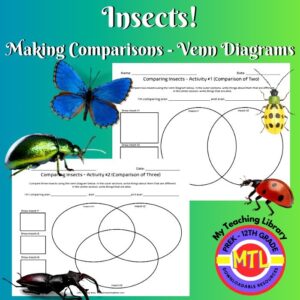
TWO ready to use Venn Diagram Science activities for students to use to compare 2 or 3 insects. On each, students will list the insects they will compare and contrast, draw a picture of each and then complete the Venn Diagram.
Extend the activity by asking students to write a paragraph or short report about their discoveries!
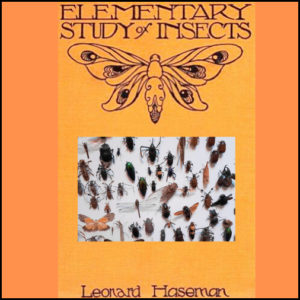
This is a downloadable copy of the book.
About the book: This book was written in 1923 by Leonard Haseman and can be a good tool to use when beginning to study insects.


Reviews
There are no reviews yet.