


Only logged in customers who have purchased this product may leave a review.
Products
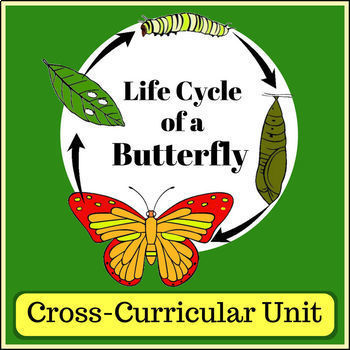
Life Cycle of a Butterfly | Cross-Curricular Learning
$4.00
Butterfly Life Cycle Unit is a 49 page cross-curricular unit offering Language Arts, Science, Math and Art activities! By the end of your study, students will know all about the life cycle of the butterfly.
What is included? Puzzles, posters, worksheets (for tracing, matching, coloring, and completing the life cycle), coloring pages, songs, life cycle mini-book (for students to complete) and even a craft project.
Related products
-
 $2.50Add to Cart
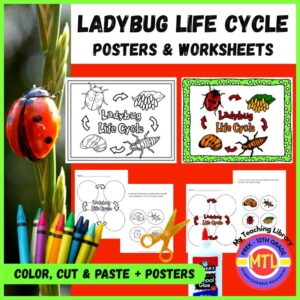
A great resource to display and to get students hands-on putting together their own life cycle of the ladybug!
⭐Benefits of this resource:
- -Low prep – print and use/
- -Children learn about the ladybug life cycle both visually (poster) and in a fun and hands-on way as they color, cut and glue (worksheets).
- -Can be used to introduce the life cycle, or as a review/assessment to check understanding.
- -Encourages fine motor/scissor skills and sequencing.
- -Differentiated can be achieved by deciding if students are allowed to have the poster as a reference when completing their own life cycle.
- -Finished worksheets can be inserted into an interactive notebook.
⭐What else is included?
- -2 Life cycle posters (Color and Black/White) You can always allow students to color the b/w poster and keep.
- -2 student pages (worksheets). Students will color and cut out the 4 stages of the ladybug life cycle from the first page and glue in the correct sequence on the second page.
-
$1.75Add to Cart
Students can create and publish a story, poem or report using this kite shape book. Includes:
- – 2 covers
- – 3 ‘inside’ pages (one blank & 2 single-lined)
- – templates to make a kite ‘tail’ to add to the book using yarn or string
-
$2.75Add to Cart
🌻 Watch their knowledge grow!
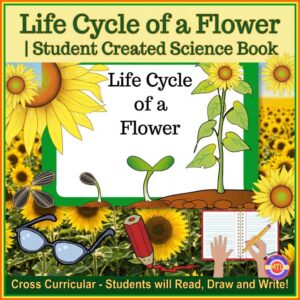
This interactive, cross-curricular project blends Science and Literacy to help students master the plant life cycle while building essential writing and reading skills.
In this activity, students don’t just read about plants—they become the authors and illustrators of their very own science journals!
🔍 How It Works: The “Read, Draw, Write” Method
This resource uses a simple, research-based three-step process on every page to reinforce learning and accommodate different ability levels:
- Read It: Students read a short, informative sentence about a specific stage in the life cycle or a plant’s needs.
- Draw It: Students visualize the concept by illustrating the page, which helps increase retention of scientific information.
- Write It: Students practice fine motor skills and vocabulary by copying the text into the provided primary or standard lines.
🧪 Key Science Concepts Covered:
- What Plants Need: Students identify and record the four essentials for life: Soil, Water, Sun, and Air.
- The Life Cycle Stages: Step-by-step pages detailing the transformation from Seed to Sprout, then to Seedling, and finally to a Mature Flower.
❤️ Why You’ll LOVE This Resource:
- Cross-Curricular Magic: Effortlessly check off Next Generation Science Standards (NGSS) and Common Core ELA standards in one engaging activity.
- Perfect for Portfolios: Creates a tangible “keep-sake” book that students are proud to take home and read to their families.
- Low Prep & High Engagement: Just print, staple, and go!
- Differentiated for Early Learners: Great for Pre-K, Kindergarten, and 1st-grade writers practicing letter formation and scientific sequencing.
Tip: Pair this book with a hands-on bean planting activity! Students can use their “Student Created Science Book” to document the growth they see in their own real-life seeds.
Bring the beauty of Spring and new growth into your lesson plans today and let your students’ creativity bloom!
-
$2.50Add to Cart
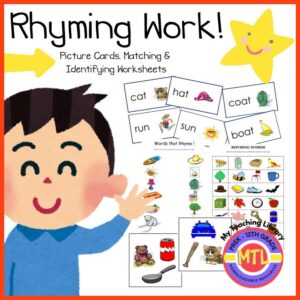
This resource teaches 30 rhyming words through picture flashcards and 8 easy matching worksheets.
Teaching rhyming words aids in teaching early literacy skills like phonemic awareness and fluency development. When children learn to rhyme, it helps them develop the ability to break words down into smaller parts like puzzle pieces.



Reviews
There are no reviews yet.