
Category: Life Science
Showing 21–40 of 106 resultsSorted by latest
-
 $2.00Add to Cart
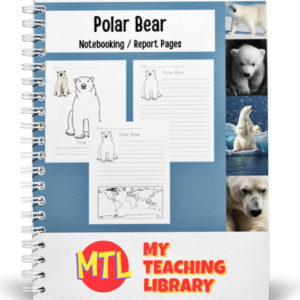
Students will love using these pages to create a report on the polar bear! Perfect to use during a study of the arctic region, tundra animals or as a cross-curricular unit that will have students reading, writing, completing map work (geography) and learning about the life of the polar bear (science).
Check out My Teaching Library’s article: Learning about the Polar Bear!
-
Sale!Original price was: $6.00.$5.00Current price is: $5.00.Add to Cart
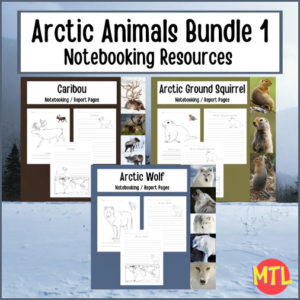
This Arctic Animal Notebooking Bundle includes three products: Arctic Wolf, the Arctic Ground Squirrel and the Caribou. Each individual resource can be used when studying the arctic habitat, tundra animals or as a cross-curricular unit that will have students reading, writing, completing map work (geography) and learning about the lives of these animals (science).
-
 $2.00Add to Cart
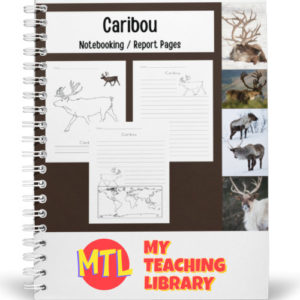
Students will love using these pages to create a report on caribou, also known as the reindeer! Perfect to use during a study of the arctic region, tundra animals or as a cross-curricular unit that will have students reading, writing, completing map work (geography) and learning about the life of the caribou (science).
Check out My Teaching Library’s article: Caribou or a Reindeer?
-
 $2.00Add to Cart
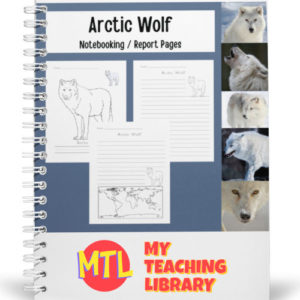
Students will love using these pages to create a report on the Arctic wolf also known as the polar wolf! Perfect to use during a study of the arctic region, tundra animals or as a cross-curricular unit that will have students reading, writing, completing map work (geography) and learning about the life of the wolf (science).
Check out My Teaching Library’s article: Learning about the Arctic Wolf!
-
 $2.00Add to Cart
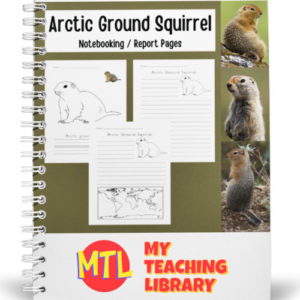
Students will love using these pages to create a report on the cute, Arctic ground squirrel that lives in Alaska, Canada and Siberia! Perfect to use during a study of the arctic region, tundra animals or as a cross-curricular unit that will have students reading, writing, completing map work (geography) and learning about the life of this cute little squirrel (science).
Check out My Teaching Library’s article: Arctic Ground Squirrel
-
$3.00Add to Cart
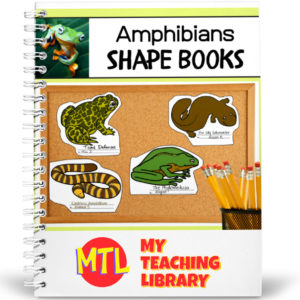
Here are four different amphibian shape books for student self-publishing! There are two for frogs/toads, one for salamanders and one for caecilians.
Students can use these shape book patterns to write stories, poems, and reports. Each book pattern has a cover page, a blank page and two pages with lines. Students can use as many pages as they need to complete their work and then fasten together with staples, ribbon or string.
-
$2.00Add to Cart
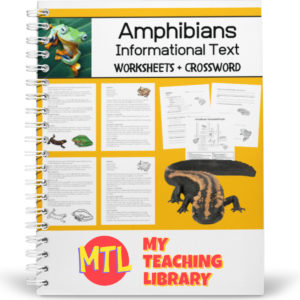
This resource has been designed to teach students about amphibians. They will learn the classification, the three types of amphibians, where they live (habitat), what the eat (diet), how they protect themselves (defense) and more.
Includes:
– Informational Text (b/w and color)
– 2 page worksheet
– Crossword puzzle
– Answer Keys
– BONUS: Large list of amphibian species -
$2.00Add to Cart
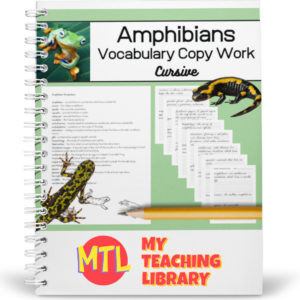
Studying amphibians? Help students learn important amphibian related vocabulary words and definitions while practicing copy work and handwriting (cursive). This resource include 22 vocabulary words and definitions. (See below description for included words)
-
$1.50Add to Cart
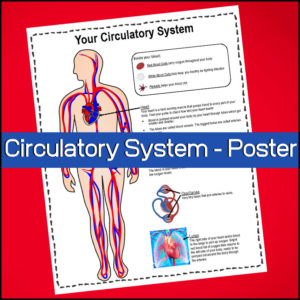
Here is a classroom poster describing the basics of the human body’s circulatory system. Perfect for a Science or Health bulletin board.
The poster outlines basic functions for the following:
- heart
- arteries
- veins
- capillaries
- lungs
- red blood cells
- white blood cells
- platelets
-
$2.50Add to Cart
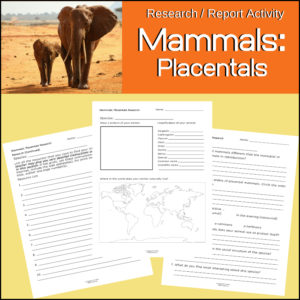
Placental mammals are the most diverse group of mammals with about 4000 discovered species and include dogs, cats, rodents, elephants, whales, cattle, pigs, humans and many more! If you are planning a study on these mammals, this product will guide students through their research and can be used as the end reporting tool!
-
$2.50Add to Cart
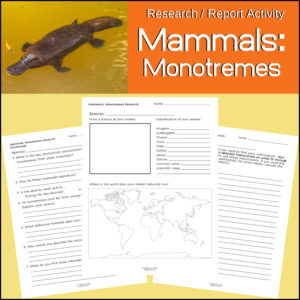
This science, animal study activity is designed to guide your students through the researching and reporting of any egg laying mammal (also known as Monotremes). These unusual mammals only reside in Australia and New Guinea. There are only five known species of monotremes: the platypus and four species of echidna.
This product will guide students through their research and can be used as the end reporting tool!
-
$2.50Add to Cart
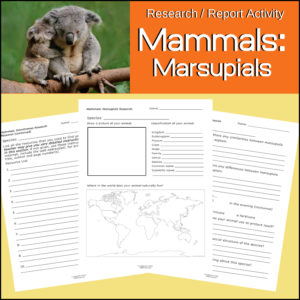
Students love kangaroos, wallabies, koalas and other pouch carrying animals also known as marsupials! This resource will guide students through their research on these amazing pouch carrying animals and can be used as the end reporting tool!
-
$2.50Add to Cart
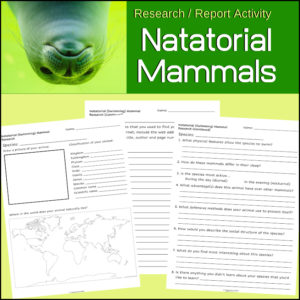
Any mammal designed to swim such as a whale, sea lion, seal or walrus is considered a natatorial mammal. The term natatorial comes from the Latin natātor, natātōrem meaning “swimmer”. This product is perfect for your students if you want to assign a research & report project on water dwelling mammals. It will guide students through their research and can be used as the end reporting tool!
-
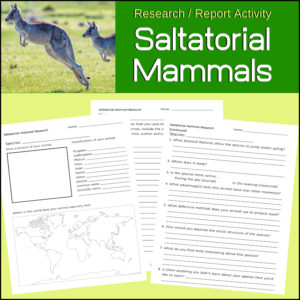
$2.50Add to CartOne way of categorizing animals is how they move. Mammals that are designed to jump, hop, gallop, or leap are called Saltatorial mammals such as the kangaroo, leopard, rabbit, horse, antelope and many others! This product is perfect to use as a research and report assignment to have students study mammals that jump, hop, gallop and/or leap! It will guide students through their research and can be used as the end reporting tool!
-
$2.50Add to Cart
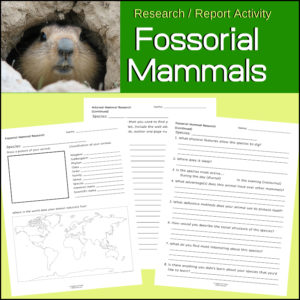
Burrowing, ground dwelling mammals are known as fossorial mammals. Fossorial comes from the Latin fossor, meaning “digger”, thus mammals such as groundhogs, gophers, moles, rabbits and others are in this group. This resource will help students research and report on fossorial mammals as it guides students through their research and can be used as the end reporting tool!
-
$2.50Add to Cart
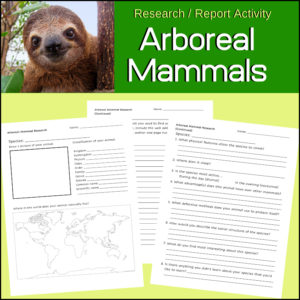
During a study of animals (specifically tree-dwelling, arboreal mammals), students can use this product to research and report on animals such as the koala, monkey, sloth or possum. Any tree dwelling mammal is considered arboreal. Students can use this product as both a guide to their research as well as the end reporting tool!
-
$2.50Add to Cart
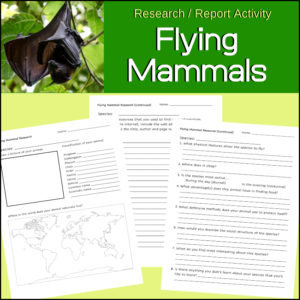
In the Science field of Zoology there is a group of mammals that are considered ‘flying’ mammals. This product makes it easy to assign students to research and report on one of these ‘flying’ mammals! Students will be able to use the product to both guide their research and use as their reporting tool.
-
$1.25Add to Cart
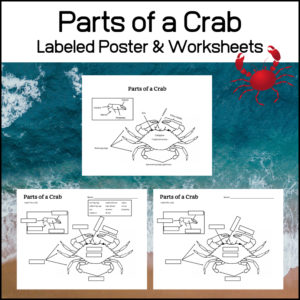
Is your Science class studying (or preparing to study) ocean life, crustaceans or the phylum Arthropoda? This resource, Parts of a Crab – Poster & Worksheets, includes a labeled poster of a crab and 2 worksheets (or quizzes).
-
$5.00Add to Cart
Whether you are studying turkeys because you want to focus on one species of bird or if it is because you want a fun topic to study around Thanksgiving, your students will love to create their very own turkey lapbook!
What is a lapbook?
A lapbook is simply a file folder that contains a variety of “mini books,” foldables, and other material that cover detailed information about the lapbook’s central topic. A lapbook might accompany a unit study, elaborate on a book or serve as a guidebook or portfolio.
Creating a lapbook is one activity that will allow students to take charge of their own learning and creativity!
What this resource includes:
- teacher instructions
- visual of how to set up a lapbook
- teacher assignment page
- Lapbooking rubric
- Turkey informational pages
- Turkey related vocabulary
- Suggested books on turkeys
- Templates to guide and report information about turkeys
- 2 photo/picture – clipart pages
A little about ‘the turkey’: Benjamin Franklin would have preferred to have the Wild Turkey, not the Bald Eagle, chosen as the national symbol of the United States. Although the barnyard variety seems to be (according to some sources) lacking intelligence, the original wild form is a wary and magnificent bird. Wild Turkeys usually get around by walking or running, but they can fly strongly, and they typically roost overnight in tall trees.