
Category: Life Science
Showing 41–60 of 106 resultsSorted by latest
-
 $8.00Add to Cart
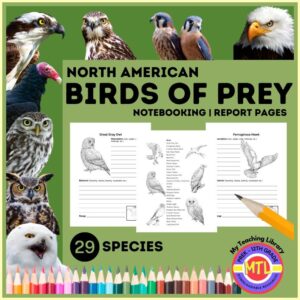
‘North American Birds of Prey’ is a 41-page resource designed to help students organize and present reports for each 29 different birds of prey species!
Each species-specific page includes the name of the bird, an illustration and the following sections: description (size, weight, color, markings, etc.), behavior (breeding, nesting, feeding, vocalization, etc.) and range plus a map of North America.
In addition to the species-specific pages, there are ten additional pages on which students can included additional information, draw their own illustrations, plus add additional species to their projects.
Use alone or add to your lessons: North American Birds of Prey Cards
This resource includes pages for the following birds:
• Great Gray Owl
• Ferruginous Hawk
• Common Black Hawk
• Red-Tailed Hawk
• Barred Owl
• Barn Owl
• Short-Eared Owl
• Prairie Falcon
• Swainson’s Hawk
• Snowy Owl
• Turkey Vulture
• Eastern Screech Owl
• Burrowing Owl
• American Swallow-Tailed Kite
• Elf Owl
• Osprey
• American Kestrel
• Peregrine Falcon
• Bald Eagle
• Northern Goshawk
• Merlin
• Golden Eagle
• Northern Harrier
• Northern Saw-Whet Owl
• Crested Caracara
• Great Horned Owl
• Sharp-Shinned Hawk
• Harris Hawk
• Long-Eared Owl -
 $1.50Add to Cart
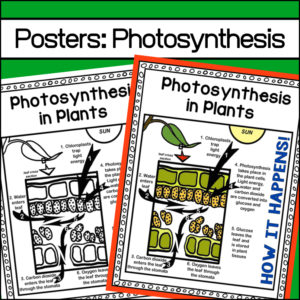
Here are 2 posters (b/w and color) of the process of photosynthesis.
-
$4.50Add to Cart
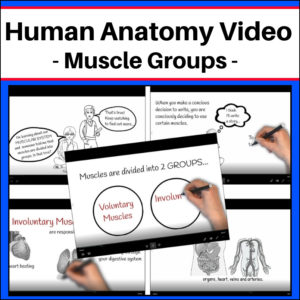
Human Anatomy – Muscle Groups Video has been created to introduce, explain and/or review voluntary and involuntary muscles in the human body. Each group is defined, explained and definitions given. This is great for visual learners!
To add student interest, one student is helping another student learn, interesting graphics have been added and upbeat music fills the background. (Music is easily muted if needed.)
-
$1.50Add to Cart
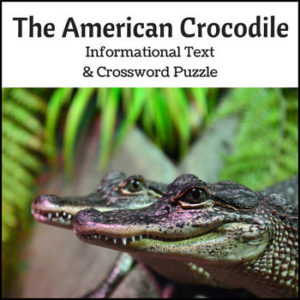
Designed for 5th-8th grade students, American Crocodile Informational Text and Crossword Puzzle will provide students with details about the only crocodile native to the Americas in the following categories:
* Appearance
* Differences from alligators
* Distribution and Habitat
* Food and Growth
* ReproductionAfter reading the text (3 pages), students are to complete the crossword puzzle. Answer Key provided.
-
$8.00Add to Cart
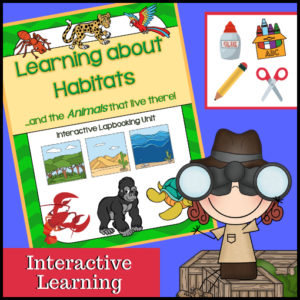
This unit on habitats and the animals that live in each is an interactive learning unit that allows students to be hands-on and create a beautiful project be the completion of the study! Use as a mini-course, in a Science center or in conjunction with another habitat study.
Use the complete unit (or) use only parts of it. Designed for 2nd-4th grades so it has been designed to work well with multiple ages/grades.
Includes:
– Instructions
– Informational text (Definition of habitat plus information on these 8 different habitats: desert, forest, ocean, arctic, wetlands, grasslands, rainforest and jungle)
– Suggested book recommendations for further study
– Project pieces (cover pages, vocabulary, definitions, habitat cards, mini-book, habitat flapbooks, habitat pockets to insert included animal cards, basic needs spinning template, favorite animal templates plus clip art)Comes in both black/white pages as well as color (so you decide if you want to print using color ink or not as well as if you want your students to color or not).
See included habitats and animals in description below.
-
$2.00Add to Cart
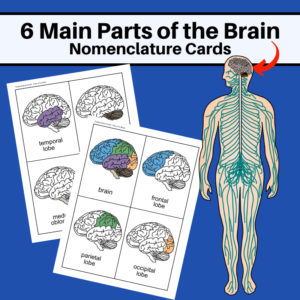
6 Main Parts of the Brain – Human Anatomy Nomenclature Cards – This resource will help students learn and study the following parts of the brain: frontal lobe, parietal lobe, occipital lobe, temporal lobe, cerebellum and the medulla oblongata.
-
$1.25Add to Cart
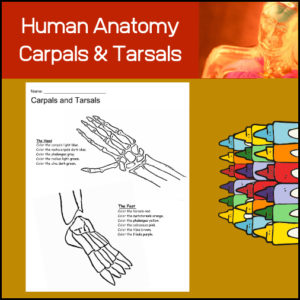
On this one page worksheet titled Carpals and Tarsals, students identify the bones of the hands (+ wrist and lower arm) and feet (+ lower leg): carpals, metacarpals, phalanges, radius, ulna, tarsals, metatarsals, phalanges, calcaneus, tibia and fibula.
Suggested uses: Use in a Science center when studying human anatomy, give as homework or use as a quick quiz. Answer key is provided.
-
$1.99Add to Cart
This cross-curricular resource will inform and assess students’ understanding of the basic process of photosynthesis. Includes both close reading and a cloze activity.
-
$2.00Add to Cart
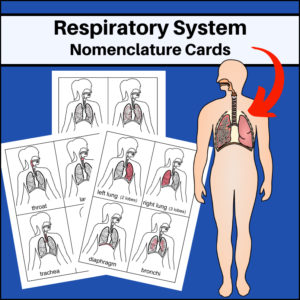
Respiratory System – Human Anatomy Nomenclature Cards – This resource will help students learn and study the location of the following parts of the respiratory system: left lung, right lung, diaphragm, bronchi, bronchioles, alveoli, sinus cavity, nose, throat, larynx, trachea, and pleura. There are also 4 extra diagrams with no labels for you to use as you wish…such as give to students to have them color in and label the cards for themselves!
-
$1.75Add to Cart
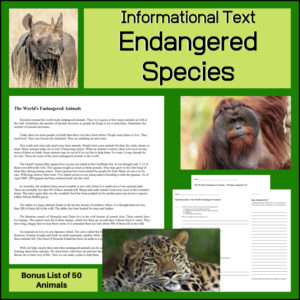
This cross-curricular (Language Arts – Science) informational article has been designed to help students gain a better understanding of why some animals in our world are endangered. The article will list causes such the need for more land and food for humans as well as pollution and hunting. Students will also be given several examples of animals from around the world that are in danger and what we need to learn in order to make plans to help them survive.
-
$2.25Add to Cart
This Science / Biology resource offers 5 posters – Color posters which are perfect for bulletin boards or centers and B/W posters which are great to use as student handouts.
-
$8.00Add to Cart
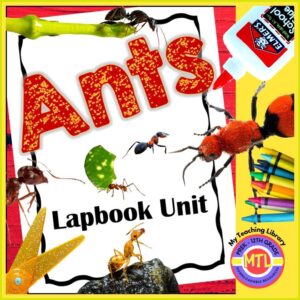
Think you know the “common” ant? Think again! With over 10,000 species crawling across the globe, these tiny powerhouses are anything but ordinary.
Ants | Hands-on Insect Science is an interactive, student-centered resource designed to transform science into a buzzing (or should we say crawling?) hub of discovery. Moving beyond simple worksheets, this unit culminates in a stunning 3D project that students can proudly display. Whether you are a homeschool parent looking for an immersive unit study or a teacher wanting to spice up your life science curriculum, this resource is built to engage.
🧠 What’s the Buzz? (The Learning Journey)
This unit dives deep into the complex world of formicaries. Students won’t just look at pictures; they’ll explore the “how” and “why” of ant life, including:
- The Life Cycle: From egg to adult.
- Anatomy: Breaking down the head, thorax, and abdomen.
- Social Structures: Understanding the hierarchy of the colony.
- Communication: How do they “talk” without voices?
- Ecosystem Impact: The good, the bad, and the tiny.
- Predators & Habitats: Who eats them and where do they hide?
📦 What’s Inside:
My Teaching Library has included everything you need to facilitate a deep-dive investigation with zero “ant-xiety”:
Feature Description Informational Text Comprehensive reading on communication, diet, and anatomy. Visual Aids Full-color posters and diagrams of the life cycle and anatomy. Species Flashcards 15 cards featuring different ants with photos and facts. Vocabulary Guide Key scientific terms with student-friendly definitions. 3D Project Templates Step-by-step instructions and templates for the final build. Fun Fact Cards Bite-sized trivia to keep engagement high. 🎨 Flexible
Whether you’re working at a kitchen table or in a 30-student classroom, this project scales to fit your needs:
- Individual Mastery: Let each student create their own 3D masterpiece.
- Cooperative Learning: Teaching multiple children? Assign roles and have students build a “super-colony” together!
Give your students a microscopic view of a massive world. 🌍
🛒 Ready to start the colony?
Add Ants | Hands-on Insect Science to your cart and download today…and watch your students’ curiosity grow!
-
$2.00Add to Cart
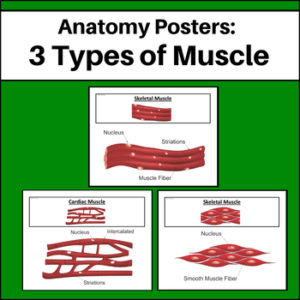
Perfect for any Biology / Anatomy Classroom teaching human anatomy: Anatomy Posters – Types of Muscle. These 3 colorful posters will help students quickly identify each type of muscle (Cardiac, Skeletal, Smooth) as well as the parts of each muscle.
-
$1.25Add to Cart
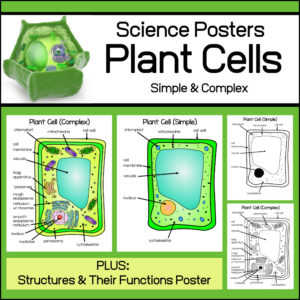
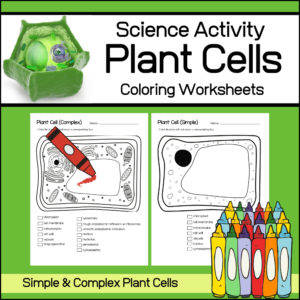
Interactive Science learning – This resource includes 2 coloring worksheets: Simple Plant Cell and Complex Plant Cell. As students color (identify) each part, they will also create a corresponding key.
Structures to be identified and colored:
1. Simple Plant Cell – cell wall, mitochondria, chloroplast, cell membrane, vacuole, nucleus, cytoskeleton
2. Complex Plant Cell – cell wall, mitochondria, chloroplast, cell membrane, vacuole, Golgi apparatus, lysosomes, rough endoplasmic reticulum w/ ribosomes, smooth endoplasmic reticulum, nucleus, nucleolus, peroxisome, cytoskeleton
-
$2.25Add to Cart
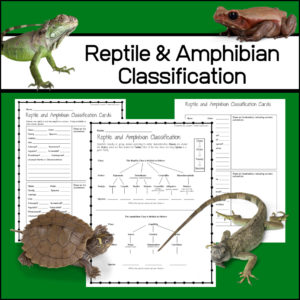
This Science / Biology resource includes 2 student exercises plus classification card templates that can be used for centers, projects and more.
-
$2.25Add to Cart
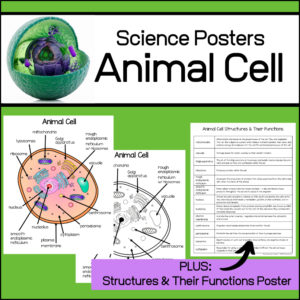
This Science / Biology resource offers 2 labeled posters showing the structures and organelles of an animal cell! I’ve also included a handout detailing the major function(s) of each structure/organelle. Structures and organelles include: centrosome, plasma membrane, mitochondria, vacuole, Golgi apparatus, ribosome, lysosomes, rough endoplasmic reticulum, smooth endoplasmic reticulum, nucleus, nucleolus, peroxisome, cytoplasm
-
$1.00Add to Cart
Autumn / Fall Migration – Informational Text is a 5 page resource that will give students valuable information about the migration of many types of animals from around the world that migrate every Autumn.
Information in the text includes:
- What migration is
- What type of animals migrate (examples)
- Why animals migrate
- Which animal has the longest migration
- How animals find their way
After students read the one page of informational text, there are 3 additional student pages to answer questions (multiple choice, short answer and essay).
Flesch-Kincaid Grade Level: 5
-
$1.50Add to Cart
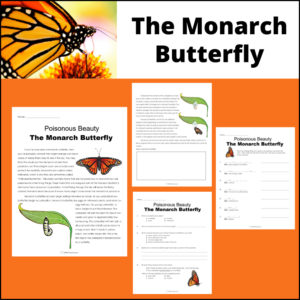
This Science article teaches students facts about the monarch butterfly! This resource includes 2 pages of informational text and 3 student activity pages.
-
$3.00Add to Cart
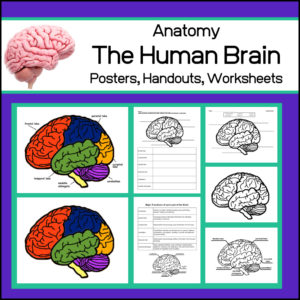
This Science / Biology / Health resource will help your students learn the different sections of the brain and the major functions of each. Sections included: frontal lobe, parietal lobe, occipital lobe, temporal lobe, cerebellum and medulla oblongata.
-
$3.00Add to Cart
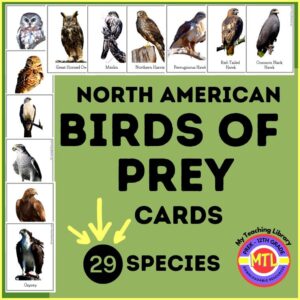
North American Birds of Prey Cards includes 29 species of birds! These cards include beautiful colored images of each bird and include 2 sets: labeled and unlabeled.
Use alone or alongside: North American Birds of Prey Notebooking / Report Pages
Birds:
• Great Gray Owl
• Ferruginous Hawk
• Common Black Hawk
• Red-Tailed Hawk
• Barred Owl
• Barn Owl
• Short-Eared Owl
• Prairie Falcon
• Swainson’s Hawk
• Snowy Owl
• Turkey Vulture
• Eastern Screech Owl
• Burrowing Owl
• American Swallow-Tailed Kite
• Elf Owl
• Osprey
• American Kestrel
• Peregrine Falcon
• Bald Eagle
• Northern Goshawk
• Merlin
• Golden Eagle
• Northern Harrier
• Northern Saw-Whet Owl
• Crested Caracara
• Great Horned Owl
• Sharp-Shinned Hawk
• Harris Hawk
• Long-Eared Owl