
Category: Classroom Helps
Showing 21–40 of 41 resultsSorted by latest
-
 $3.00Add to Cart
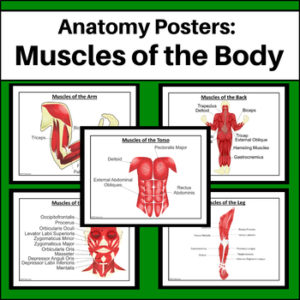
Perfect for any Middle School or High School Biology / Anatomy Classroom teaching human anatomy: Anatomy Posters – Muscles of the Body. These 5 colorful posters will help students quickly identify muscles of the body (Arm, Leg, Back, Torso and Face). Great for Health classrooms as well!
-
$1.50Add to Cart
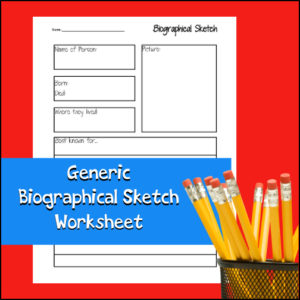
Students can use this worksheet again and again to record short biographies on any person for any subject. This worksheet can be used alone or as part of a larger report or notebooking project. Students can report on inventors, scientists, explorers, mathematicians, musicians, famous Americans, etc!
-
$2.00Add to Cart
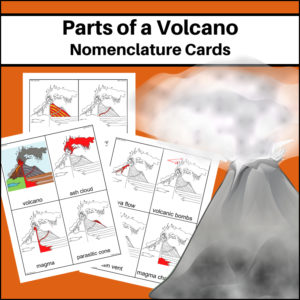
Parts of a Volcano – Nomenclature Cards – This resource will help students learn and study the various parts of a volcano: ash cloud, magma, parasitic cone, lava & ash layers, side vent, crater, pyroclastic flow, lava flow, volcanic bombs, main vent, and magma chamber.
-
$9.75Add to Cart
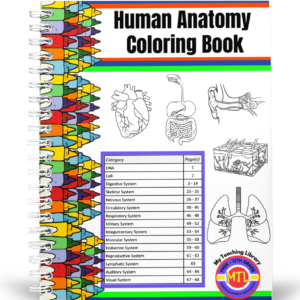
This 68-page anatomy coloring book has been designed for 5th-12th grade classrooms (Health, Science, Anatomy, Biology, Physiology).
Categories:
- DNA
- Cell
- Digestive System
- Skeletal System
- Nervous System
- Circulatory System
- Respiratory System
- Urinary System
- Integumentary System
- Muscular System
- Endocrine System
- Reproductive System
- Lymphatic System
- Auditory System
- Visual System
-
$2.50Add to Cart
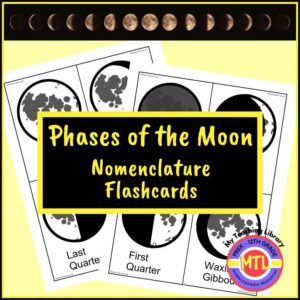
Teaching about the different phases of the moon? Get “Earth Science: Moon Phases Nomenclature Flashcards” to help students learn and identify the 8 different phases of the moon, regardless of grade level.
✨ What’s Included:
- Printable Nomenclature / flash cards for hands-on learning.
- Clear and concise labeled illustrations of each of the following moon phases: new moon, waxing moon, first quarter, waxing gibbous, full moon, waning gibbous, last quarter and waning crescent
✅ Perfect For…
- – Earth Science and general science lessons
- – Engaging students with moon phases and astronomy concepts.
This resource is built on the belief that understanding scientific terminology should be an active and interactive process. By utilizing a nomenclature-based approach, these flashcards encourage students to not only memorize terms but also to actively engage with the visual and conceptual aspects of moon phases. This method fosters deeper understanding and retention, making complex scientific ideas more accessible and memorable for every learner.
📚 Learning Objectives
- – Students will be able to identify and name the different moon phases.
- – Students will understand and define key Earth Science vocabulary related to the moon.
Transform your science lessons with these dynamic and effective Earth Science Vocabulary Moon Phases Nomenclature Flashcards! They are a fantastic tool to illuminate the wonders of space science for your students.
Click Add to Cart today!
-
$3.00Add to Cart
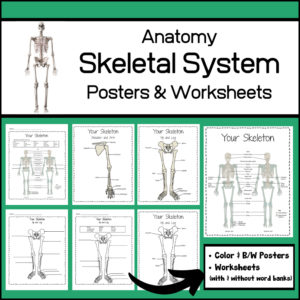
This ANATOMY / BIOLOGY / HEALTH resource includes 3 sets of human skeleton posters and worksheets to help you teach the names of major bones. Each set has a color poster (great for bulletin boards) and b/w poster (great for student handouts) and each worksheet comes with and without a word bank. Bones: Skull (cranial portion, facial portion), clavicle, scapula, sternum, ribs, vertebral column, hip bones (pelvic girdle), humerus, ulna, radius, carpals, metacarpals, phalanges, femur, patella, tibia, fibula, tarsals, metatarsals.
-
 $1.00Add to Cart
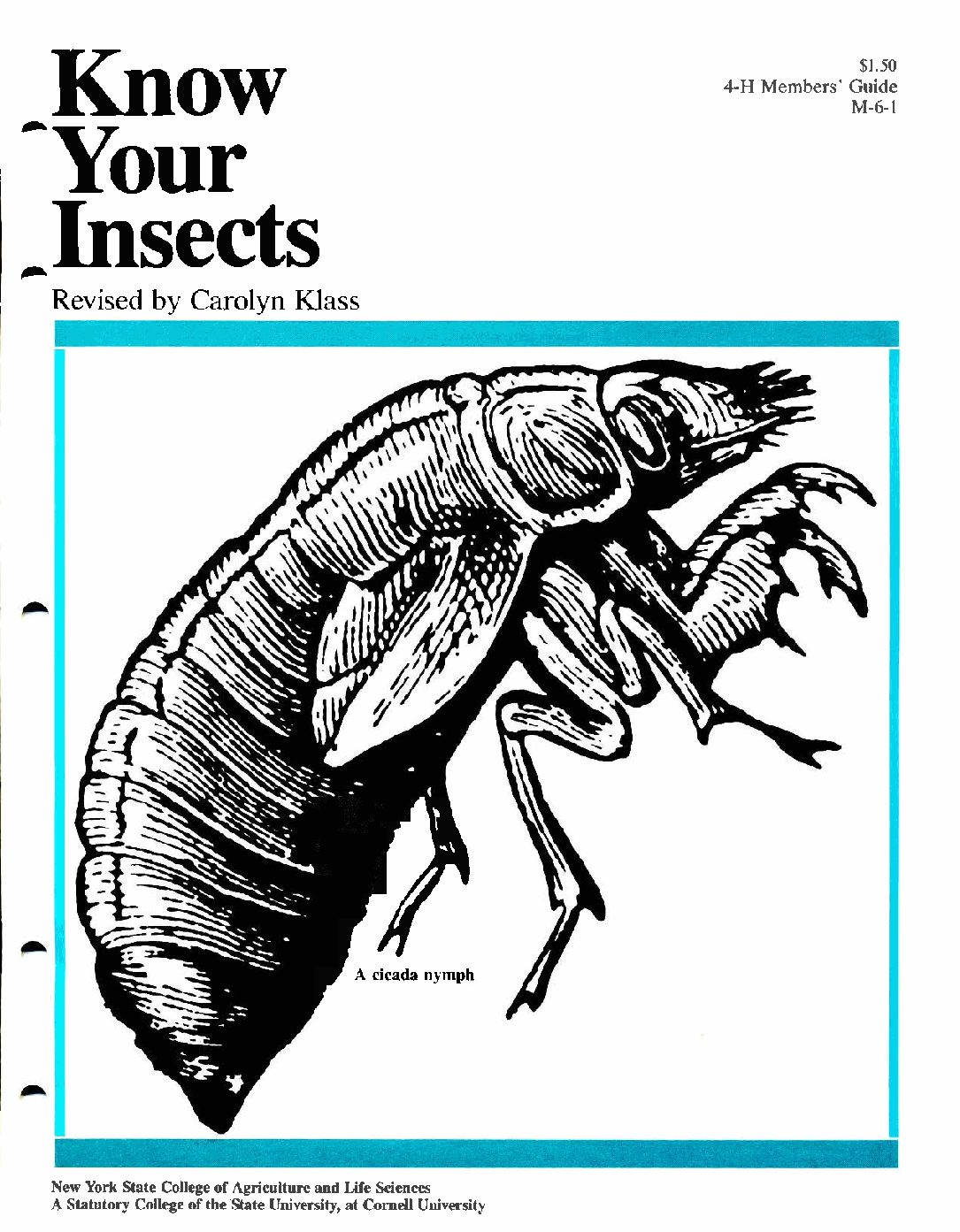
This is a small (15 page) old handout to help students learn basics about insects and how to mount them when creating an insect collection.
-
$1.00Add to Cart
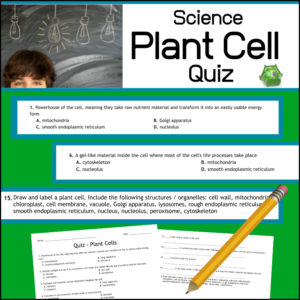
The resource is a 15 question quiz that will assess student understanding of the following structures / organelles of a plant cell: cell wall, mitochondria, chloroplast, cell membrane, vacuole, Golgi apparatus, lysosomes, rough endoplasmic reticulum w/ ribosomes, smooth endoplasmic reticulum, nucleus, nucleolus, peroxisome, cytoskeleton
-
$1.50Add to Cart
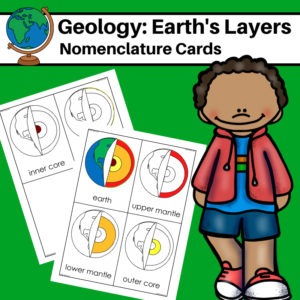
This resource, Earth’s Layers – Nomenclature Cards, will help your students learn the names of the layers of the Earth: upper mantle, lower mantle, outer core, inner core, and crust.
I’ve also included a set of blank cards for students to use and label themselves!
-
$3.00Add to Cart
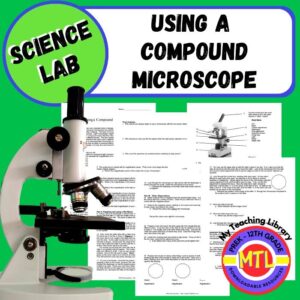
This is a complete, step by step science lab during which students will learn about, use a compound microscope and record their observations as well as important facts they’ve learned.
Key highlights covered:
- – Parts of a compound light microscope and their functions
- – How to calculate magnification
- – How to make a wet mount slide
- – Detailed information on how to use the microscope
-
$0.50Add to Cart
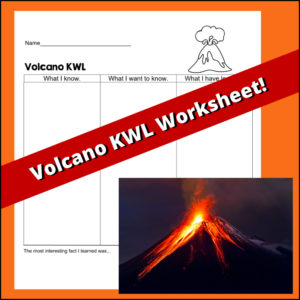
Here is a worksheet for students to use when the are learning about volcanoes! KWL worksheets are to be used at the beginning and end of any study.
K – What I know (Students list everything they already know – prior knowledge)
W – What I want to learn (Students begin thinking about what they don’t know and what they want to investigate about the given topic…i.e. volcanoes!)
L – What I’ve learned (After the study is complete, students will complete this section giving details about what ‘new’ things they have learned)
There is also a section for students to reveal what the most ‘interesting’ fact was that they learned. Your students will love the reflection and enjoy sharing their answers.
-
$3.00Add to Cart
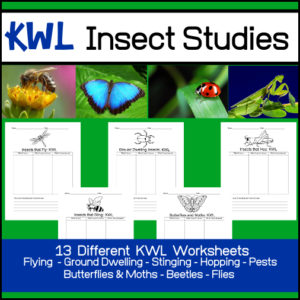
Want student to investigate a variety of different types of insects? This K-W-L resource includes 13 different KWL worksheets so that students (individually or in cooperative groups) can use as they study different bugs and creepy crawlies. Perhaps they want (or you want) the focus to be on insects that hop or ground dwelling insects. What if their study should focus on beetles only or butterflies and moths? Not only will you get worksheets for a variety of specified ‘types’ of insects but I’ve also included some that can be tailor designed to what you or your students choose to study!
-
$1.50Add to Cart
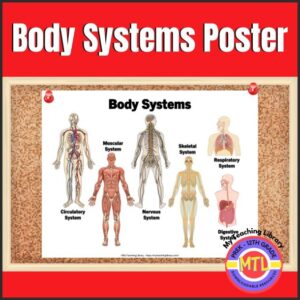
Studying anatomy? Body systems? Here is “Body Systems” poster that that illustrates these systems: circulatory, muscular, digestive, nervous, skeletal and respiratory.
-
$3.00Add to Cart
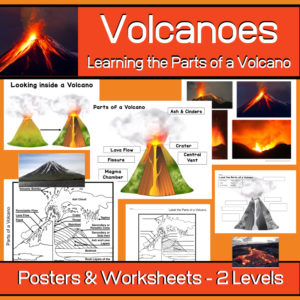
Help students master their knowledge of the parts of a volcano with these posters, handouts and worksheets! This resource provides 2 levels of learning plus worksheets come with and without terms. (Landforms, Earth Science, Geology)
-
$8.50Add to Cart
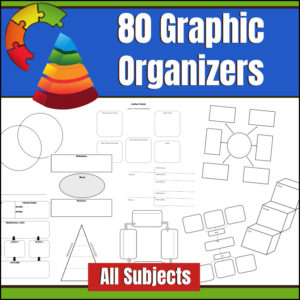
A graphic organizer, also known as knowledge map, concept map, story map, cognitive organizer, advance organizer, or concept diagram, is a communication tool that uses visual symbols to express knowledge, concepts, thoughts, or ideas, and the relationships between them. This resource gives you 80 different graphic organizers and can be used across the curriculum!
Here is a comment from a customer…
Karen E. said: “OK, at first I thought “Really? I’m going to pay for graphic organizers that I can probably find for free with some searching, etc?” Well, now I am so glad that I did. So good to have organizers available quickly BUT also several of them have variations which is helpful for “seeing” how to use them in my content area. Good value.“ -
$2.00Add to Cart
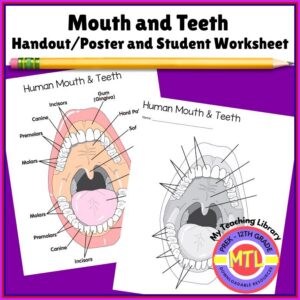
Help students learn the parts of the mouth and the types of teeth with this labeled poster and worksheet!
Looking for additional resources to use with the resource?
Tooth Anatomy Diagram and Worksheet
Dental Care Word Search | Dental Health -
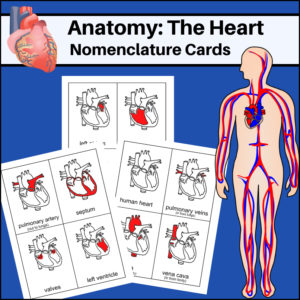
$2.00Add to CartThis resource,The Heart – Human Anatomy Nomenclature Cards, help students learn and study the location of the parts of the heart: pulmonary veins, aorta, vena cava, pulmonary artery, septum, valves, left ventricle, left atrium, right ventricle and right atrium.
-
$4.50Add to Cart
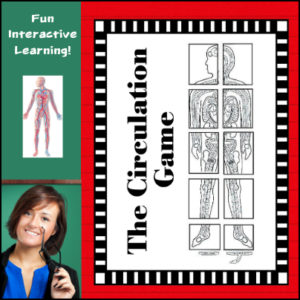
A fun, interactive game that will have students learn all about the circulatory system!
- – deliver oxygen and food to the cells
- – have oxygen and carbon dioxide ‘ride’ on red blood cells
- – circulate red blood cells throughout the body – through the circulatory system (arteries and veins)
The first team to get all their oxygen to the cells, all the food to the cells, all the wastes to the kidneys and all the carbon dioxides to the lungs, wins the game!
-
$2.25Add to Cart
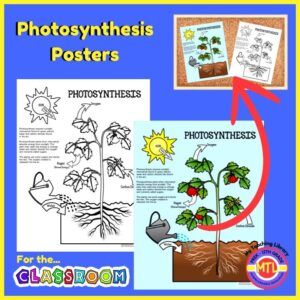
This resource gives you two photosynthesis posters, one b/w and the other color. Each poster has an easy-to-understand illustration plus a short explanation of the photosynthesis process is also included!