
Tag: zoology
Showing all 11 resultsSorted by latest
-
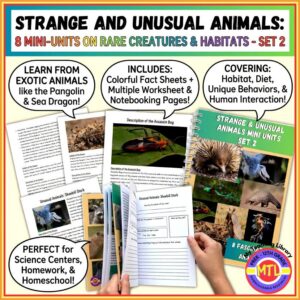
Strange and Unusual Animals: 8 Mini-Units on Rare Creatures & Habitats Set 2 to Pinterest (opens in a new window)
 $8.00Add to Cart
Dive Deep into the Extraordinary: Strange and Unusual Animals – Set 2! 🌍🦒👾
Ready to take your students on a journey to explore the most bizarre, fascinating, and rare creatures on Earth? Welcome to Set 2 of Strange and Unusual Animals Mini-Units! This sequel is packed with biodiversity that will leave your students (and maybe you!) completely fascinated.
This set features 8 comprehensive mini-units, each designed to introduce students to an animal that challenges the definition of “normal.” Forget lions and tigers; we’re talking about creatures with unique defenses, strange behaviors, and habitats that are off the beaten path.
🧬 What is a Mini-Unit?
Each of the 8 mini-units is a self-contained exploration into the lives of these uncommon species. They are packed with engaging information, vivid, colorful photos, and active learning opportunities to make science come to life! Students will dive deep into:
-
What they look like: Discover their bizarre appearances and strange adaptations. 🦎
-
Where they live (Habitat and Location): Follow them to unique ecosystems and global coordinates. 🗺️
-
What they eat: Uncover unique diets and predatory strategies. 🌿
-
Interesting, “strange” facts: The “weird and wonderful” details that make them unforgettable! 💡
-
Interactions with humans: Are they helpful, dangerous, or elusive? 🏠
-
Pets or Wild? Learn if these creatures have ever been domesticated (or if that’s even a good idea!). 🏡
🐊 Featured Animals in Set 2:
Meet the new “wild” cast that will spark curiosity:
-
Assassin Bug (The silent, deadly hunter) 🎯
-
Moloch (The thorny devil of the desert) 🌵
-
Quetzal (The iridescent, sacred bird) ✨
-
Sea Dragon (The master of ocean camouflage) 🌊
-
Shoebill Stork (The ancient, powerful predator) 🕊️
-
Armadillo (The tank-like digger) 🛡️
-
Pangolin (The armored, walking pinecone) 🐉
-
Echidna (The egg-laying, spiky mammal) 🐣
📝 What You’ll Love:
-
Vibrant Visuals: Every page features high-quality, colorful photos that keep students interested and engaged. 📸
-
Active Comprehension: Each animal study includes 2 student notebooking pages per creature, encouraging research, recording facts, and illustrating key concepts.
-
Flexible Learning: Perfect for independent study, science centers, or a “Creature of the Week” feature in your classroom or homeschool. 🏠
-
Comprehensive Animal Study: This set offers more than just facts; it provides holistic research opportunities into rare species. 🔬
✨ Keep the Adventure Going!
If your students fall in love with these rare creatures and haven’t already completed Set 1, get it now!
Grab Strange and Unusual Animals | Set 1 -
-
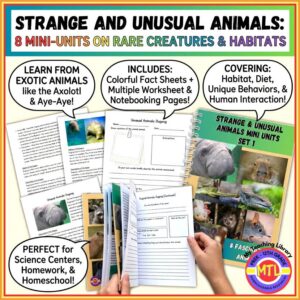
Strange and Unusual Animals: 8 Mini-Units on Rare Creatures & Habitats to Pinterest (opens in a new window)$8.00Add to Cart
🐾 Discover the Extraordinary: Strange and Unusual Animals Mini-Units (Set 1) 🌍
Are you looking to spice up your science curriculum? Spark student curiosity and wonder with this deep dive into the world’s most peculiar creatures!
This comprehensive set features 8 mini-units designed to take students on a journey to meet animals they won’t find in a typical textbook. From the depths of the water to the heights of the rainforest canopy, your students will become experts on the “weird and wonderful.”
🧬 What’s Inside?
Each of the 8 mini-units is packed with engaging information and vibrant, colorful photos to keep young learners hooked. Students will explore:
-
Physical Characteristics: What makes them look so unique? 🦎
-
Habitats & Locations: Where in the world do they hide? 🗺️
-
Dietary Habits: What’s on the menu for a Fossa or a Dugong? 🌿
-
Human Interaction: Are they pets, or are they better left in the wild? 🏠
-
Mind-Blowing Facts: The “strange” details that make these animals unforgettable! 💡
🐊 Featured Animals in Set 1:
-
Gharial (The long-snouted crocodilian)
-
Dugong (The “sea cow” of the ocean)
-
Capybara (The world’s largest, chillest rodent)
-
Blue-Tongued Skink (A reptile with a colorful surprise)
-
Axolotl (The smiling salamander)
-
Aye-Aye (The mysterious primate of Madagascar)
-
Elephant Shrew (Tiny, fast, and trunk-nosed)
-
Fossa (The elusive predator of the forest)
📝 What You’ll Love:
-
Vibrant Visuals: Real-life photos bring the science to life! 📸
-
Active Learning: Every unit includes 2 notebooking pages per animal to test comprehension and encourage research.
-
Extension Activities: Includes a “Taking it Further” section with creative suggestions for projects and deep-dives to keep the momentum going! 🚀
-
Low Prep: Just print and go—perfect for science centers, independent study, or a “Creature of the Week” feature.
✨ Keep the Adventure Going!
If your students fall in love with these rare creatures, don’t stop here!
Grab Strange and Unusual Animals | Set 2 -
-
$1.50Add to Cart
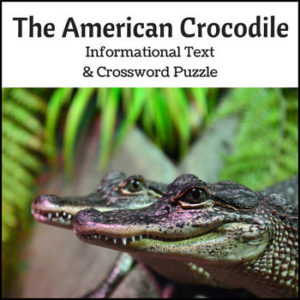
Designed for 5th-8th grade students, American Crocodile Informational Text and Crossword Puzzle will provide students with details about the only crocodile native to the Americas in the following categories:
* Appearance
* Differences from alligators
* Distribution and Habitat
* Food and Growth
* ReproductionAfter reading the text (3 pages), students are to complete the crossword puzzle. Answer Key provided.
-
$2.50Add to Cart
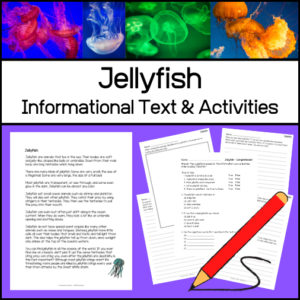
Help students develop their reading comprehension while building vocabulary and content knowledge plus practice their writing skills using this cross-curricular resource based on jellyfish! You can use this resource to reinforce Language Arts skills while teaching about sea life – the jellyfish.
-
$2.50Add to Cart
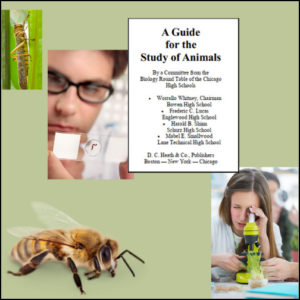
This is a downloadable copy of the book. (138 pages)
About the book: A Guide for the Study of Animals is a classic zoology guide (1911) which is intended for pupils in 9th-12th grades. It was prepared by the authors at the request of the Biology Round Table, an association composed of the teachers of Biology in the Chicago High Schools. The book is basically a Biology / Zoology Lab activity guide. Please note that this is not a ‘textbook’ but a lab activity book. (See description for further details.) -
$2.50Add to Cart
This is a downloadable copy of the book. (71 pages)
About the book: The Woodpeckers is a wonderful introduction to the world of bird study for the young naturalist, covering such topics as how he finds food, courting, how he builds his nest, the interesting ways he uses his different body parts as tools, among other topics discussed in the book. -
$2.50Add to Cart
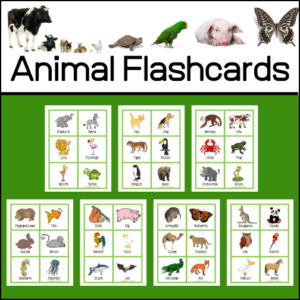
42 colorful animal flashcards
Suggested uses:
- – to learn animal names
- – to learn classification (ex: sort by habitat, number of legs, mode of transport such as flying, running or swimming, etc)
-
$1.50Add to Cart
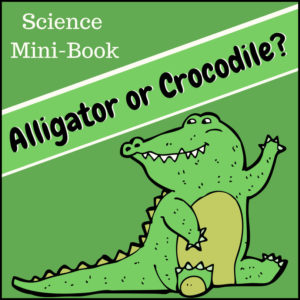
Help students learn the differences (and similarities) between an alligator and a crocodile with this resource and have a cute 18 page mini-book to create and color!
-
$1.50Add to Cart
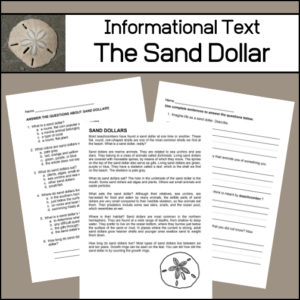
This informational article will teach students about the sand dollar. They will learn that the little round, coin-shaped shell found on the beach is actually part of a marine animal, related to sea urchins and sea stars. They will also learn how living sand dollars move, that they aren’t ‘white’, how and what they eat and much more. After reading, students will complete two worksheets (multiple choice and short answer) to assess their comprehension / understanding of the material. Answer Key is provided.
Automated Readability Index: 4.8
Grade level: 8-9 yrs. old (Fourth and Fifth graders)
Linsear Write Formula : 5.6
Grade level: Sixth Grade. -
$2.00Add to Cart
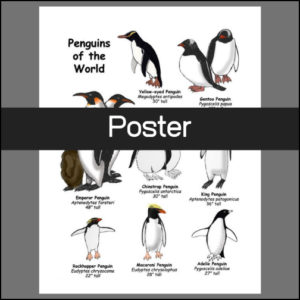
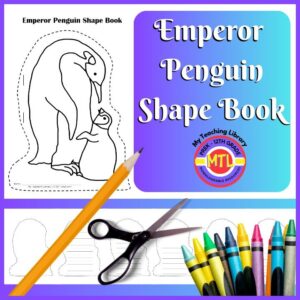
Studying penguins or perhaps animals of the arctic? Here is a ready-to-use resource for students to publish stories, reports or poems about penguins.
You’ll find pages with both dotted-dashed lines as well as single lines so that you can use what best fits the level of your students.