
Description
Flesch-Kincaid Grade Levels of text within this resource: 7.6 – 9.2

$3.00
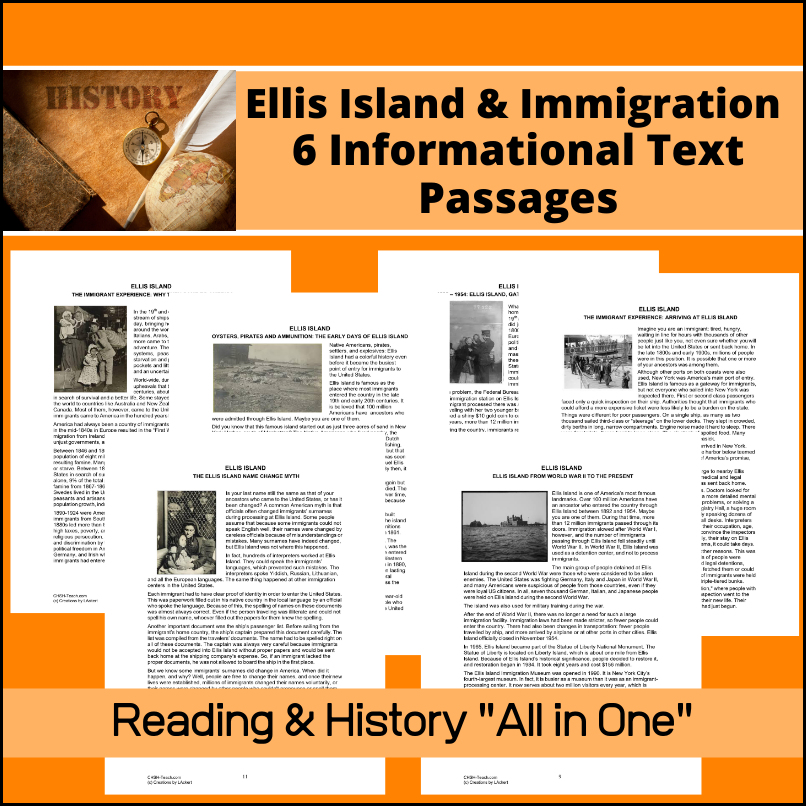
This resource, Immigration – Ellis Island – US History Informational Text, has SIX parts: The Early Days, 1892-1954 Gateway to the United States, The Immigrant Experience, Why They Came, From WWII to the Present and Ellis Island Name Change Myth.
In each part, students will have one page of informational text and then a page of multiple choice questions plus one essay question to assess understanding / comprehension. Answer Keys provided.
Flesch-Kincaid Grade Levels of text within this resource: 7.6 – 9.2
Only logged in customers who have purchased this product may leave a review.

Road to Revolution: 42-page unit teaches students about major events before and during the American revolution. Includes student text, assessments and teacher pages and keys.
Topics covered:
Includes student text, assessments, teacher pages and keys.
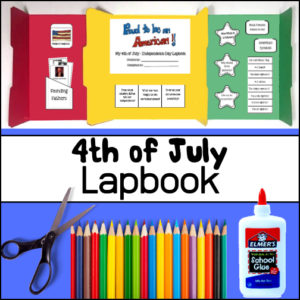
This lapbook has been designed to give students a creative project to create about America’s Independence Day – the 4th of July!
Students are given various lapbooking templates on a variety of topics. They will then research or read books about each, record what they have learned and add to their lapbook. These topics include…
– Pledge of Allegiance
– The American flag and winning independence
– Founding fathers: George Washington, John Adams, Thomas Jefferson and others
– American Symbols, the words ‘patriotic’ and ‘freedom’
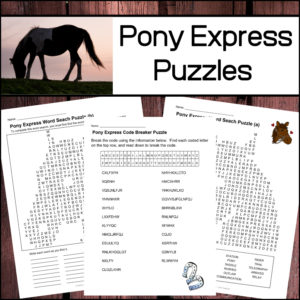
Studies have shown that word search and other word puzzles can help improve memory, focus, vocabulary, word recognition, pattern recognition, and overall mental acuity! With this in mind, why not engage students in some brain exercises using these puzzles? Perfect to use while you are doing a unit on the Pony Express and the westward expansion of the United States.
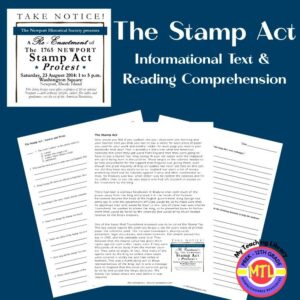
This informational article will help students understand one of ‘taxes’ imposed upon the colonies by King George prior to the American Revolution. After reading, students will be questions to assess their comprehension of the material (1 multiple-choice question, 7 short answer questions and 2 short essay questions).


Reviews
There are no reviews yet.