
Category: 4th-5th
Showing 441–460 of 717 resultsSorted by latest
-
 $2.50Add to Cart
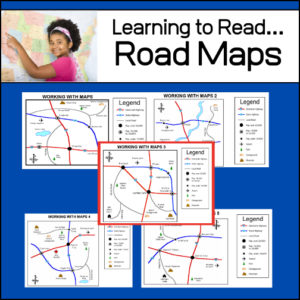
An important life skill is learning how to read maps! This resource provides 5 easy to read road maps. For each map, students will practice using the legend and answer 12-15 questions. Students will answer a total of 71 questions – Answer Keys provided.
-
$15.00Add to Cart
Wonderful Christmas writing project templates for kids! This 91-page download contains 18 different templates for student publishing, writing and cards!
This 91-page download contains 18 different themes:
- gift bow
- train
- bells
- elf girl with candy cane
- elf boy with candy cane
- Santa frog with ornament
- gingerbread house
- jumping reindeer
- walking reindeer
- Santa with list
- gifts
- nutcracker
- candy cane
- dancing candy canes
- angel
- Mary, Joseph and baby Jesus
- Manger with Jesus
- Jesus with 3 wise men
Each theme includes 6 pages:
- Cover page with “title” and “written by” for student publishing
- Card cover page
- 3 different inside lined pages for different ability levels
- 1 blank inside page with no lines
Students can use these templates to write stories, poems and reports, or they can create cards for family and friends!
Students will be able to CREATE and DISPLAY wonderful Christmas creations using this resource!
-
$1.75Add to Cart
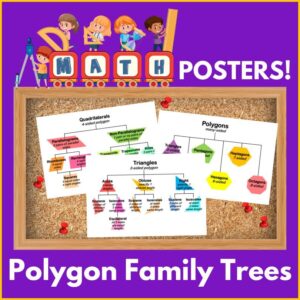
Here are three Math Geometry posters (polygon family trees) to display in your classroom! These will be a great visual addition to help introduce the relationships between shapes and shape vocabulary.
Included:
- Poster #1 Polygons will show: triangle pentagon, heptagon, quadrilateral, hexagon, octagon,
- Poster #2 Triangles will show: acute (scalene, isosceles, equilateral), obtuse (scalene, isosceles), right (scalene, isosceles)
- Poster #3 Quadrilaterals will show parallelograms (rhombuses, rectangles, squares), non-parallelograms (trapezoids, trapeziums, kites)
-
$2.50Add to Cart
This is a downloadable copy of the book. (176 pages)
About the book: The Ladies’ Workbook contains detailed instructions in knitting, crochet, point-Lace, etc. (published in 1858) -
$2.50Add to Cart
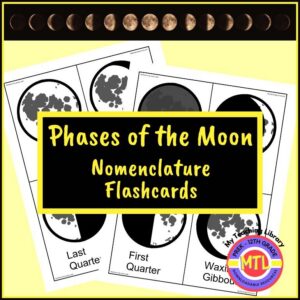
Teaching about the different phases of the moon? Get “Earth Science: Moon Phases Nomenclature Flashcards” to help students learn and identify the 8 different phases of the moon, regardless of grade level.
✨ What’s Included:
- Printable Nomenclature / flash cards for hands-on learning.
- Clear and concise labeled illustrations of each of the following moon phases: new moon, waxing moon, first quarter, waxing gibbous, full moon, waning gibbous, last quarter and waning crescent
✅ Perfect For…
- – Earth Science and general science lessons
- – Engaging students with moon phases and astronomy concepts.
This resource is built on the belief that understanding scientific terminology should be an active and interactive process. By utilizing a nomenclature-based approach, these flashcards encourage students to not only memorize terms but also to actively engage with the visual and conceptual aspects of moon phases. This method fosters deeper understanding and retention, making complex scientific ideas more accessible and memorable for every learner.
📚 Learning Objectives
- – Students will be able to identify and name the different moon phases.
- – Students will understand and define key Earth Science vocabulary related to the moon.
Transform your science lessons with these dynamic and effective Earth Science Vocabulary Moon Phases Nomenclature Flashcards! They are a fantastic tool to illuminate the wonders of space science for your students.
Click Add to Cart today!
-
$4.00Add to Cart
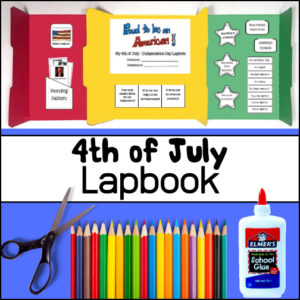
This lapbook has been designed to give students a creative project to create about America’s Independence Day – the 4th of July!
Students are given various lapbooking templates on a variety of topics. They will then research or read books about each, record what they have learned and add to their lapbook. These topics include…
– Pledge of Allegiance
– The American flag and winning independence
– Founding fathers: George Washington, John Adams, Thomas Jefferson and others
– American Symbols, the words ‘patriotic’ and ‘freedom’ -
$1.00Add to Cart
Help your students get creative! This mini-book template resource can be used by students to…
1. Publish their own short stories
2. Write definitions for spelling or vocabulary words
3. Create their own ‘study’ books from any lesson
4. Use within interactive notebooks
5. Use to add information to a lapbooking project -
$15.00Add to Cart
This resource is a large 190-page resource with everything you need to create a fantastic study on the Native Americans of North America! Can be used by an individual student or as a family unit study!
You’ll begin the unit with a native Americans KWL (What I “Know” – “Want to Learn” – “Learned”) activity that you will use at the beginning and end of the resource.
As students go through the unit, they will learn:
- -Vocabulary surrounding life and culture
- -Major tribes and regions where they lived (including geography, animals, natural resources, etc. about each area)
- -Timeline information from the time of Columbus’ arrival until all were declared citizens of the U.S.
- -Culture of various tribes and how they lived, types of homes, clothing, rites of passage, spiritual beliefs, symbols, writing and pictograpsh
- -Famous Native Americans
…and more.
Students will read, draw, write, complete worksheets, timelines, arts and crafts, mapwork and more.
There is even a lapbook included!
You can do all of the activities or pick and choose what you want to do. This resource can be used as a couple weeks project or a couple months…You decide!
-
$2.50Add to Cart
This resource, Symbols of the U.S.A. – U.S. History Informational Text, has FIVE parts: The Statue of Liberty, The Liberty Bell, The Great Seal, The Bald Eagle and The American Flag.
In each section, students will have one page of informational text and then 2 pages to assess understanding / comprehension through multiple choice questions and writing prompt page. Answer Keys provided.
-
$3.00Add to Cart
This resource offers vocabulary work, reading comprehension and discussion questions about the story and characters..
About the book (Not included):
The Whipping Boy is a Newbery medal-winning children’s book by Sid Fleischman, first published in 1986.
It is the story of a friendship that develops between Prince Brat and his whipping boy, Jemmy, who was forced to take punishments for the prince. Though these boys seem to be complete opposites, they display courage and a willingness to help one another when they are faced with danger.
Interest level:
Grades 4 – 8Reading level:
Grades 2 – 5 -
$3.00Add to Cart
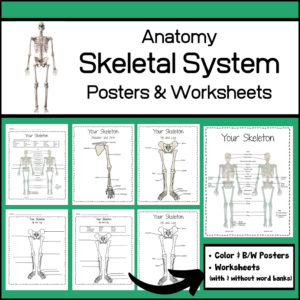
This ANATOMY / BIOLOGY / HEALTH resource includes 3 sets of human skeleton posters and worksheets to help you teach the names of major bones. Each set has a color poster (great for bulletin boards) and b/w poster (great for student handouts) and each worksheet comes with and without a word bank. Bones: Skull (cranial portion, facial portion), clavicle, scapula, sternum, ribs, vertebral column, hip bones (pelvic girdle), humerus, ulna, radius, carpals, metacarpals, phalanges, femur, patella, tibia, fibula, tarsals, metatarsals.
-
$3.00Add to Cart
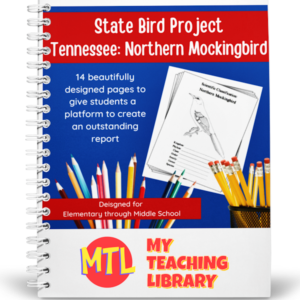
Studying the state of Tennessee and state symbols? What is the state bird of Tennessee?
This project-based unit is designed to help students study and record information about Tennessee’s state bird: Northern Mockingbird
⭐Included:
– A map page (for the state)
– Scientific classification page
– A page for students to give details about the bird’s physical description, habitat, diet, life span and reproduction
– A page where students will do additional map work to show where in the U.S. the bird lives in addition to migration information
– Coloring page
– Several pages on which students can use for expository and/or creative writing as well as sections in which students may draw.⭐ 14 pages in all and is designed for different levels / abilities.
My Teaching Library has a notebooking set for each of all 50 states. In addition, you can get all of them bundled!
Here are other bird related products you’ll love…
-
$1.00Add to Cart
This Christmas similes worksheet will have students putting on their critical thinking skills to the test in this fun holiday activity!
-
$2.00Add to Cart
This resource offers vocabulary work, reading comprehension and discussion questions about the story and characters.
About the book (Not included):
The View from Saturday is a children’s novel by E. L. Konigsburg, published in 1996. It won the 1997 Newbery Medal for excellence in American children’s literature, the author’s second Medal. Theme of the book: “Kindness and the courage it takes to be kind.”Reading level: 6th-8th Grade
-
$5.00Add to Cart
GEOGRAPHY FUN: 50 States – 50 coloring pages! Each coloring page gives the name of the state and the bird. Use with any study on the U.S.A. or simply anytime. Can be used in centers, as seat work or as part of a project. Your students will love them!
See a list of states / birds in the description below.
-
$3.00Add to Cart
An important aspect of understanding any written text is being able to determine the author’s purpose. Was the piece written to persuade, to inform or to entertain? This Language Arts packet begins through explaining P.I.E. (and later includes a 4th purpose of writing: to express personal feelings). Students will be asked to read passages throughout and to determine the purpose of each.
-
$1.50Add to Cart
This informational article will help students learn more about two French explorers: Cartier and Champlain. These men were early explorers of the St. Lawrence Bay area of the New World (Canada). After students read the text, they will complete two worksheets to assess their understanding and reading comprehension. Answer key provided.
Readability:
Flesch-Kincaid Grade Level: 3.9
Grade level: Fourth Grade
Linsear Write Formula : 4.8
Grade level: Fifth Grade. -
$1.00Add to Cart
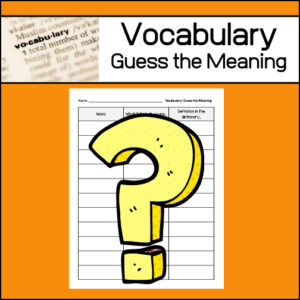
One strategy to help students learn unfamiliar vocabulary is called: Guess the meaning. This ready-to-use worksheet has been designed to be used again and again, throughout the school year as students encounter new vocabulary words. Students will write each ‘new‘ word, what they ‘think’ it means and then after looking up the word in a dictionary, they will write an actual definition.