
Category: Branch of Science
Showing 81–100 of 143 resultsSorted by latest
-
 $1.50Add to Cart
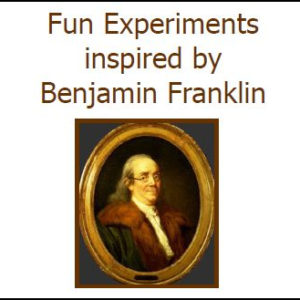
Inject a little history into your science lessons and perform some cool experiments too!
What you’ll get:- – 2 Short informational texts: One on Benjamin Franklin and one on Franklin’s Glass Armonica
- – 4 Experiments: Bottle Pipes, Lemon Battery, Magnetic Art, and the Thermometer
-
$3.00Add to Cart
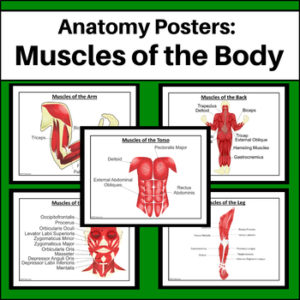
Perfect for any Middle School or High School Biology / Anatomy Classroom teaching human anatomy: Anatomy Posters – Muscles of the Body. These 5 colorful posters will help students quickly identify muscles of the body (Arm, Leg, Back, Torso and Face). Great for Health classrooms as well!
-
$1.50Add to Cart
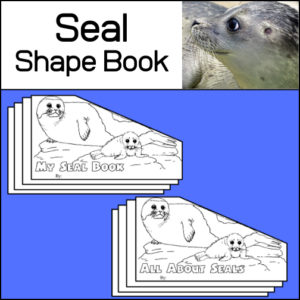
Seals are found along most coasts and cold waters, but a majority of them live in the Arctic and Antarctic waters. Harbor, ringed, ribbon, spotted and bearded seals, as well as northern fur seals and Steller sea lions live in the Arctic region. Whether you are studying these wonderful animals or just want to add a quick side lesson, here is a Seal Shape Book that students can use to self-publish their created stories, reports and poems! Templates have differing line heights to accommodate a variety of grade levels.
-
$2.00Add to Cart
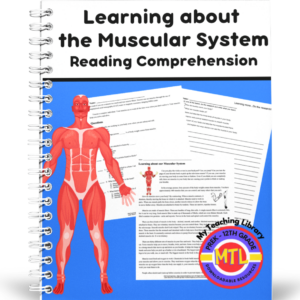
Students will read about the muscular system and learn facts such as how many muscles are in the body, what are muscle fibers, the three different types of muscles and much more. After reading and learning about the body / human anatomy, students will answer multiple choice questions.
Also included: A research and writing activity that may be assigned at your discretion!
Answer Key provided.
Reading level:
Flesch-Kincaid Grade Level: 5.3
Linsear Write Formula : 5.1 -
$3.00Add to Cart
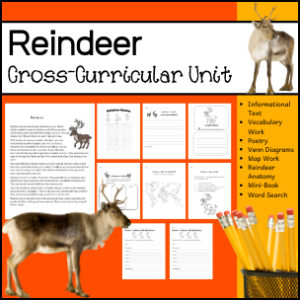
Engaging, cross-curricular unit all about reindeer!
Includes:
- – Informational Text and worksheet (true/false)
- – Vocabulary work
- – Acrostic poetry
- – Venn diagrams
- – Map work
- – Reindeer anatomy
- – Mini-Book creation
- – Word Search
- – Informational Text and worksheet (true/false)
-
$2.50Add to Cart
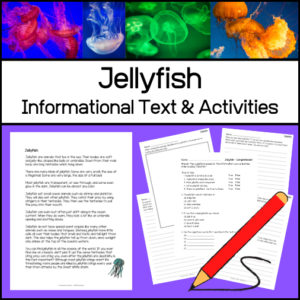
Help students develop their reading comprehension while building vocabulary and content knowledge plus practice their writing skills using this cross-curricular resource based on jellyfish! You can use this resource to reinforce Language Arts skills while teaching about sea life – the jellyfish.
-
$1.00Add to Cart
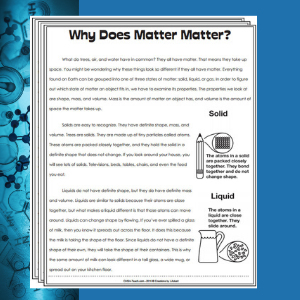
This informational text will help define matter and its 3 main stages (solid, liquid and gas). After students read the article, they will be asked comprehension questions to assess their understanding. Answer Key also included.
-
FREEAdd to Cart
This free curriculum resource is from the Minerals Education Coalition.
-
$2.00Add to Cart
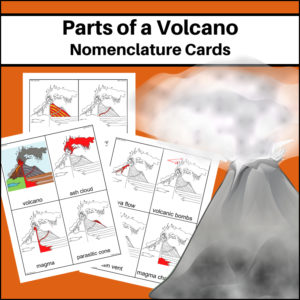
Parts of a Volcano – Nomenclature Cards – This resource will help students learn and study the various parts of a volcano: ash cloud, magma, parasitic cone, lava & ash layers, side vent, crater, pyroclastic flow, lava flow, volcanic bombs, main vent, and magma chamber.
-
$3.00Add to CartPumpkin Science has several fun, hands-on activities that ask students to compare, contrast, observe, estimate, count, sort, investigate, graph and much more…Students can even create a Pumpkin Science Journal or use pages as notebooking pages.See more about this product in the description below.
-
$4.50Add to Cart
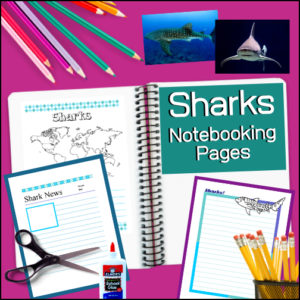
There are over 500 known species of sharks in the world! Most students love studying sharks and this unit has been created to help students record the knowledge they learn during a study on sharks as well as personal reflections of what has been learned.
This resource includes:
- – Creating a Notebooking Project…What is Notebookiing?
- – Supply list
- – Teacher pages
- – Student organizational pages
- -‘Jump off’ Questions designed to get students thinking about the different shark related questions they can research
- – 32 Notebooking pages
Notebooking is a coined term for what can also be referred to as educational journaling or scrapbooking.
-
$5.00Add to Cart
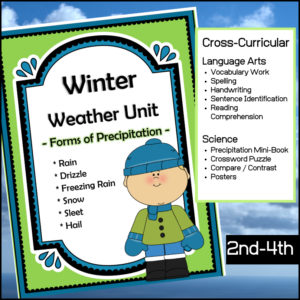
Your students will enjoy this cross-curricular resource, Winter Weather Unit – Forms of Precipitation, as they learn about the different forms of precipitation and related vocabulary! Students will be engaged in vocabulary work, spelling, handwriting, sentence identification, comparing / contrasting and more.
16 weather-related vocabulary words: precipitation, rain, drizzle, freezing rain, snow, sleet, hail, atmosphere, moisture, droplets, snowflake icy, crystals, frozen, updraft, and evaporation.
In this resource, you get:
- Word Wall cards
- Types of Precipitation Posters
- Weather Worksheets (both Language Arts & Science)
- Precipitation Mini-Book
- Puzzles
-
$10.00Add to Cart
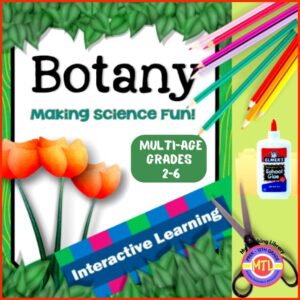
🌿 Botany – Plants | Interactive Learning Unit 🪴
Transform your science lessons into a hands-on adventure!
Ready to turn your science lesson plans into a thriving garden of knowledge? This Interactive, Project-Based Botany Unit is the ultimate resource for parents and educators looking to make science come alive. Designed with flexibility in mind, this resource grows with your students, making it perfect for multi-age learning environments (Grades 2nd–6th).
🍃 What’s Inside?
Give your students an engaging, deep dive into the world of plants. This resource covers everything from the microscopic details of a cell to the fascinating world of carnivorous plants:
-
Classification 🗂️: Learn how scientists group the green world.
-
Photosynthesis ☀️: Discover the magic of how plants turn sunlight into food.
-
The Plant Cell 🔬: A closer look at the building blocks of life.
-
Parts of the Plant 🌱: From roots to petals, understand how every part has a job.
-
Needs for Growth 💧: Exploration of the essential elements: water, light, soil, and air.
-
The Life Cycle 🔄: Follow the journey from a tiny seed to a mature plant.
-
Leaf Study 🍃: Diving into the shapes, functions, and beauty of foliage.
-
Specialty Species 🌵: Explore the “wild side” with non-flowering, carnivorous, and poisonous plants!
✨ Why You’ll Love It:
From a homeschooling parent: “Finally, a resource that works for my whole family! I can teach my 2nd grader and 5th grader at the same time with activities that challenge them both.”
From a classroom teacher: “Perfect for differentiated learning!“-
Project-Based Learning: Move beyond the worksheet! Students engage in hands-on projects that solidify their understanding.
-
Differentiated for Grades 2–6: The content is adaptable, allowing you to scale the complexity up or down depending on your students’ needs.
-
Interactive & Engaging: Keeps “boredom” at bay with activities that encourage curiosity and scientific inquiry.
-
No-Prep & Easy to Use: Whether you are in a traditional classroom or at the kitchen table, this unit is organized and ready to go.
Get ready to watch your students’ curiosity bloom! 🌸
-
-
$1.25Add to Cart
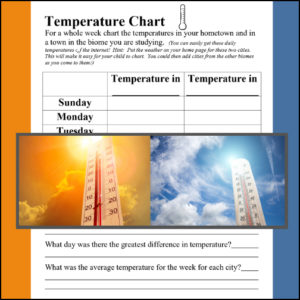
A biome is a large geographical area that contains distinct plant and animal groups which are adapted to live in that environment. There can be many different habitats in a biome. Some major biomes are tundra, taiga, grasslands, deciduous forest, fresh water, desert, alpine, rainforest and ocean. When studying a specific biome, use this temperature comparison chart to record the temperature in the student’s hometown and the biome of study for a week! (Use again and again with each biome studied)
Science meets Geography
-
$1.50Add to Cart
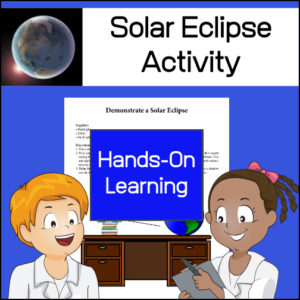
Hands on learning! A solar eclipse activity designed to help students visualize a solar eclipse through using common objects to actually demonstrate one.
-
$4.50Add to Cart
Studying marine animals? Whales? If so, your students will love the student-centered, hands-on, cross-curricular project where they’ll learn all about whales while creating a lapbook or an interactive notebook.
This can be used as a stand-alone unit that includes all of the informational materials, maps, illustrations and templates needed to create a beautiful project. However, a booklist is given if further research and reading is desired.
Includes:
– Instructions and lapbook/notebooking visuals
– Supply list
– Required elements checklist (optional for teacher assigned elements)
– Grading rubric and grading sheet
– Informational text covering: General and fun information about whales in general and more specific information on 8 species (orca, sperm whale, blue whale, beluga whale, humpback whale, gray whale, bowhead whale and narwhal), taxonomy, description of the 2 types of whales (baleen and toothed), migration, diet, communication, life cycle, predators, swimming displays, vocabulary
– Book suggestions for additional reading
– Illustration of anatomy: Baleen and toothed (labeled)
– Maps (Where in the World) for the orca, sperm whale, blue whale, beluga whale, humpback whale, gray whale, bowhead whale and narwhal
– 16 pages of templates that can be used to either create a lapbook or use in an interactive notebook -
$9.75Add to Cart
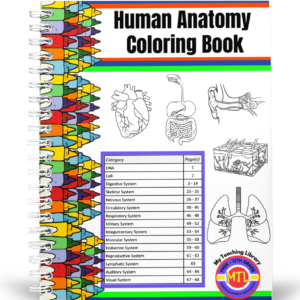
This 68-page anatomy coloring book has been designed for 5th-12th grade classrooms (Health, Science, Anatomy, Biology, Physiology).
Categories:
- DNA
- Cell
- Digestive System
- Skeletal System
- Nervous System
- Circulatory System
- Respiratory System
- Urinary System
- Integumentary System
- Muscular System
- Endocrine System
- Reproductive System
- Lymphatic System
- Auditory System
- Visual System
-
$2.00Add to Cart
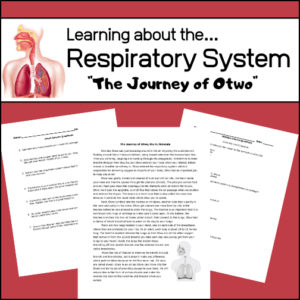
Students will learn about the respiratory system by following Otwo (the oxygen molecule) as he goes from bouncing around in the outside air into the human body! After reading the story, students will complete two worksheets (multiple choice and short answer) to access their understanding. Answer keys provided.
-
$5.00Add to Cart
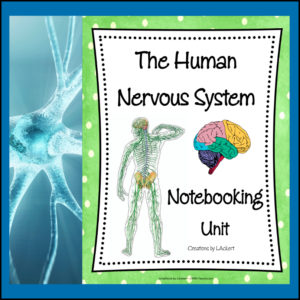
This BIOLOGY / HEALTH / ANATOMY / BODY SYSTEMS resource centers around the human nervous system and is a notebooking project unit. This interactive 56 page resource will require students to perform research and can be used independently or along side your curriculum.



&url=https://myteachinglibrary.com/product/pumpkin-science-unit/&media=https://myteachinglibrary.com/wp-content/uploads/2019/08/wy-424-a.jpg)


