
Category: Earth Science
Showing 21–34 of 34 resultsSorted by latest
-
 $2.50Add to Cart
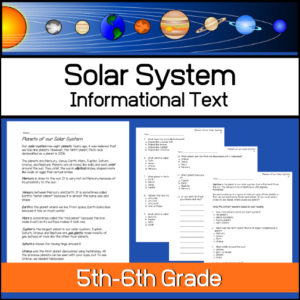
Help students develop their reading comprehension skills as they gain knowledge about the planets within our solar system with this informational article and assessment questions. This has been written for 5th-6th grade classrooms. The assessment includes 11 multiple choice questions, 1 opinion, short answer question and asks students to draw the planets in relation to the sun. Answer Key provided.
Flesch-Kincaid Grade Level: 6.5
Grade level: Sixth Grade
Automated Readability Index: 5.5
Grade level: 8-9 yrs. old (Fifth graders) -
 FREEAdd to Cart
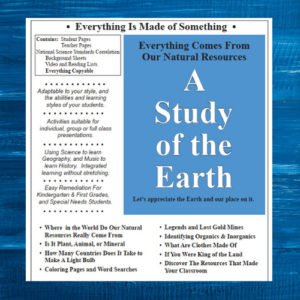
This free curriculum resource is from the Minerals Education Coalition.
-
 $2.00Add to Cart
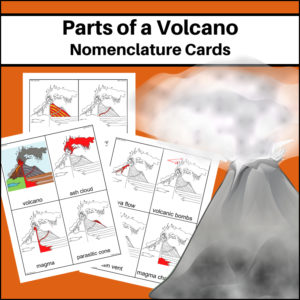
Parts of a Volcano – Nomenclature Cards – This resource will help students learn and study the various parts of a volcano: ash cloud, magma, parasitic cone, lava & ash layers, side vent, crater, pyroclastic flow, lava flow, volcanic bombs, main vent, and magma chamber.
-
$1.25Add to Cart
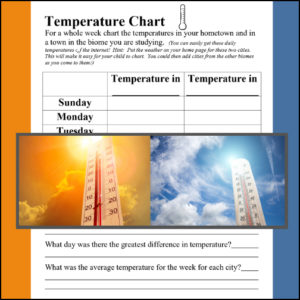
A biome is a large geographical area that contains distinct plant and animal groups which are adapted to live in that environment. There can be many different habitats in a biome. Some major biomes are tundra, taiga, grasslands, deciduous forest, fresh water, desert, alpine, rainforest and ocean. When studying a specific biome, use this temperature comparison chart to record the temperature in the student’s hometown and the biome of study for a week! (Use again and again with each biome studied)
Science meets Geography
-
$1.00Add to Cart
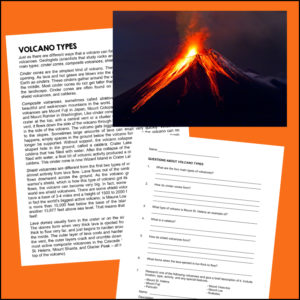
Here is a one page informational article to help students (6th-9th grades) learn about the various types of volcanoes and characteristics of each. After reading the text, student will answer questions to assess their comprehension.
-
$2.50Add to Cart
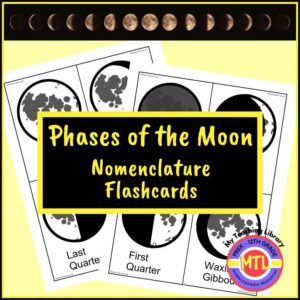
Teaching about the different phases of the moon? Get “Earth Science: Moon Phases Nomenclature Flashcards” to help students learn and identify the 8 different phases of the moon, regardless of grade level.
✨ What’s Included:
- Printable Nomenclature / flash cards for hands-on learning.
- Clear and concise labeled illustrations of each of the following moon phases: new moon, waxing moon, first quarter, waxing gibbous, full moon, waning gibbous, last quarter and waning crescent
✅ Perfect For…
- – Earth Science and general science lessons
- – Engaging students with moon phases and astronomy concepts.
This resource is built on the belief that understanding scientific terminology should be an active and interactive process. By utilizing a nomenclature-based approach, these flashcards encourage students to not only memorize terms but also to actively engage with the visual and conceptual aspects of moon phases. This method fosters deeper understanding and retention, making complex scientific ideas more accessible and memorable for every learner.
📚 Learning Objectives
- – Students will be able to identify and name the different moon phases.
- – Students will understand and define key Earth Science vocabulary related to the moon.
Transform your science lessons with these dynamic and effective Earth Science Vocabulary Moon Phases Nomenclature Flashcards! They are a fantastic tool to illuminate the wonders of space science for your students.
Click Add to Cart today!
-
$1.50Add to Cart
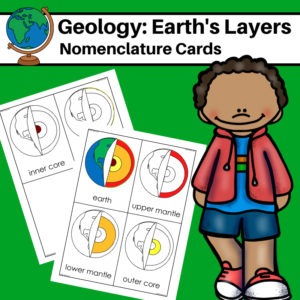
This resource, Earth’s Layers – Nomenclature Cards, will help your students learn the names of the layers of the Earth: upper mantle, lower mantle, outer core, inner core, and crust.
I’ve also included a set of blank cards for students to use and label themselves!
-
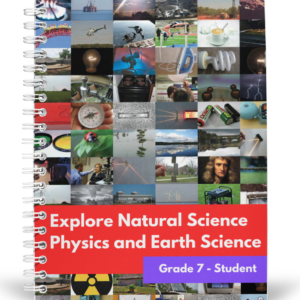
Natural Science: Physics & Earth Science – Grade 7 (Student Edition) to Pinterest (opens in a new window)$15.00Add to Cart
This physics and earth science student textbook is designed to use with middle school students (specifically those learning at or ready for 7th grade work). View the table of contents in the description below. Preview video here.
Get the TEACHER’S EDITION here!
Bundle and Save: 7th Grade Science Curriculum Bundle
-
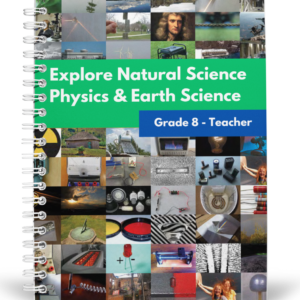
Natural Science: Physics & Earth Science – Grade 8 (Teacher’s Edition) to Pinterest (opens in a new window)$15.00Add to Cart
This is the teacher’s edition for Natural Science: Physics & Earth Science – Grade 8 (Student Edition)
Bundle and Save: 8th Grade Science Curriculum Bundle
-
$3.00Add to Cart
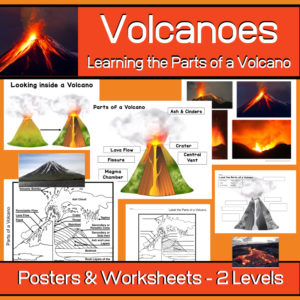
Help students master their knowledge of the parts of a volcano with these posters, handouts and worksheets! This resource provides 2 levels of learning plus worksheets come with and without terms. (Landforms, Earth Science, Geology)
-
$7.00Add to Cart
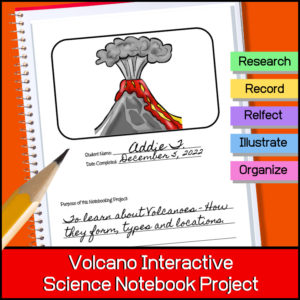
Help your students become self-learners as the plan, research, organize and most of all…LEARN as they create their own Volcano notebook project. This cross-curricular resource has been designed to inspire and guide students through the learning and reporting process as they learn how volcanoes are formed, prediction of eruptions, types of volcanoes, where they are located and more.
-
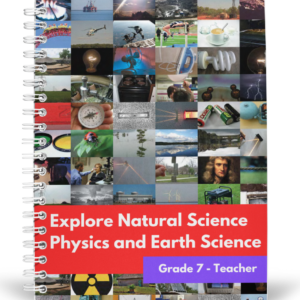
Natural Science: Physics & Earth Science – Grade 7 (Teacher’s Edition) to Pinterest (opens in a new window)$15.00Add to Cart
This is the teacher’s edition for Natural Science: Physics & Earth Science – Grade 7 (Student Edition)
Preview the student edition here.
Bundle and Save: 7th Grade Science Curriculum Bundle
-
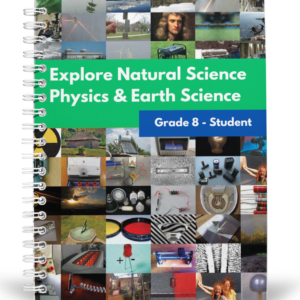
Natural Science: Physics & Earth Science – Grade 8 (Student Edition) to Pinterest (opens in a new window)$15.00Add to Cart
This Physics and Earth Science student textbook is designed to use with middle school students (specifically those learning at or ready for 8th grade work). View the table of contents in the description below.
Preview video of the companion 8th Grade Science: Biology & Chemistry textbook here.
Get the TEACHER’S EDITION here!
Bundle and Save: 8th Grade Science Curriculum Bundle
-
$4.50Add to Cart
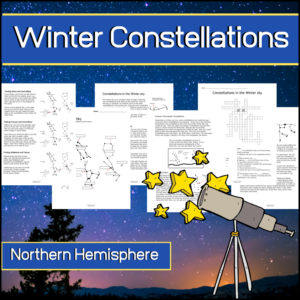
Explore the Northern Hemisphere’s Winter constellations with this resource! Students will learn…
- What are the major constellations?
- What is the Greek Mythology behind them?
- What major stars will help guide them through the night sky?
- How is Orion the ‘key’ to locating the main constellations?
- What is the name of the North Star, and which constellation is it in?
- What is the brightest star in the sky?
Students will learn about the following constellations:
- Orion
- Canis Major
- Canis Minor
- Gemini
- Auriga
- Pleiades
- Taurus
- Draco
- Ursa
- Major
- Ursa Minor
- Cepheus
- Cassiopeia
They will learn the location of the following stars:
- Pollux
- Castor
- Capella
- Procyon
- Sirius
- Betelgeuse
- Rigel
- Aldebaran
- Capella
- Polaris
They will also learn which constellations are called the Northern Circumpolar constellations PLUS the Greek Mythology behind these major constellations!
Student activity sheets include:
- Fill in the blank (constellation and star names for the ‘Winter Sky’)
- Draw and name (the five circumpolar constellations and the North Star)
- Crossword Puzzle (in which they will use the information within the resource to gather answers)
Suggested follow up activities:
- Assign students to go outside after dark, find and draw the constellations they see and can identify.
- Visit a local planetarium


&url=https://myteachinglibrary.com/product/natural-science-physics-earth-sci-7th-student/&media=https://myteachinglibrary.com/wp-content/uploads/2019/08/Z-260-Natural-Science-Gr-7-Physics-Earth-Student-1024x1024.png)
&url=https://myteachinglibrary.com/product/natural-science-physics-earth-sci-8th-teacher/&media=https://myteachinglibrary.com/wp-content/uploads/2019/08/Z-254-8th-grade-teachers-physics-earth-1024x1024.png)


&url=https://myteachinglibrary.com/product/natural-science-physics-earth-sci-7th-teacher/&media=https://myteachinglibrary.com/wp-content/uploads/2019/08/Z-260-Natural-Science-Gr-7-Physics-Earth-Teacher-1024x1024.png)
&url=https://myteachinglibrary.com/product/natural-science-physics-earth-sci-8th-student/&media=https://myteachinglibrary.com/wp-content/uploads/2019/08/Z-256-Physics-Earth-Science-8th-Grade-Student-1024x1024.png)
