
Category: Language Arts
Showing 181–200 of 614 resultsSorted by latest
-
 $9.99Add to Cart
Teacher’s Guide for Language Arts 3 (suggested 8th Grade use)
-
$3.00Add to CartWord Turkeys (November Language Activities) is a 60 page download for primary students (Advanced Kindergarten, 1st grade and remedial 2nd grade) designed to teach and reinforce Language – Word – Skills.Based on 1st grade word families and sight words, this turkey themed download would make a fun addition during the month of November, the Thanksgiving holidays or any turkey unit!See description below for more details.
-
$2.00Add to Cart
This circle letter resource is designed to give younger students the ability to see a word and then spell it using circle letter manipulatives. This resource can be used to reinforce letter learning, letter sounds, formation of words and much more.
With an October-theme, students will love creating / forming words that are related to Halloween such as bat, web, pumpkin, squash, candy, spider, cat, leaf and house. You will receive two copies of each word mat (color and b/w).
-
$1.75Add to Cart
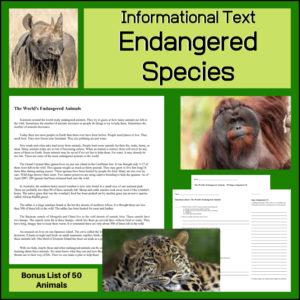
This cross-curricular (Language Arts – Science) informational article has been designed to help students gain a better understanding of why some animals in our world are endangered. The article will list causes such the need for more land and food for humans as well as pollution and hunting. Students will also be given several examples of animals from around the world that are in danger and what we need to learn in order to make plans to help them survive.
-
$2.50Add to Cart
This is a downloadable copy of the book.
About the book: Published in 1811, Sense and Sensibility has delighted generations of readers with its masterfully crafted portrait of two sisters, Elinor and Marianne Dashwood. Forced to leave their home after their father’s death, Elinor and Marianne must rely on making good marriages as their means of support.About the Author: Jane Austen was an English novelist known primarily for her six major novels, which interpret, critique and comment upon the British landed gentry at the end of the 18th century. Austen’s plots often explore the dependence of women on marriage in the pursuit of favorable social standing and economic security.
-
 $2.50Add to Cart
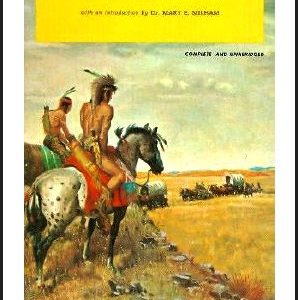
This is a downloadable copy of the book.
About the book: Cooper’s fictitious frontier hero Bumppo is never called by his name, but is instead referred to as “the trapper” or “the old man.” Chronologically The Prairie is the fifth and final installment of the Leatherstocking Tales, though it was published before The Pathfinder (1840) and The Deerslayer (1841). It depicts Natty in the final year of his life still proving helpful to people in distress on the American frontier.About the Author: James Fenimore Cooper was an American writer of the first half of the 19th century. His historical romances draw a picture of frontier and American Indian life in the early American days which created a unique form of American literature.
-
 $5.00Add to Cart
The Rime of the Ancient Mariner by the English poet Samuel Taylor Coleridge (British Romantic Literature) is the basis for this Literary Unit designed for 10th, 11th, and 12th grade students.
The unit is divided into the following sections:
Summaries and More: Includes summary, brief review, symbols of the poem, tone, setting, point of view and more.
Student Handouts: Sound devices in Poetry + Imagery & Figurative Language in Poetry
The Poem Worksheets: Examining and Analyzing Metaphors
Quizzes and Tests: Poetic devices quiz, Multiple choice on the poem, Short Answer and Essay for the poem
Additional Resources: Extended Activities + Albatross illustrationAnswer Keys are provided.
-
$5.00Add to Cart
This reading / literacy resource has been created to use with the Caldecott winning book, Jumanji, written by Chris Van Allsburg. It includes guided reading questions, journal response pages, reading journal pages, student activity pages, extended activities, and vocabulary work. Designed to use with 3rd – 4th -5th grades.
Includes:
- Guided Reading includes Pre-Reading, About the Cover, After Reading, and About the Art questions.
- Journal Response pages include questions about the story, an area for students to develop their own questions, questions students still have after reading and art expressions.
- Reading Journal (2 pages from which to choose) on which students record pages read, new words, record story events and student opinion about the story.
- Student Activity pages include creating a story setting map (with key), art work and write a different ending.
- Extended Activity (11 from which to choose) examples: Create a diorama of a favorite scene, create a board game.
- Vocabulary Work includes a word wall (40 words), definition and sentence writing and word search.
Reading Level information about Jumanji: Level: 3.9
-
$1.50Add to Cart
Why teach about syllables? Dividing words into parts, or “chunks” helps speed the process of decoding. Knowing the rules for syllable division can students read words more accurately and fluently. Understanding syllables can also help students learn to spell words correctly. This resource will help your students learn to divide words into syllables!
-
$2.00Add to Cart
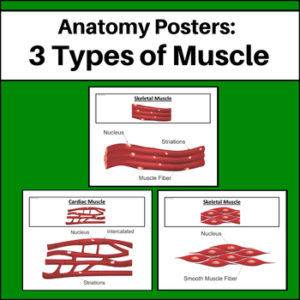
Perfect for any Biology / Anatomy Classroom teaching human anatomy: Anatomy Posters – Types of Muscle. These 3 colorful posters will help students quickly identify each type of muscle (Cardiac, Skeletal, Smooth) as well as the parts of each muscle.
-
$3.00Add to Cart
The Emerald City of Oz is the sixth of L. Frank Baum’s fourteen Land of Oz books. It was also adapted into a Canadian animated film in 1987. Originally published on July 20, 1910, it is the story of Dorothy Gale and her Uncle Henry and Aunt Em coming to live in Oz permanently. While they are toured through the Quadling Country, the Nome King is assembling allies for an invasion of Oz. This is the first time in the Oz series that Baum made use of double plots for one of the books.
Plot: At the beginning of this story, it is made quite clear that Dorothy Gale (the primary protagonist of many of the previous Oz books), is in the habit of freely speaking of her many adventures in the Land of Oz to her only living relatives, her Aunt Em and Uncle Henry. Neither of them believes a word of her stories, but consider her a dreamer, as her dead mother had been. She is undeterred.
Later, it is revealed that the destruction of their farmhouse by the tornado back in The Wonderful Wizard of Oz has left Uncle Henry in terrible debt. In order to pay it, he has taken out a mortgage on his farm. If he cannot repay his creditors, they will seize the farm, thus leaving Henry and his family homeless. He is not too afraid for himself, but both he and his wife, Aunt Em, fear very much for their niece’s future. Upon learning this, Dorothy quickly arranges with Princess Ozma to let her bring her guardians to Oz where they will be very happier and forever safe. Using the Magic Belt (a tool captured from the jealous Nome King Roquat), Ozma transports them to her throne room. They are given rooms to live in and luxuries to enjoy, including a vast and complex wardrobe. They meet with many of Dorothy’s animal friends, including the Cowardly Lion and Billina the Yellow Hen.
In the underground Nome Kingdom, the Nome King Roquat is plotting to conquer the Land of Oz and recover his magic belt, which Dorothy took from him in Ozma of Oz. After ordering the expulsion of his General (who will not agree to such an attack) and the death of his Colonel (who also refuses), King Roquat holds counsel with a veteran soldier called Guph. Guph believes that against the many magicians of Oz (the reputation of which has grown in the telling), the Nome Army has no chance alone. He therefore sets out personally to recruit allies.
Dorothy, accompanied by the Wizard of Oz and several other friends, departs the Emerald City in a carriage drawn by the Wooden Sawhorse, intending to give her aunt and uncle a tour of the land.
-
$2.50Add to Cart
This 42 page book is a biography of Frederick Douglass. Frederick Douglass was an American social reformer, abolitionist, orator, writer, and statesman. After escaping from slavery in Maryland, he became a national leader of the abolitionist movement in Massachusetts and New York, gaining note for his oratory and incisive antislavery writings.
-
$0.50Add to Cart
This cute little song (tune: Did You Ever See a Lassie?) will help students remember which vowel ‘talks’ when there are two vowels together!
-
$6.00Add to Cart
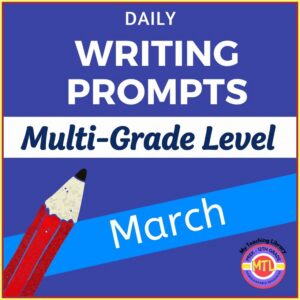
Stop the “I don’t know what to write about!” struggle before it starts. This daily writing prompts resource provides a seamless solution for developing consistent writing habits, critical thinking skills, and creative expression for students in 4th – 12th Grade. Whether it’s a deep dive into facts and history or a light-hearted reflection, this month’s prompts ensure your students have a meaningful reason to put pen to paper every single day.
What’s Included?
This isn’t just a list of sentences; it is a complete journaling system. Each month is packed with:
- Individual Journal Pages: A unique, dedicated page for every day of the month.
- Diverse Prompt Styles: A balanced mix of “light and fun” topics and “deep-dive” prompts that challenge students to think critically about values, history, and social issues.
Here are two examples:
March 3rd – (Star Spangled Banner became the U.S. national anthem)
The Star Spangled Banner was written during the Revolution, but it didn’t become the national anthem until 1931. Some people think that it’s a great anthem. Other people think that it isn’t. What do you think? If we were to change the national anthem, what would you want to have instead? Or would you not want to change it, no matter what?March 24th – (Tuberculosis bacillus discovered)
In 1882, a German scientist named Robert Koch isolated the bacillus that cased tuberculosis. Tuberculosis still kills about two million people annually worldwide. However, this discovery enabled scientist to fight this disease, which can be vaccinated against, and cured. If you could cure one disease, what would it be? Why would you choose to cure that disease?How to implement it:
- Daily Starts: Start your morning or English period with a 10-minute quiet writing session.
- Fast-Finisher Activity: Keep your “early birds” engaged with a meaningful task that doesn’t feel like “busy work.”
- Homeschool Portfolios: Use these daily entries to track progress in handwriting, grammar, and expressive thought throughout the year.
- Digital or Print: These pages are designed to be “print-and-go” ready, but they also work beautifully as digital assignments. Simply give them to your student(s) and allow them to create a word document for each. First, have them copy (type) the prompt. Then answer it! Print and place in a growing 3 ring-binder of work.
The Benefits of Daily Prompting
Daily writing is like a workout for the brain. By using these journals, students will:
- Build Writing Stamina
- Strengthen Critical Thinking
- Encourage Research
- Encourages Deep Thinking About Different Topics
My Teaching Library has writing prompts for the entire year – BUNDLE & SAVE: Daily Writing Prompt Journal – ONE YEAR BUNDLE
-
$3.00Add to Cart
A complete Guided Reading resource for the Caldecott book: Snowflake Bentley!
Includes:
- A Guided Reading (Teacher page) to use before the book is read and contains Pre-reading questions plus questions about the cover
- A Guided Reading (Teacher page) to use after reading the book and contains questions about the plot of the story and the artwork.
- 4 Journal Response pages (Student)
– Two to use during and after the reading of the book
– Two Art prompt pages
About the book: The book is based on a true story. Martin has written about the first known snowflake photographer, Wilson Bentley, and his interest in capturing snowflakes. From the time he was a small boy, Wilson Bentley saw snowflakes as small miracles. And he determined that one day his camera would capture for others the wonder of the tiny crystal.
-
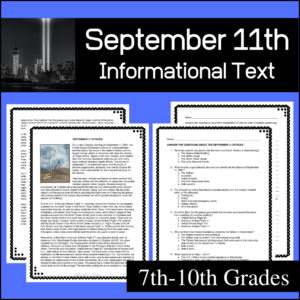
$3.00Add to CartStudents should understand the significance of a terrible day in American history, September 11th, 2001, otherwise known as 9-11.This resource has been designed to help students gain factual knowledge of the events of that day, the heroic efforts of first responders and the U.S. military response.May be used as a standalone mini-lesson or as part of your own curriculum. (Designed for 7th-10th grades)
-
$3.50Add to Cart
This December (NO PREP) Packet is Christmas themed and filled with engaging and FUN resources that get kids excited about learning! Includes 30 students pages for an entire holiday month of skills review…See more details in description below!
-
$3.00Add to Cart
Help students grow their vocabulary and practice Language Arts skills with this MLK – Martin Luther King, Jr. resource! Use as a standalone resource or as a springboard to further MLK study during the month of January or anytime.
Includes:
- – Vocabulary Packet: 39 words
- – MLK Creative Writing assignment
- – Alphabetical Order
- – Scrambled Letters Worksheets
- – Word Search