
Category: Animals
Showing 21–40 of 50 resultsSorted by latest
-
 $2.00Add to Cart
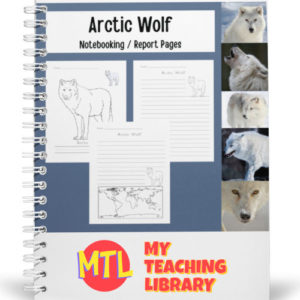
Students will love using these pages to create a report on the Arctic wolf also known as the polar wolf! Perfect to use during a study of the arctic region, tundra animals or as a cross-curricular unit that will have students reading, writing, completing map work (geography) and learning about the life of the wolf (science).
Check out My Teaching Library’s article: Learning about the Arctic Wolf!
-
$2.00Add to Cart
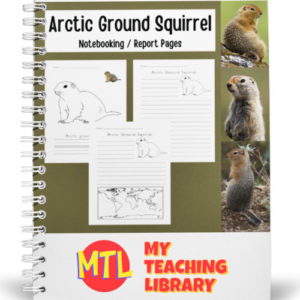
Students will love using these pages to create a report on the cute, Arctic ground squirrel that lives in Alaska, Canada and Siberia! Perfect to use during a study of the arctic region, tundra animals or as a cross-curricular unit that will have students reading, writing, completing map work (geography) and learning about the life of this cute little squirrel (science).
Check out My Teaching Library’s article: Arctic Ground Squirrel
-
$2.00Add to Cart
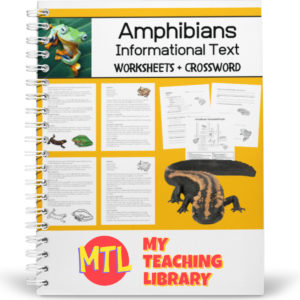
This resource has been designed to teach students about amphibians. They will learn the classification, the three types of amphibians, where they live (habitat), what the eat (diet), how they protect themselves (defense) and more.
Includes:
– Informational Text (b/w and color)
– 2 page worksheet
– Crossword puzzle
– Answer Keys
– BONUS: Large list of amphibian species -
$2.00Add to Cart
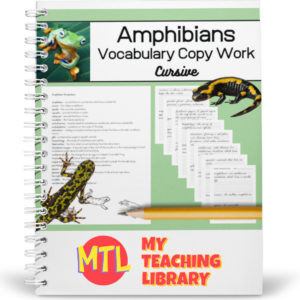
Studying amphibians? Help students learn important amphibian related vocabulary words and definitions while practicing copy work and handwriting (cursive). This resource include 22 vocabulary words and definitions. (See below description for included words)
-
$2.50Add to Cart
Placental mammals are the most diverse group of mammals with about 4000 discovered species and include dogs, cats, rodents, elephants, whales, cattle, pigs, humans and many more! If you are planning a study on these mammals, this product will guide students through their research and can be used as the end reporting tool!
-
$2.50Add to Cart
This science, animal study activity is designed to guide your students through the researching and reporting of any egg laying mammal (also known as Monotremes). These unusual mammals only reside in Australia and New Guinea. There are only five known species of monotremes: the platypus and four species of echidna.
This product will guide students through their research and can be used as the end reporting tool!
-
$2.50Add to Cart
Students love kangaroos, wallabies, koalas and other pouch carrying animals also known as marsupials! This resource will guide students through their research on these amazing pouch carrying animals and can be used as the end reporting tool!
-
$2.50Add to Cart
Any mammal designed to swim such as a whale, sea lion, seal or walrus is considered a natatorial mammal. The term natatorial comes from the Latin natātor, natātōrem meaning “swimmer”. This product is perfect for your students if you want to assign a research & report project on water dwelling mammals. It will guide students through their research and can be used as the end reporting tool!
-
$2.50Add to CartOne way of categorizing animals is how they move. Mammals that are designed to jump, hop, gallop, or leap are called Saltatorial mammals such as the kangaroo, leopard, rabbit, horse, antelope and many others! This product is perfect to use as a research and report assignment to have students study mammals that jump, hop, gallop and/or leap! It will guide students through their research and can be used as the end reporting tool!
-
$2.50Add to Cart
Burrowing, ground dwelling mammals are known as fossorial mammals. Fossorial comes from the Latin fossor, meaning “digger”, thus mammals such as groundhogs, gophers, moles, rabbits and others are in this group. This resource will help students research and report on fossorial mammals as it guides students through their research and can be used as the end reporting tool!
-
$2.50Add to Cart
During a study of animals (specifically tree-dwelling, arboreal mammals), students can use this product to research and report on animals such as the koala, monkey, sloth or possum. Any tree dwelling mammal is considered arboreal. Students can use this product as both a guide to their research as well as the end reporting tool!
-
$2.50Add to Cart
In the Science field of Zoology there is a group of mammals that are considered ‘flying’ mammals. This product makes it easy to assign students to research and report on one of these ‘flying’ mammals! Students will be able to use the product to both guide their research and use as their reporting tool.
-
$1.25Add to Cart
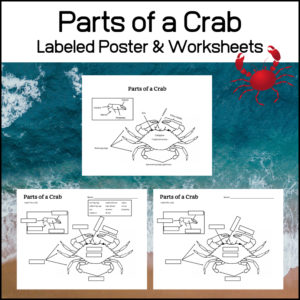
Is your Science class studying (or preparing to study) ocean life, crustaceans or the phylum Arthropoda? This resource, Parts of a Crab – Poster & Worksheets, includes a labeled poster of a crab and 2 worksheets (or quizzes).
-
$1.50Add to Cart
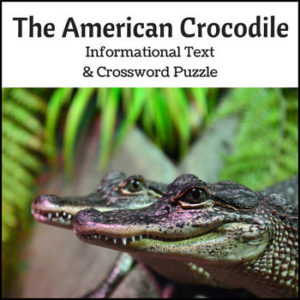
Designed for 5th-8th grade students, American Crocodile Informational Text and Crossword Puzzle will provide students with details about the only crocodile native to the Americas in the following categories:
* Appearance
* Differences from alligators
* Distribution and Habitat
* Food and Growth
* ReproductionAfter reading the text (3 pages), students are to complete the crossword puzzle. Answer Key provided.
-
$8.00Add to Cart
This unit on habitats and the animals that live in each is an interactive learning unit that allows students to be hands-on and create a beautiful project be the completion of the study! Use as a mini-course, in a Science center or in conjunction with another habitat study.
Use the complete unit (or) use only parts of it. Designed for 2nd-4th grades so it has been designed to work well with multiple ages/grades.
Includes:
– Instructions
– Informational text (Definition of habitat plus information on these 8 different habitats: desert, forest, ocean, arctic, wetlands, grasslands, rainforest and jungle)
– Suggested book recommendations for further study
– Project pieces (cover pages, vocabulary, definitions, habitat cards, mini-book, habitat flapbooks, habitat pockets to insert included animal cards, basic needs spinning template, favorite animal templates plus clip art)Comes in both black/white pages as well as color (so you decide if you want to print using color ink or not as well as if you want your students to color or not).
See included habitats and animals in description below.
-
$1.75Add to Cart
This cross-curricular (Language Arts – Science) informational article has been designed to help students gain a better understanding of why some animals in our world are endangered. The article will list causes such the need for more land and food for humans as well as pollution and hunting. Students will also be given several examples of animals from around the world that are in danger and what we need to learn in order to make plans to help them survive.
-
$2.25Add to Cart
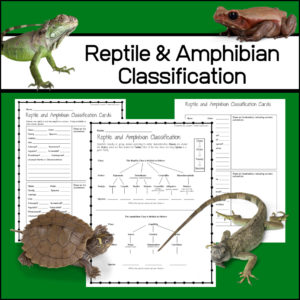
This Science / Biology resource includes 2 student exercises plus classification card templates that can be used for centers, projects and more.
-
$2.25Add to Cart
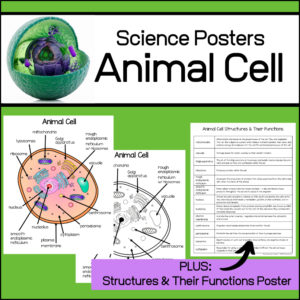
This Science / Biology resource offers 2 labeled posters showing the structures and organelles of an animal cell! I’ve also included a handout detailing the major function(s) of each structure/organelle. Structures and organelles include: centrosome, plasma membrane, mitochondria, vacuole, Golgi apparatus, ribosome, lysosomes, rough endoplasmic reticulum, smooth endoplasmic reticulum, nucleus, nucleolus, peroxisome, cytoplasm
-
$1.00Add to Cart
Autumn / Fall Migration – Informational Text is a 5 page resource that will give students valuable information about the migration of many types of animals from around the world that migrate every Autumn.
Information in the text includes:
- What migration is
- What type of animals migrate (examples)
- Why animals migrate
- Which animal has the longest migration
- How animals find their way
After students read the one page of informational text, there are 3 additional student pages to answer questions (multiple choice, short answer and essay).
Flesch-Kincaid Grade Level: 5
-
$1.50Add to Cart
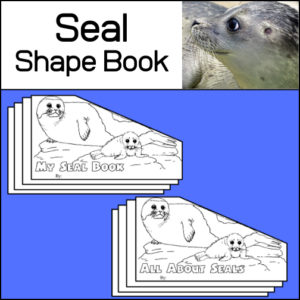
Seals are found along most coasts and cold waters, but a majority of them live in the Arctic and Antarctic waters. Harbor, ringed, ribbon, spotted and bearded seals, as well as northern fur seals and Steller sea lions live in the Arctic region. Whether you are studying these wonderful animals or just want to add a quick side lesson, here is a Seal Shape Book that students can use to self-publish their created stories, reports and poems! Templates have differing line heights to accommodate a variety of grade levels.