
Category: Life Science
Showing 81–98 of 98 resultsSorted by latest
-
 $3.00Add to Cart
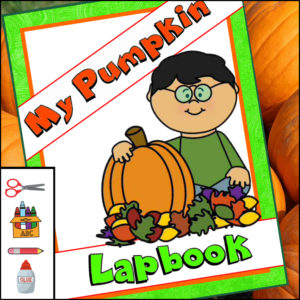
This interactive unit for students will allow them to create a cute LAPBOOK about PUMPKINS! Great to use anytime, especially in October or November during the Fall Holidays.
See description below for more details on this resource AND suggested uses.
-
$3.00Add to Cart
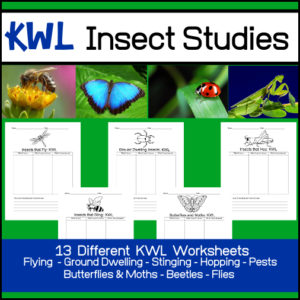
Want student to investigate a variety of different types of insects? This K-W-L resource includes 13 different KWL worksheets so that students (individually or in cooperative groups) can use as they study different bugs and creepy crawlies. Perhaps they want (or you want) the focus to be on insects that hop or ground dwelling insects. What if their study should focus on beetles only or butterflies and moths? Not only will you get worksheets for a variety of specified ‘types’ of insects but I’ve also included some that can be tailor designed to what you or your students choose to study!
-
$4.00Add to Cart
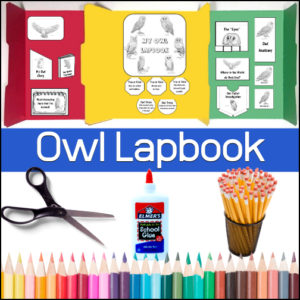
This engaging, hands-on project will give students the materials necessary to learn all about owls and create a great project to display their learning!
Suggested for 3rd-6th grades. (See description for more information)
-
$4.99Add to Cart
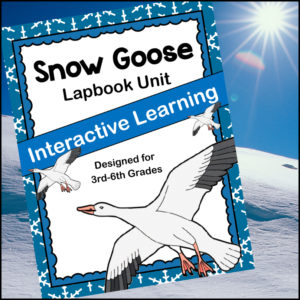
This resource contains everything your students need to complete it. No need to do additional research, although this should be encouraged. So whether you are looking for a completely self-contained unit or one that allows for in-depth study, this is it…Snow Goose Lapbook Unit!
Students will study all aspects of the Snow Goose’s life, vocabulary related to the informational reading contained within the unit, complete map work and more.
-
$2.00Add to Cart
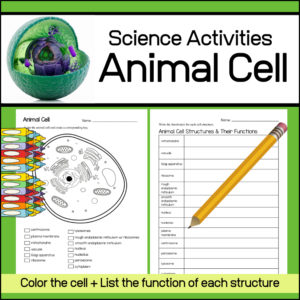
This Science / Biology resource includes 2 activity worksheets for students to help them review the structures / organelles of an animal cell and the main function(s) of each. Structures /organelles include: centrosome, plasma membrane, mitochondria, vacuole, Golgi apparatus, ribosome, lysosomes, rough endoplasmic reticulum, smooth endoplasmic reticulum, nucleus, nucleolus, peroxisome, cytoplasm
-
$1.50Add to Cart
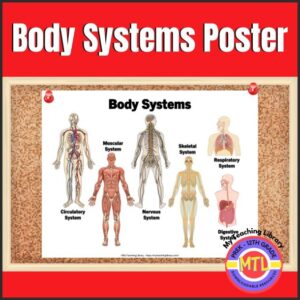
Studying anatomy? Body systems? Here is “Body Systems” poster that that illustrates these systems: circulatory, muscular, digestive, nervous, skeletal and respiratory.
-
$3.00Add to Cart
– In one minute, how much air do you breathe in?
– What does nose hair do?
– What is a bronchial tree?
– Do you breathe in carbon monoxide or carbon dioxide?Students will learn the answers to these questions and others as they color and read the pages of ‘Your Respiratory System Coloring Book’.
-
$2.00Add to Cart
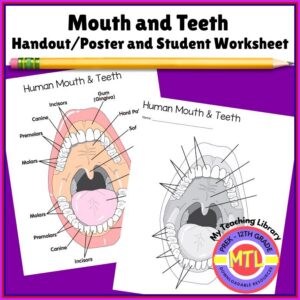
Help students learn the parts of the mouth and the types of teeth with this labeled poster and worksheet!
Looking for additional resources to use with the resource?
Tooth Anatomy Diagram and Worksheet
Dental Care Word Search | Dental Health -
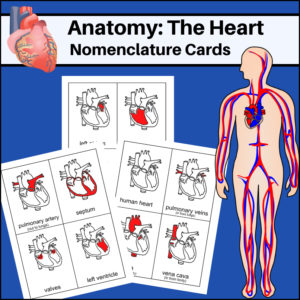
$2.00Add to CartThis resource,The Heart – Human Anatomy Nomenclature Cards, help students learn and study the location of the parts of the heart: pulmonary veins, aorta, vena cava, pulmonary artery, septum, valves, left ventricle, left atrium, right ventricle and right atrium.
-
$2.25Add to Cart
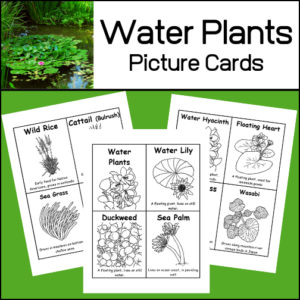
Studying botany? Perhaps you are studying water ecosystems? Here are ready-to-color cards showing 10 plants that grow in water.
Each card includes the type of plant, a short description and a picture to color.Plants included are:
– water lily
– duckweed
– sea palm
– water hyacinth
– floating heart
– watercress
– wasabi
– wild rice
– cattail (bulrush)
– sea grass -
$1.50Add to Cart
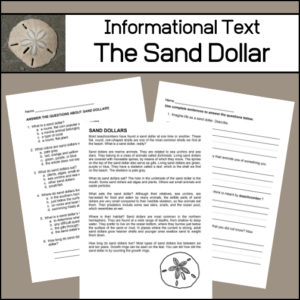
This informational article will teach students about the sand dollar. They will learn that the little round, coin-shaped shell found on the beach is actually part of a marine animal, related to sea urchins and sea stars. They will also learn how living sand dollars move, that they aren’t ‘white’, how and what they eat and much more. After reading, students will complete two worksheets (multiple choice and short answer) to assess their comprehension / understanding of the material. Answer Key is provided.
Automated Readability Index: 4.8
Grade level: 8-9 yrs. old (Fourth and Fifth graders)
Linsear Write Formula : 5.6
Grade level: Sixth Grade. -
$8.00Add to Cart
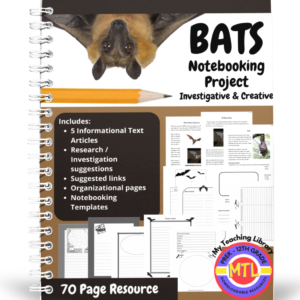
Studying bats? Here is a resource that will allow students to create a beautiful project that will show off what they’ve learned. This 70 page project unit can be used as a fully contained project resource (with no needed outside information required) or can be a launch for a full-blown research project using additional resources and includes:
- – Explanation page about creating a notebooking project
- – Suggested supply list
- – Evaluation rubric
- – Assignment page
- – Table of contents pages
- – Vocabulary & Reference pages
- – List of bat related vocabulary
- – Suggested links (optional)
- – Research / Notebooking questions/investigation suggestion handouts
- – 5 Informational text articles
- – Project KWL
- – Notebooking template pages
- – Bat pictures
-
$2.00Add to Cart
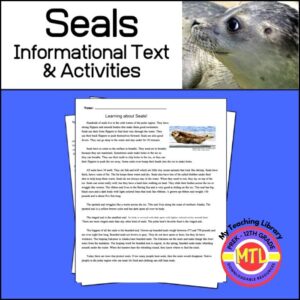
This informational text article is all about seals, where they live, their physical characteristics and about several different types of this cold-water mammal. After reading, students will complete a reading comprehension worksheet and (optional) write a story! Answer key provided.
-
$4.50Add to Cart
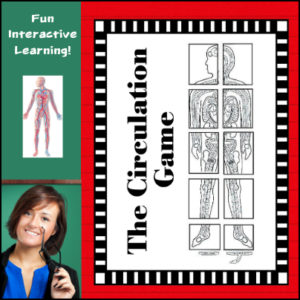
A fun, interactive game that will have students learn all about the circulatory system!
- – deliver oxygen and food to the cells
- – have oxygen and carbon dioxide ‘ride’ on red blood cells
- – circulate red blood cells throughout the body – through the circulatory system (arteries and veins)
The first team to get all their oxygen to the cells, all the food to the cells, all the wastes to the kidneys and all the carbon dioxides to the lungs, wins the game!
-
$2.25Add to Cart
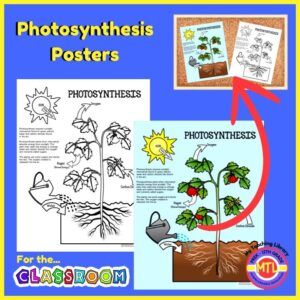
This resource gives you two photosynthesis posters, one b/w and the other color. Each poster has an easy-to-understand illustration plus a short explanation of the photosynthesis process is also included!
-
$2.25Add to Cart
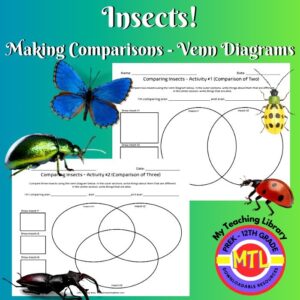
TWO ready to use Venn Diagram Science activities for students to use to compare 2 or 3 insects. On each, students will list the insects they will compare and contrast, draw a picture of each and then complete the Venn Diagram.
Extend the activity by asking students to write a paragraph or short report about their discoveries!
-
$3.25Add to Cart
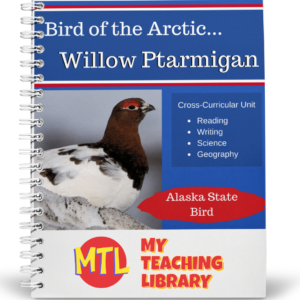
Bird of the Arctic – Willow Ptarmigan is a cross-curricular resource (Reading, Writing, Science and Geography) that you can use as a stand alone product or as a supplement to related thematic and/or unit studies. Great to use if you are studying: Habitats, Arctic animals, Alaska, Birds, State birds, Ornithology