


Only logged in customers who have purchased this product may leave a review.
Products
A Day in History – Investigation Station | September 1 – Titanic Found
$1.00
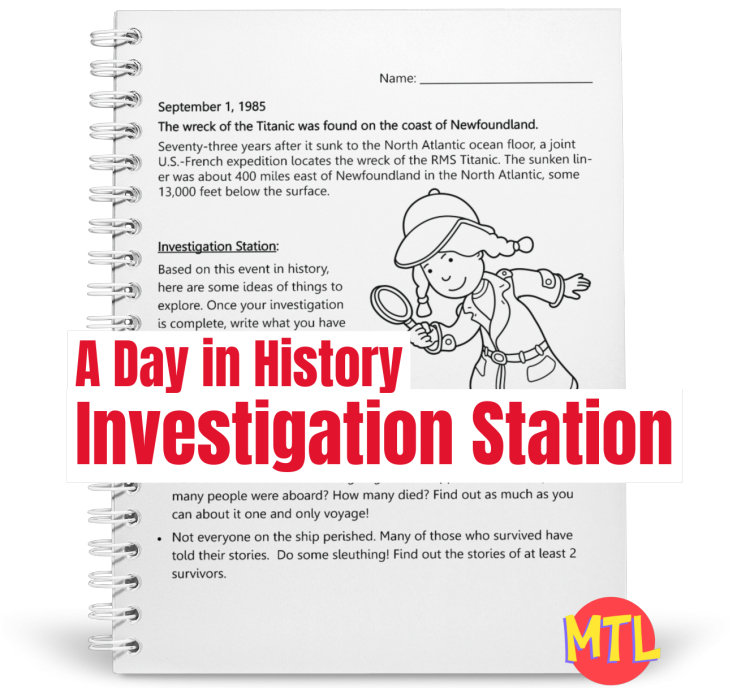
A Day in History – Investigation Station is a series of fun sleuthing research activities based on a single event on a specific day in history! This investigation centers around the Titanic. Exploration ideas include learning about Dr. Robert Ballad, the ship’s maiden voyage and survivor stories.
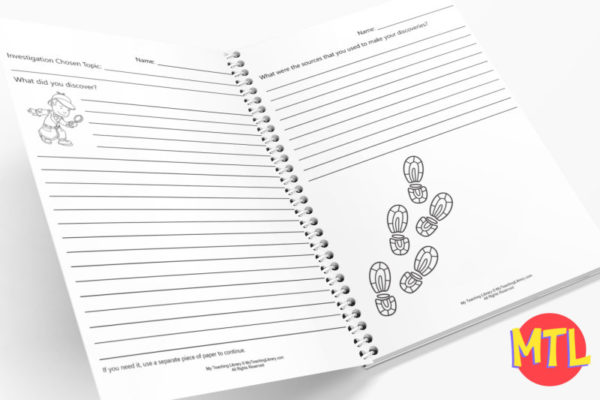
Students will learn about an event and be given several topics from which to choose to ‘investigate’. After some exploration, students are asked to write what they have discovered and name used sources.
So…with each lesson, students will:
▪ (Read) Learn one ‘On this Day in History’ fact.
▪ (Investigate) Take a related topic and explore it through the use of different forms of media (i.e. books, internet).
▪ (Write) Summarize and write what they have discovered. This also should include the recording of sources.
Related products
-
 $3.00Buy Now
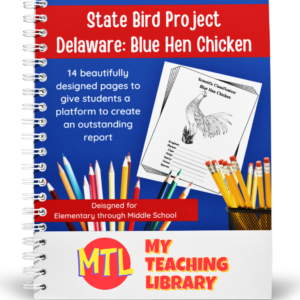
Studying the state of Delaware and state symbols? What is the state bird of Delaware?
This project-based unit is designed to help students study and record information about Delaware’s state bird: Delaware Blue Hen Chicken
What type of pages are contained in this set:
– A map page (for the state)
– Scientific classification page
– A page for students to give details about the bird’s physical description, habitat, diet, life span and reproduction
– A page where students will do additional map work to show where in the U.S. the bird lives in addition to migration information
– Coloring page
– Several pages on which students can use for expository and/or creative writing as well as sections in which students may draw.14 pages in all and is designed for different levels / abilities.
My Teaching Library has a notebooking set for each of all 50 states. In addition, you can get all of them bundled!
Here are other bird related products you’ll love…
-
$2.50Buy Now
Words to 24 traditional Christmas Carols (and a little history about them as well).
Includes:
- Deck the Halls
- We Wish you a Merry Christmas
- The Twelve Days of Christmas
- Good King Wenceslas
- Come, Buy My Nice Fresh Ivy
- Carol of the Bells
- O Christmas Tree
- Here We Come a-Wassailing
- God Rest Ye Merry Gentlemen
- The First Noel
- I Saw Three Ships
- Hark! The Herald Angels Sing
- It Came upon the Midnight Clear
- Silent Night
- Down in Yon Forest
- Joy to the World
- O Holy Night
- We Three Kings
- Away in the Manger
- Good Christian Men Rejoice
- O Come All Ye Faithful
- O Little Town of Bethlehem
- While Shepherds Watched
- Jingle Bells
-
$1.75Buy Now
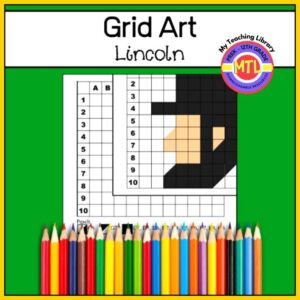
This is a Math and Geography Coordinate Activity!
Grid art is a terrific way to practice using coordinates (A1) (D8) which is an important skill to master.
Coordinates are a set of values that show an exact position which is used when graphing (Math) and reading maps (Geography). Your students will enjoy discovering the unknown, mystery picture…which happens to be Abraham Lincoln!
-
$3.00Buy Now
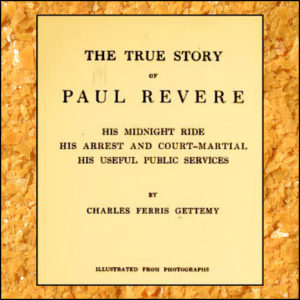
This is a downloadable copy of the book. (358 pages)
About the book: Published in 1905, Gettemy writes of Paul Revere’s midnight ride, his arrest, court-martial plus his ‘useful public services’. Paul Revere ( December 21, 1734 – May 10, 1818) was an American silversmith, engraver, early industrialist, and a patriot in the American Revolution. He is most famous for alerting the Colonial militia to the approach of British forces before the battles of Lexington and Concord, as dramatized in Henry Wadsworth Longfellow’s poem, “Paul Revere’s Ride”. Revere was a prosperous and prominent Boston silversmith, who helped organize an intelligence and alarm system to keep watch on the British military. Revere later served as a Massachusetts militia officer, though his service culminated after the Penobscot Expedition, one of the most disastrous campaigns of the American Revolutionary War, for which he was absolved of blame. Following the war, Revere returned to his silversmith trade and used the profits from his expanding business to finance his work in iron casting, bronze bell and cannon casting, and the forging of copper bolts and spikes. Finally in 1800 he became the first American to successfully roll copper into sheets for use as sheathing on naval vessels.


Reviews
There are no reviews yet.