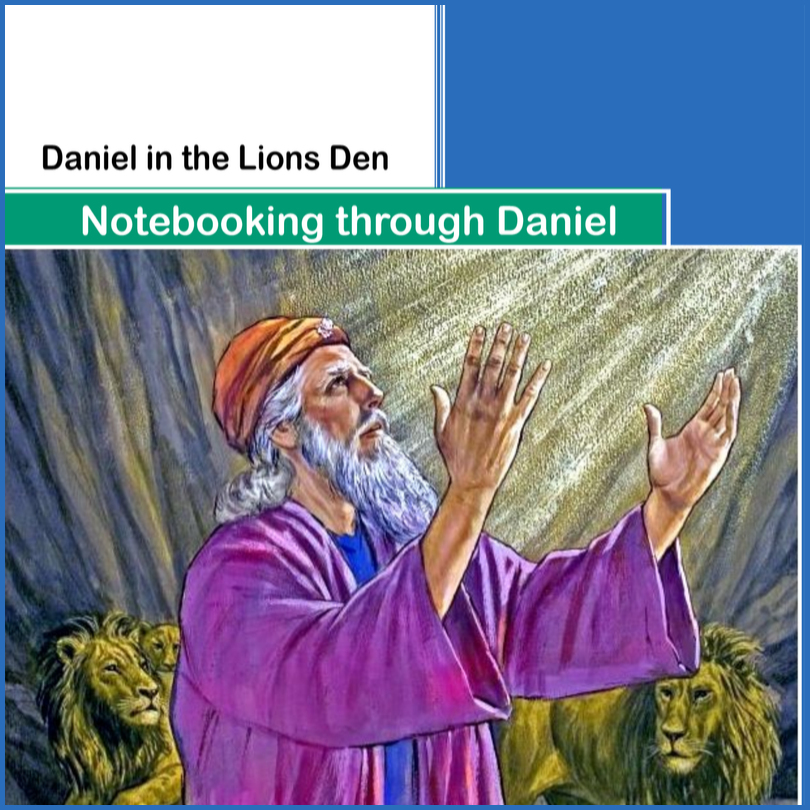

Description
Included:
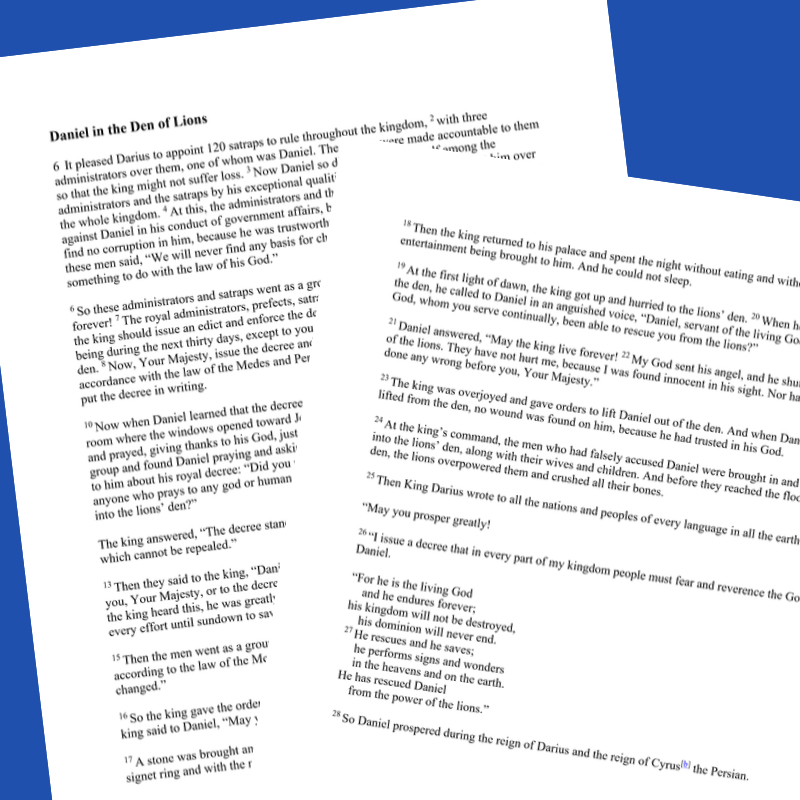
- Copy of Daniel 6
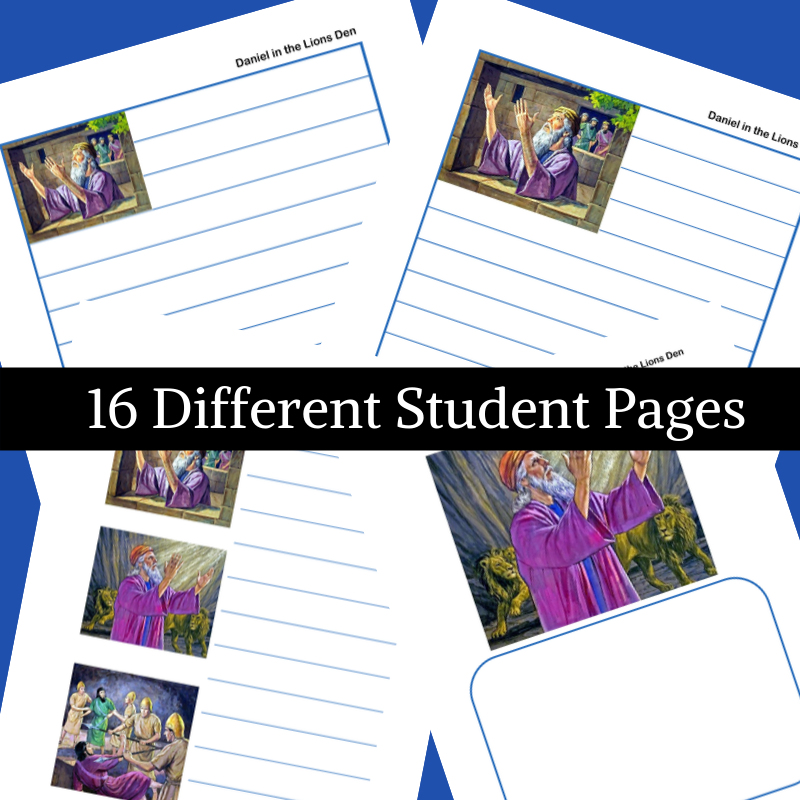
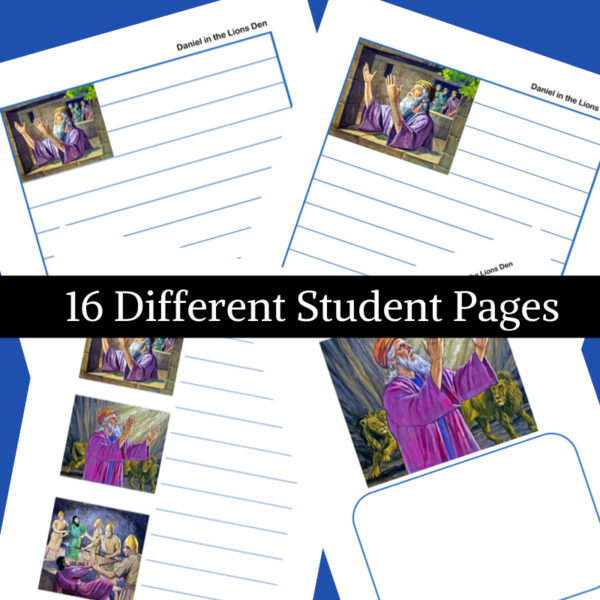
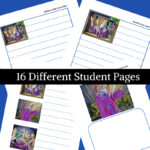
- 16 different student notebooking pages

$3.00
The story of Daniel in the lions’ den (Daniel – Chapter 6) tells how Daniel is raised to high office by his royal master Darius the Mede, but jealous rivals trick Darius into issuing a decree which condemns Daniel to death. Hoping for Daniel’s deliverance, but unable to save him, the king has him cast into the pit of lions. At daybreak he hurries back, asking if God had saved his friend. Daniel replies that God had sent an angel to close the jaws of the lions, “because I was found blameless before him.” The king has those who had conspired against Daniel, and their wives and children, thrown to the lions in his place, and commands to all the people of the whole world to “tremble and fear before the God of Daniel”.
This notebooking resource has been designed for students to write about, give a report of, and comment on chapter 6 of the book of Daniel.
Included:
Only logged in customers who have purchased this product may leave a review.
✏️A student-centered resource to help students learn and practice research skills, report writing, project and presentation skills.
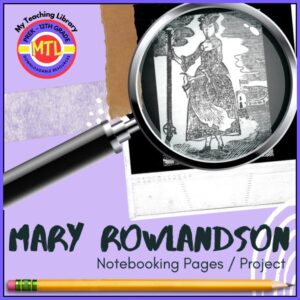
Students will use this project-based unit to learn about and report on Mary Rowlandson.Mary Rowlandson was a British American colonial author who wrote one of the first 17th-century captivity narratives, in which she told of her capture by Native Americans, revealing both elements of Native American life and of Puritan-Indian conflicts in early New England.
✏️This notebooking project unit can be assigned individually or within cooperative groups. Use it within a Language Arts classroom or a Social Studies / U.S. History classroom. Very flexible and cross-curricular! After completing the written portion of this resource, you can grade it (or) assign students to do an oral and/or audio-visual presentation based on their findings/work.
✏️What is in this resource?
This is a fun, engaging unit on trains!
See description for details
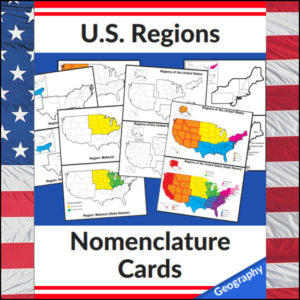
Mastering the map has never been more visual! This set of 20 professional nomenclature cards is the perfect foundational tool for any U.S. geography unit. Based on the 4 regions as defined by the U.S. Census Bureau (Northeast, Midwest, South, and West), these cards provide a clear, structured way for students to visualize how the United States is organized.
From full-color coded keys to black-and-white standalone regional maps, this versatile set helps students transition from “the big picture” to specific regional details with ease.
🧠 The “How” and “Why” (Educational Benefits)
Why use nomenclature cards for geography? It’s all about spatial recognition and scaffolded learning:
🛠️ Ways to Use These
🚀 Help Your Students Find Their Way!
Equip your geography explorers with the visual tools they need to master U.S. Geography. Add these US Regions Nomenclature Cards to your teaching toolkit today and watch their map-reading confidence soar! 🌟
UPGRADE and get this BUDNLE: Regions of the U.S.A. | Geography Bundle


Reviews
There are no reviews yet.