
Category: Language Arts
Showing 161–180 of 217 resultsSorted by latest
-
 $6.00Add to Cart
Stop the “I don’t know what to write about!” struggle before it starts. This daily writing prompts resource provides a seamless solution for developing consistent writing habits, critical thinking skills, and creative expression for students in 4th – 12th Grade. Whether it’s a deep dive into facts and history or a light-hearted reflection, this month’s prompts ensures your students have a meaningful reason to put pen to paper every single day.
What’s Included?
This isn’t just a list of sentences; it is a complete journaling system. Each month is packed with:
- Individual Journal Pages: A unique, dedicated page for every day of the month.
- Diverse Prompt Styles: A balanced mix of “light and fun” topics and “deep-dive” prompts that challenge students to think critically about values, history, and social issues.
Here are two examples:
January 16th – (America put the “Prohibition Amendment” into effect in 1919)
To prohibit something is to forbid it, or to make it illegal. In 1917, in Amendment 18, the United States decided that the negative effects of alcohol were so dangerous that is should be illegal. The Amendment when into effect in 1919. The intention of the amendment was to protect people from the dangers of alcohol. Unfortunately, it had the effect of making organized crime very wealthy through the illegal sale of alcohol. In 1933, Prohibition was repealed with the 21st Amendment. If you could make something that is legal become illegal, what would it be? How would you enforce the law?January 22nd – (National Mentoring Month is January)
To be a mentor, you don’t need special skills, just an ability to listen and to offer friendship, guidance and encourage to a young person. Have you ever been a mentor to someone? If so, describe your experience. If not, is there someone you might mentor? Do you know him/her already? If not, how would you meet? Describe how you’d be a good mentor.Whether you are an educator or a homeschooling parent, you probably know that the hardest part of writing is often just getting started. This bundle removes that barrier.
How to implement it:
- Daily Starts: Start your morning or English period with a 10-minute quiet writing session.
- Fast-Finisher Activity: Keep your “early birds” engaged with a meaningful task that doesn’t feel like “busy work.”
- Homeschool Portfolios: Use these daily entries to track progress in handwriting, grammar, and expressive thought throughout the year.
- Digital or Print: These pages are designed to be “print-and-go” ready, but they also work beautifully as digital assignments. Simply give them to your student(s) and allow them to create a word document for each. First, have them copy (type) the prompt. Then answer it! Print and place in a growing 3 ring-binder of work.
The Benefits of Daily Prompting
Daily writing is like a workout for the brain. By using these journals, students will:
- Build Writing Stamina
- Strengthen Critical Thinking
- Encourage Research
- Encourages Deep Thinking About Different Topics
My Teaching Library has writing prompts for the entire year – BUNDLE & SAVE: Daily Writing Prompt Journal – ONE YEAR BUNDLE
-
$2.50Add to Cart
This is a downloadable copy of the book.
About the book: The Black Arrow: A Tale of the Two Roses is an 1888 novel and is both an historical adventure novel and a romance novel. The Black Arrow tells the story of Richard (Dick) Shelton during the Wars of the Roses: how he becomes a knight, rescues his lady Joanna Sedley, and obtains justice for the murder of his father, Sir Harry Shelton. Outlaws in Tunstall Forest organised by Ellis Duckworth, whose weapon and calling card is a black arrow, cause Dick to suspect that his guardian Sir Daniel Brackley and his retainers are responsible for his father’s murder. Dick’s suspicions are enough to turn Sir Daniel against him, so he has no recourse but to escape from Sir Daniel and join the outlaws of the Black Arrow against him. This struggle sweeps him up into the greater conflict surrounding them all.About the Author: Robert Louis Stevenson (13 November 1850 – 3 December 1894) was a Scottish novelist and travel writer, most noted for Treasure Island, Kidnapped, Strange Case of Dr Jekyll and Mr Hyde, and A Child’s Garden of Verses. A celebrity in his lifetime, Stevenson’s critical reputation has fluctuated since his death, though today his works are held in general acclaim. He is currently ranked as the 26th most translated author in the world.
-
$5.00Add to Cart
This engaging literature unit for the chapter book, “These Happy Golden Years” by Laura Ingalls Wilder offers a reading journal, vocabulary work, discussion questions, writing assignments and 13 reading comprehension quizzes (with keys). Designed to keep students thoughtfully engaged. 54 pages.

👈Book not included. Click to purchase the book
About the book: These Happy Golden Years written by Laura Ingalls Wilder is the eighth of nine books in her Little House series – although it originally ended it. It is based on her later adolescence near De Smet, South Dakota, featuring her short time as a teacher, beginning at age 15, and her courtship with Almanzo Wilder. It spans the time period from 1882 to 1885, when they marry. The novel was a Newbery Honor book in 1944Interest level:
Grades 4 – 8Reading level:
Grades 4 – 6BUNDLE & SAVE: Little House of the Prairie Literature BUNDLE | Laura Ingalls Wilder
-
$1.75Add to Cart
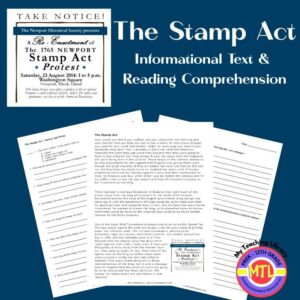
This informational article will help students understand one of ‘taxes’ imposed upon the colonies by King George prior to the American Revolution. After reading, students will be questions to assess their comprehension of the material (1 multiple-choice question, 7 short answer questions and 2 short essay questions).
-
$3.00Add to Cart
This is a downloadable copy of the book. (386 pages)
About the book: A literary classic that wasn’t recognized for its merits until decades after its publication, Herman Melville’s Moby-Dick tells the tale of a whaling ship and its crew, who are carried progressively further out to sea by the fiery Captain Ahab. Obsessed with killing the massive whale, which had previously bitten off Ahab’s leg, the seasoned seafarer steers his ship to confront the creature, while the rest of the shipmates, including the young narrator, Ishmael, and the harpoon expert, Queequeg, must contend with their increasingly dire journey. The book invariably lands on any short list of the greatest American novels.Interest Level Reading Level Grades 9 – 12 Grades 9 – 11 -
$1.50Add to Cart
This resource includes informational text (1 page) about the U.S. Constitution. It includes a brief history of the document, the basics of what it accomplishes and the intent behind it. The 2nd page includes 5 multiple choice questions. The 3rd includes 5 short answer questions. Answer Key provided.
Flesch-Kincaid Grade Level: 6.0
-
$6.00Add to Cart
Stop the “I don’t know what to write about!” struggle before it starts. This daily writing prompts resource provides a seamless solution for developing consistent writing habits, critical thinking skills, and creative expression for students in 4th – 12th Grade. Whether it’s a deep dive into facts and history or a light-hearted reflection, this month’s prompts ensure your students have a meaningful reason to put pen to paper every single day.
What’s Included?
This isn’t just a list of sentences; it is a complete journaling system. Each month is packed with:
- Individual Journal Pages: A unique, dedicated page for every day of the month.
- Diverse Prompt Styles: A balanced mix of “light and fun” topics and “deep-dive” prompts that challenge students to think critically about values, history, and social issues.
Here are two examples:
October 10th – (World Mental Health Day)
What is mental health? Why is mental health important? Do you know anyone that has a mental health issue? How does it affect his/her life and the lives of those around him/her? What are things we can do to help our mental health? What type of careers are considered mental health careers? Would you be be interested in any of these careers? Why or why not?October 13th – (October is Vegetarian Month)
What does it mean to be vegetarian? Do you know someone who is a vegetarian? If you decided to become a vegetarian (or are a vegetarian) what food(s) would (do) you miss the most and why? How would you incorporate protein into your diet? What is the difference between being a vegetarians and a vegan?How to implement it:
- Daily Starts: Start your morning or English period with a 10-minute quiet writing session.
- Fast-Finisher Activity: Keep your “early birds” engaged with a meaningful task that doesn’t feel like “busy work.”
- Homeschool Portfolios: Use these daily entries to track progress in handwriting, grammar, and expressive thought throughout the year.
- Digital or Print: These pages are designed to be “print-and-go” ready, but they also work beautifully as digital assignments. Simply give them to your student(s) and allow them to create a word document for each. First, have them copy (type) the prompt. Then answer it! Print and place in a growing 3 ring-binder of work.
The Benefits of Daily Prompting
Daily writing is like a workout for the brain. By using these journals, students will:
- Build Writing Stamina
- Strengthen Critical Thinking
- Encourage Research
- Encourages Deep Thinking About Different Topics
My Teaching Library has writing prompts for the entire year – BUNDLE & SAVE: Daily Writing Prompt Journal – ONE YEAR BUNDLE
-
$5.00Add to Cart
Thanksgiving Grammar & Creative Writing Activities, is a NO PREP resource that will keep your students actively learning throughout the month of November covering a variety of skills.
It includes 19 student pages and will have students focusing on
- adjectives
- adverbs
- verbs
- suffixes
- articles “a” and “an”
- nouns – both common and proper
- syllables
- synonyms
- proofreading
- PLUS includes picture writing prompts for creative story writing as well as acrostic and limerick poetry!
-
$6.00Add to Cart
Stop the “I don’t know what to write about!” struggle before it starts. This daily writing prompts resource provides a seamless solution for developing consistent writing habits, critical thinking skills, and creative expression for students in 4th – 12th Grade. Whether it’s a deep dive into facts and history or a light-hearted reflection, this month’s prompts ensure your students have a meaningful reason to put pen to paper every single day.
What’s Included?
This isn’t just a list of sentences; it is a complete journaling system. Each month is packed with:
- Individual Journal Pages: A unique, dedicated page for every day of the month.
- Diverse Prompt Styles: A balanced mix of “light and fun” topics and “deep-dive” prompts that challenge students to think critically about values, history, and social issues.
Here are two examples:
November 11th – (Veterans Day)
Veterans Day (celebrated somewhat differently as Remembrance Day in Canada, Australia and Great Britain) originally commemorated the end of World War I. In the United States, it is now a day to honor all those who serve in the military, living and dead, from all wars and during peacetime. Do you know any veterans? Write a letter to a veteran you know or, if you don’t know one, to any veteran.November 13th – (World Kindness Day)
“No act of kindness, however small, is ever wasted.” ~ Aesop
Tell about a time when someone was kind to you.How to implement it:
- Daily Starts: Start your morning or English period with a 10-minute quiet writing session.
- Fast-Finisher Activity: Keep your “early birds” engaged with a meaningful task that doesn’t feel like “busy work.”
- Homeschool Portfolios: Use these daily entries to track progress in handwriting, grammar, and expressive thought throughout the year.
- Digital or Print: These pages are designed to be “print-and-go” ready, but they also work beautifully as digital assignments. Simply give them to your student(s) and allow them to create a word document for each. First, have them copy (type) the prompt. Then answer it! Print and place in a growing 3 ring-binder of work.
The Benefits of Daily Prompting
Daily writing is like a workout for the brain. By using these journals, students will:
- Build Writing Stamina
- Strengthen Critical Thinking
- Encourage Research
- Encourages Deep Thinking About Different Topics
My Teaching Library has writing prompts for the entire year – BUNDLE & SAVE: Daily Writing Prompt Journal – ONE YEAR BUNDLE
-
 $2.50Add to Cart
This is a downloadable copy of the book.
About the book: The book was the first of five novels published which became known as the Leatherstocking Tales.The story takes place on the rapidly advancing frontier of New York State and features an elderly Leatherstocking (Natty Bumppo), Judge Marmaduke Temple of Templeton (whose life parallels that of the author’s father Judge William Cooper), and Elizabeth Temple (based on the author’s sister, Hannah Cooper), daughter of the fictional Templeton. The story begins with an argument between the judge and Leatherstocking over who killed a buck. Through their discussion, Cooper reviews many of the changes to New York’s Lake Otsego and its area: questions of environmental stewardship, conservation, and use prevail. Leatherstocking and his closest friend, the Mohican Indian Chingachgook, begin to compete with the Temples for the loyalties of a mysterious young visitor, a “young hunter” known as Oliver Edwards. The latter eventually marries Elizabeth Temple. Chingachgook dies, representing European-American fears for the race of “dying Indians”, who appear to be displaced by settlers. Natty vanishes into the sunset.
About the Author: James Fenimore Cooper was an American writer of the first half of the 19th century. His historical romances draw a picture of frontier and American Indian life in the early American days which created a unique form of American literature.
-
$2.00Add to Cart
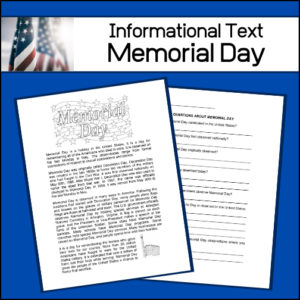
Help your students discover the true meaning behind the holiday with the Memorial Day Informational Text & Review from My Teaching Library! Perfect for a focused, project-based history lesson, this concise resource features an engaging informational text detailing the rich history of the holiday. Students will learn about its origins as “Decoration Day” in 1868 , its expansion after World War I, and the official name change in 1967.
The packet features a beautiful “You are not forgotten” American flag coloring element paired with a comprehensive reading comprehension worksheet. Students will answer seven key questions to reinforce historical facts —including government traditions at Arlington National Cemetery and the significance of flying the flag at half-mast —plus a thoughtful prompt to reflect on local community traditions. Complete with a full teacher answer key, this easy-to-use printout provides a meaningful way to honor the over one million heroes who sacrificed their lives for our freedom.
-
$2.50Add to Cart
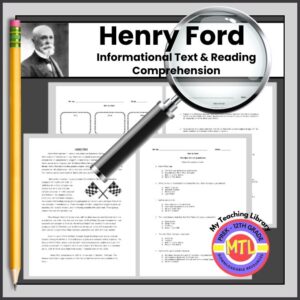
With this resource students will learn about and be tested on the life and accomplishments of Henry Ford.
Students will learn about:
– Where he was born
– What he built at the age of 15
– Where he worked as an engineer and when he built his first gasoline powered car
– What brought people to him willing to finance his new concept of manufacturing…and more!After reading, there are three worksheets for students to complete to help assess student comprehension.
– A “Who, What, When, Where, Why and How” worksheet
– A multiple-choice worksheet
– A short answer worksheetAnswer Keys provided.
-
$1.75Add to Cart
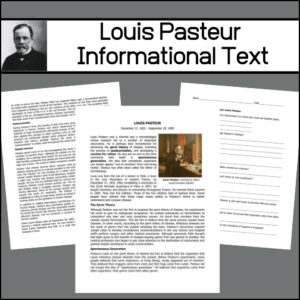
This is a resource designed to teach students about Louis Pasteur and his important contribution to science in germ theory, spontaneous generation, pasteurization and the rabies vaccine. After reading 2 pages of informational text, students will be asked 9 short answer questions to assess comprehension of the material. Answer key is provided.
-
$5.00Add to Cart
This engaging literature unit for the chapter book, “Farmer Boy” by Laura Ingalls Wilder offers a reading journal, vocabulary work, discussion questions, writing assignments and 13 reading comprehension quizzes (with keys). Designed to keep students thoughtfully engaged. 83 pages.

👈Book not included. Click to purchase the book
About the book: Farmer Boy written by Laura Ingalls Wilder was the second-published one in the Little House series. The novel is based on the childhood of Wilder’s husband, Almanzo Wilder, who grew up in the 1860s near the town of Malone, New York. It covers roughly one year of his life, beginning just before his ninth birthday and describes a full year of farming.Interest level:
Grades 4 – 8Reading level:
Grades 4 – 6BUNDLE & SAVE: Little House of the Prairie Literature BUNDLE | Laura Ingalls Wilder
-
 $2.50Add to Cart
This is a downloadable copy of the book.
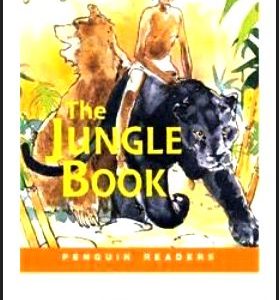
About the book: The Jungle Book (1894) is a collection of stories by the English author Rudyard Kipling. Most of the characters are animals such as Shere Khan the tiger and Baloo the bear, though a principal character is the boy or “man-cub” Mowgli, who is raised in the jungle by wolves. A major theme in the book is abandonment followed by fostering, as in the life of Mowgli, echoing Kipling’s own childhood. The theme is echoed in the triumph of protagonists including Rikki-Tikki-Tavi and The White Seal over their enemies, as well as Mowgli’s.About the Author: Joseph Rudyard Kipling was an English journalist, short-story writer, poet, and novelist. He was born in India, which inspired much of his work. Kipling in the late 19th and early 20th centuries was among the United Kingdom’s most popular writers. In 1907, he was awarded the Nobel Prize in Literature, as the first English-language writer to receive the prize, and at 41, its youngest recipient to date. He was also sounded for the British Poet Laureateship and several times for a knighthood but declined both. Following his death in 1936, his ashes were interred at Poets’ Corner, part of the South Transept of Westminster Abbey.
-
$8.50Add to Cart
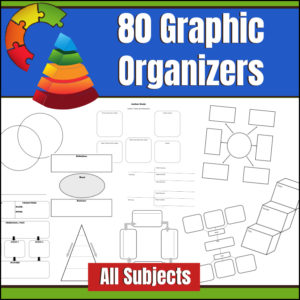
A graphic organizer, also known as knowledge map, concept map, story map, cognitive organizer, advance organizer, or concept diagram, is a communication tool that uses visual symbols to express knowledge, concepts, thoughts, or ideas, and the relationships between them. This resource gives you 80 different graphic organizers and can be used across the curriculum!
Here is a comment from a customer…
Karen E. said: “OK, at first I thought “Really? I’m going to pay for graphic organizers that I can probably find for free with some searching, etc?” Well, now I am so glad that I did. So good to have organizers available quickly BUT also several of them have variations which is helpful for “seeing” how to use them in my content area. Good value.“ -
$1.75Add to Cart
This informational article will teach students about a very important Christian holiday – Easter. After reading a one page article, students will have two worksheets to assess their reading comprehension and understanding of the material.
-
$3.00Add to Cart
This is a downloadable copy of the book. (Large download – 527 pages)
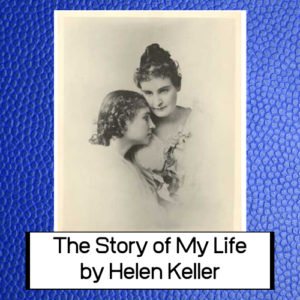
About the book: With Helen Keller’s Letters (1887-1901) and a Supplementary Account of Her Education, Including Passages From the Reports and Letters of Her Teacher, Anne Mansfield Sullivan -
$2.50Add to Cart
American Fairy Tales is the title of a collection of twelve fantasy stories by L. Frank Baum, published in 1901 by the George M. Hill Company, the firm that issued The Wonderful Wizard of Oz the previous year.
-
$15.00Add to Cart
Student Edition for Language Arts 2
(Suggested for 7th Grade)This is a large 471 page resource – 1 complete year of Language Arts curriculum.
Teacher Edition available here!This is the 2nd in a series of middle school Language Arts curriculum. They all are very similar in design and only builds, covering the core skills and concepts that should be taught each year. We offer a short preview of Language Arts 1 and when viewing, you’ll be able to see what type of curriculum you can expect in Language Arts 2.