
Category: 9th-12th
Showing 141–160 of 421 resultsSorted by latest
-
 $2.00Add to Cart
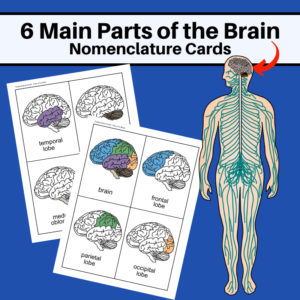
6 Main Parts of the Brain – Human Anatomy Nomenclature Cards – This resource will help students learn and study the following parts of the brain: frontal lobe, parietal lobe, occipital lobe, temporal lobe, cerebellum and the medulla oblongata.
-
 $3.00Add to Cart
This is a downloadable copy of the book.
About the book: Barton’s 1904 book “A Story of the Red Cross: Glimpses of Field Work,” recounts the work performed by the Society under her direction.About the Author: Clara Barton (1821 – 1912) was a pioneering nurse who founded the American Red Cross. She was a hospital nurse in the American Civil War, a teacher, and patent clerk. Nursing education was not very formalized at that time and Clara did not attend nursing school, so she provided self-taught nursing care.
-
 $1.25Add to Cart
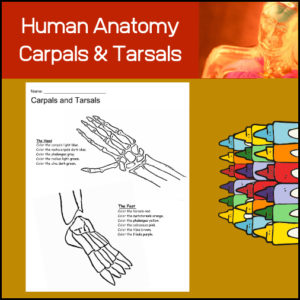
On this one page worksheet titled Carpals and Tarsals, students identify the bones of the hands (+ wrist and lower arm) and feet (+ lower leg): carpals, metacarpals, phalanges, radius, ulna, tarsals, metatarsals, phalanges, calcaneus, tibia and fibula.
Suggested uses: Use in a Science center when studying human anatomy, give as homework or use as a quick quiz. Answer key is provided.
-
 $3.00Add to Cart
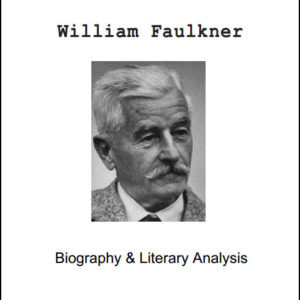
Biography & Analysis of Works – William Faulkner
561 pages -
$2.00Add to Cart
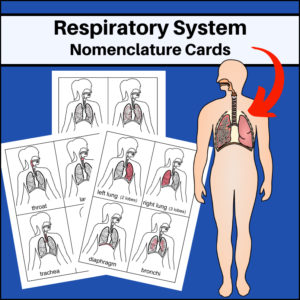
Respiratory System – Human Anatomy Nomenclature Cards – This resource will help students learn and study the location of the following parts of the respiratory system: left lung, right lung, diaphragm, bronchi, bronchioles, alveoli, sinus cavity, nose, throat, larynx, trachea, and pleura. There are also 4 extra diagrams with no labels for you to use as you wish…such as give to students to have them color in and label the cards for themselves!
-
$5.00Add to Cart
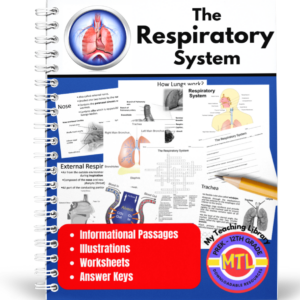
Students will learn all about the respiratory system with this resource designed for middle and high school biology / anatomy students. Students will learn about the nose, pharynx, larynx, trachea, lungs, pleura, diaphragm and more.
This resource includes:
- 22 informational pages with details and illustrations
- 8 posters
- 6 worksheet pages (a 3 page detailed short answer worksheet to use along side the informational pages, 2 labeling worksheets and a crossword puzzle)
- answer keys
-
$3.00Add to Cart
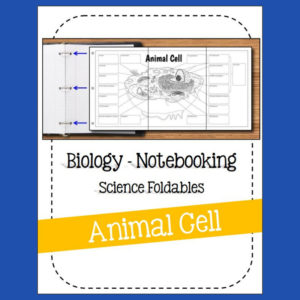
High School Biology Notebook resource!
Students will learn the following terms: peroxisome, cilium, centriole, lysosome, cell / plasma membrane, cytoplasm, mitochondrion, smooth endoplasmic reticulum, flagellum, cytoskeleton, nuclear pores, nuclear membrane / envelope, DNA, nucleolus, nucleus, rough endoplasmic reticulum, ribosomes, Golgi body, Golgi vesicles
-
$2.50Add to Cart
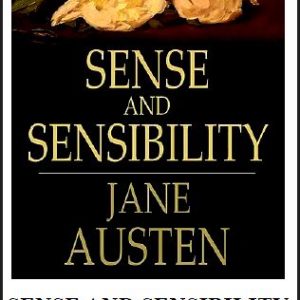
This is a downloadable copy of the book.
About the book: Published in 1811, Sense and Sensibility has delighted generations of readers with its masterfully crafted portrait of two sisters, Elinor and Marianne Dashwood. Forced to leave their home after their father’s death, Elinor and Marianne must rely on making good marriages as their means of support.About the Author: Jane Austen was an English novelist known primarily for her six major novels, which interpret, critique and comment upon the British landed gentry at the end of the 18th century. Austen’s plots often explore the dependence of women on marriage in the pursuit of favorable social standing and economic security.
-
 $2.50Add to Cart
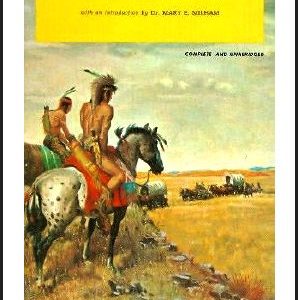
This is a downloadable copy of the book.
About the book: Cooper’s fictitious frontier hero Bumppo is never called by his name, but is instead referred to as “the trapper” or “the old man.” Chronologically The Prairie is the fifth and final installment of the Leatherstocking Tales, though it was published before The Pathfinder (1840) and The Deerslayer (1841). It depicts Natty in the final year of his life still proving helpful to people in distress on the American frontier.About the Author: James Fenimore Cooper was an American writer of the first half of the 19th century. His historical romances draw a picture of frontier and American Indian life in the early American days which created a unique form of American literature.
-
 $5.00Add to Cart
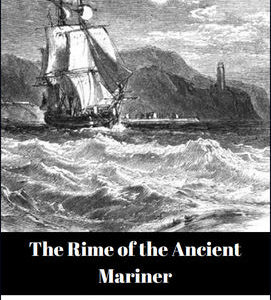
The Rime of the Ancient Mariner by the English poet Samuel Taylor Coleridge (British Romantic Literature) is the basis for this Literary Unit designed for 10th, 11th, and 12th grade students.
The unit is divided into the following sections:
Summaries and More: Includes summary, brief review, symbols of the poem, tone, setting, point of view and more.
Student Handouts: Sound devices in Poetry + Imagery & Figurative Language in Poetry
The Poem Worksheets: Examining and Analyzing Metaphors
Quizzes and Tests: Poetic devices quiz, Multiple choice on the poem, Short Answer and Essay for the poem
Additional Resources: Extended Activities + Albatross illustrationAnswer Keys are provided.
-
$12.00Add to Cart
Teacher’s Guide for American Government
-
$3.00Add to Cart
This resource is a project-based activity designed to be used during any election (local, state or national). It can be completed individually or in cooperative groups. Perfect for any Civics, Social Studies, or Government classroom 6th-12th grades.
The assignment consists of comparing / contrasting two candidates and requires students to research, report, plus give their own opinions on several aspects surrounding the various activities listed below. You can also require students to create a presentation if you’d like of all their findings!
-
$2.00Add to Cart
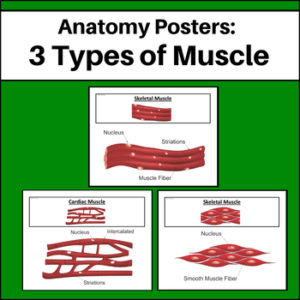
Perfect for any Biology / Anatomy Classroom teaching human anatomy: Anatomy Posters – Types of Muscle. These 3 colorful posters will help students quickly identify each type of muscle (Cardiac, Skeletal, Smooth) as well as the parts of each muscle.
-
$1.50Add to Cart
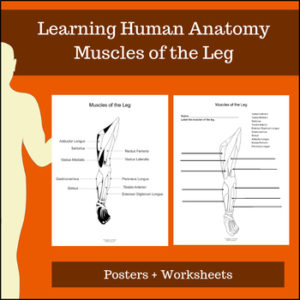
Muscles of the Leg – Learning Human Anatomy will be exactly what you need if you are looking for a easy to read posters as well as a labeling worksheet for students. This resource actually comes with two worksheets, one with and one without terms. (You choose if you want your students to completely remember the names or if they need the terms to help them. )
See description below for more information.
-
$1.00Add to Cart
This is a historic book originally published in 1877. This 17-page book is recommended for High School students.
-
$1.50Add to Cart
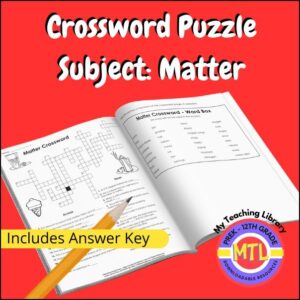
This fun crossword puzzle is a great way for students to review what they know about matter! If students need help, page 2 contains a ‘word box’ to give students terms from which to choose! Answer Key also provided.
Sample clues:
- At 32 degrees Fahrenheit, water ___.
- This is a very light gas found in some balloons.
- The amount of matter something contains is its ___.
-
$2.50Add to Cart
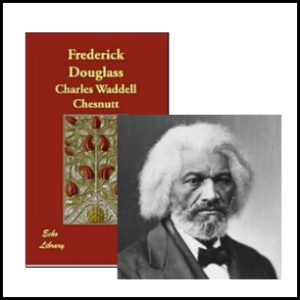
This 42 page book is a biography of Frederick Douglass. Frederick Douglass was an American social reformer, abolitionist, orator, writer, and statesman. After escaping from slavery in Maryland, he became a national leader of the abolitionist movement in Massachusetts and New York, gaining note for his oratory and incisive antislavery writings.
-
$1.25Add to Cart
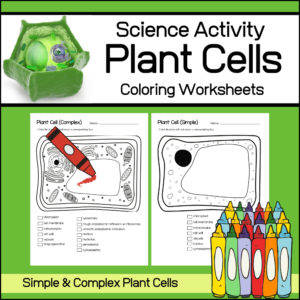
Interactive Science learning – This resource includes 2 coloring worksheets: Simple Plant Cell and Complex Plant Cell. As students color (identify) each part, they will also create a corresponding key.
Structures to be identified and colored:
1. Simple Plant Cell – cell wall, mitochondria, chloroplast, cell membrane, vacuole, nucleus, cytoskeleton
2. Complex Plant Cell – cell wall, mitochondria, chloroplast, cell membrane, vacuole, Golgi apparatus, lysosomes, rough endoplasmic reticulum w/ ribosomes, smooth endoplasmic reticulum, nucleus, nucleolus, peroxisome, cytoskeleton
-
$2.25Add to Cart
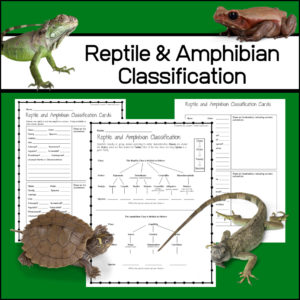
This Science / Biology resource includes 2 student exercises plus classification card templates that can be used for centers, projects and more.
-
$6.00Add to Cart
Stop the “I don’t know what to write about!” struggle before it starts. This daily writing prompts resource provides a seamless solution for developing consistent writing habits, critical thinking skills, and creative expression for students in 4th – 12th Grade. Whether it’s a deep dive into facts and history or a light-hearted reflection, this month’s prompts ensure your students have a meaningful reason to put pen to paper every single day.
What’s Included?
This isn’t just a list of sentences; it is a complete journaling system. Each month is packed with:
- Individual Journal Pages: A unique, dedicated page for every day of the month.
- Diverse Prompt Styles: A balanced mix of “light and fun” topics and “deep-dive” prompts that challenge students to think critically about values, history, and social issues.
Here are two examples:
March 3rd – (Star Spangled Banner became the U.S. national anthem)
The Star Spangled Banner was written during the Revolution, but it didn’t become the national anthem until 1931. Some people think that it’s a great anthem. Other people think that it isn’t. What do you think? If we were to change the national anthem, what would you want to have instead? Or would you not want to change it, no matter what?March 24th – (Tuberculosis bacillus discovered)
In 1882, a German scientist named Robert Koch isolated the bacillus that cased tuberculosis. Tuberculosis still kills about two million people annually worldwide. However, this discovery enabled scientist to fight this disease, which can be vaccinated against, and cured. If you could cure one disease, what would it be? Why would you choose to cure that disease?How to implement it:
- Daily Starts: Start your morning or English period with a 10-minute quiet writing session.
- Fast-Finisher Activity: Keep your “early birds” engaged with a meaningful task that doesn’t feel like “busy work.”
- Homeschool Portfolios: Use these daily entries to track progress in handwriting, grammar, and expressive thought throughout the year.
- Digital or Print: These pages are designed to be “print-and-go” ready, but they also work beautifully as digital assignments. Simply give them to your student(s) and allow them to create a word document for each. First, have them copy (type) the prompt. Then answer it! Print and place in a growing 3 ring-binder of work.
The Benefits of Daily Prompting
Daily writing is like a workout for the brain. By using these journals, students will:
- Build Writing Stamina
- Strengthen Critical Thinking
- Encourage Research
- Encourages Deep Thinking About Different Topics
My Teaching Library has writing prompts for the entire year – BUNDLE & SAVE: Daily Writing Prompt Journal – ONE YEAR BUNDLE



&url=https://myteachinglibrary.com/product/sense-and-sensibility-jane-austen/&media=https://myteachinglibrary.com/wp-content/uploads/2019/08/wy-308-c.jpg)
&url=https://myteachinglibrary.com/product/the-prairie-cooper/&media=https://myteachinglibrary.com/wp-content/uploads/2019/08/wy-306-e.jpg)


