
Category: 6th-8th
Showing 221–240 of 603 resultsSorted by latest
-
 $2.50Add to Cart
This is a downloadable copy of the book.
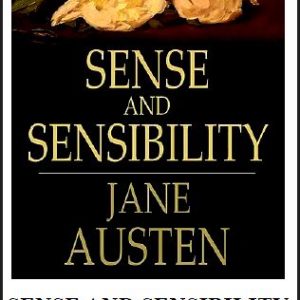
About the book: Published in 1811, Sense and Sensibility has delighted generations of readers with its masterfully crafted portrait of two sisters, Elinor and Marianne Dashwood. Forced to leave their home after their father’s death, Elinor and Marianne must rely on making good marriages as their means of support.About the Author: Jane Austen was an English novelist known primarily for her six major novels, which interpret, critique and comment upon the British landed gentry at the end of the 18th century. Austen’s plots often explore the dependence of women on marriage in the pursuit of favorable social standing and economic security.
-
 $2.50Add to Cart
This is a downloadable copy of the book.
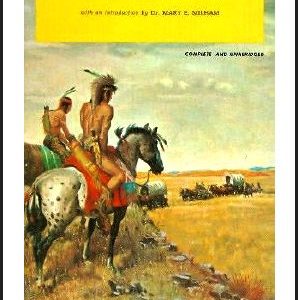
About the book: Cooper’s fictitious frontier hero Bumppo is never called by his name, but is instead referred to as “the trapper” or “the old man.” Chronologically The Prairie is the fifth and final installment of the Leatherstocking Tales, though it was published before The Pathfinder (1840) and The Deerslayer (1841). It depicts Natty in the final year of his life still proving helpful to people in distress on the American frontier.About the Author: James Fenimore Cooper was an American writer of the first half of the 19th century. His historical romances draw a picture of frontier and American Indian life in the early American days which created a unique form of American literature.
-
$12.00Add to Cart
Teacher’s Guide for American Government
-
$2.25Add to Cart
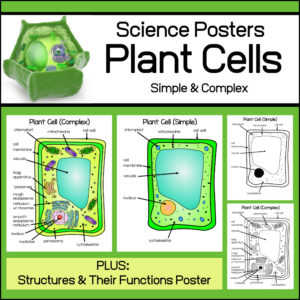
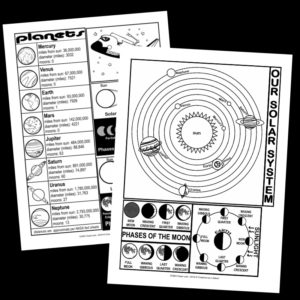
This Science / Biology resource offers 5 posters – Color posters which are perfect for bulletin boards or centers and B/W posters which are great to use as student handouts.
-
$3.00Add to Cart
This resource is a project-based activity designed to be used during any election (local, state or national). It can be completed individually or in cooperative groups. Perfect for any Civics, Social Studies, or Government classroom 6th-12th grades.
The assignment consists of comparing / contrasting two candidates and requires students to research, report, plus give their own opinions on several aspects surrounding the various activities listed below. You can also require students to create a presentation if you’d like of all their findings!
-
$2.00Add to Cart
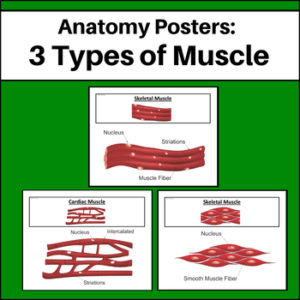
Perfect for any Biology / Anatomy Classroom teaching human anatomy: Anatomy Posters – Types of Muscle. These 3 colorful posters will help students quickly identify each type of muscle (Cardiac, Skeletal, Smooth) as well as the parts of each muscle.
-
$1.50Add to Cart
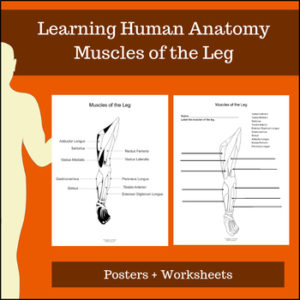
Muscles of the Leg – Learning Human Anatomy will be exactly what you need if you are looking for a easy to read posters as well as a labeling worksheet for students. This resource actually comes with two worksheets, one with and one without terms. (You choose if you want your students to completely remember the names or if they need the terms to help them. )
See description below for more information.
-
$3.00Add to Cart
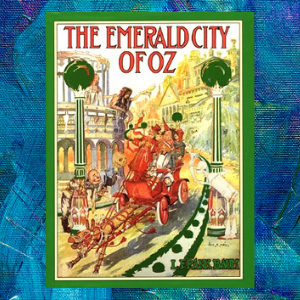
The Emerald City of Oz is the sixth of L. Frank Baum’s fourteen Land of Oz books. It was also adapted into a Canadian animated film in 1987. Originally published on July 20, 1910, it is the story of Dorothy Gale and her Uncle Henry and Aunt Em coming to live in Oz permanently. While they are toured through the Quadling Country, the Nome King is assembling allies for an invasion of Oz. This is the first time in the Oz series that Baum made use of double plots for one of the books.
Plot: At the beginning of this story, it is made quite clear that Dorothy Gale (the primary protagonist of many of the previous Oz books), is in the habit of freely speaking of her many adventures in the Land of Oz to her only living relatives, her Aunt Em and Uncle Henry. Neither of them believes a word of her stories, but consider her a dreamer, as her dead mother had been. She is undeterred.
Later, it is revealed that the destruction of their farmhouse by the tornado back in The Wonderful Wizard of Oz has left Uncle Henry in terrible debt. In order to pay it, he has taken out a mortgage on his farm. If he cannot repay his creditors, they will seize the farm, thus leaving Henry and his family homeless. He is not too afraid for himself, but both he and his wife, Aunt Em, fear very much for their niece’s future. Upon learning this, Dorothy quickly arranges with Princess Ozma to let her bring her guardians to Oz where they will be very happier and forever safe. Using the Magic Belt (a tool captured from the jealous Nome King Roquat), Ozma transports them to her throne room. They are given rooms to live in and luxuries to enjoy, including a vast and complex wardrobe. They meet with many of Dorothy’s animal friends, including the Cowardly Lion and Billina the Yellow Hen.
In the underground Nome Kingdom, the Nome King Roquat is plotting to conquer the Land of Oz and recover his magic belt, which Dorothy took from him in Ozma of Oz. After ordering the expulsion of his General (who will not agree to such an attack) and the death of his Colonel (who also refuses), King Roquat holds counsel with a veteran soldier called Guph. Guph believes that against the many magicians of Oz (the reputation of which has grown in the telling), the Nome Army has no chance alone. He therefore sets out personally to recruit allies.
Dorothy, accompanied by the Wizard of Oz and several other friends, departs the Emerald City in a carriage drawn by the Wooden Sawhorse, intending to give her aunt and uncle a tour of the land.
-
$1.50Add to Cart
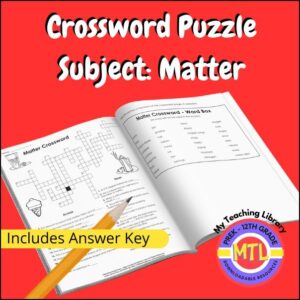
This fun crossword puzzle is a great way for students to review what they know about matter! If students need help, page 2 contains a ‘word box’ to give students terms from which to choose! Answer Key also provided.
Sample clues:
- At 32 degrees Fahrenheit, water ___.
- This is a very light gas found in some balloons.
- The amount of matter something contains is its ___.
-
$2.50Add to Cart
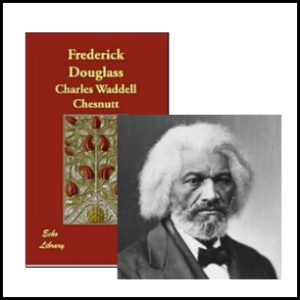
This 42 page book is a biography of Frederick Douglass. Frederick Douglass was an American social reformer, abolitionist, orator, writer, and statesman. After escaping from slavery in Maryland, he became a national leader of the abolitionist movement in Massachusetts and New York, gaining note for his oratory and incisive antislavery writings.
-
$1.25Add to Cart
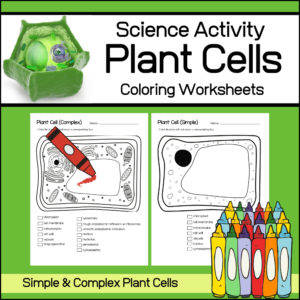
Interactive Science learning – This resource includes 2 coloring worksheets: Simple Plant Cell and Complex Plant Cell. As students color (identify) each part, they will also create a corresponding key.
Structures to be identified and colored:
1. Simple Plant Cell – cell wall, mitochondria, chloroplast, cell membrane, vacuole, nucleus, cytoskeleton
2. Complex Plant Cell – cell wall, mitochondria, chloroplast, cell membrane, vacuole, Golgi apparatus, lysosomes, rough endoplasmic reticulum w/ ribosomes, smooth endoplasmic reticulum, nucleus, nucleolus, peroxisome, cytoskeleton
-
$2.25Add to Cart
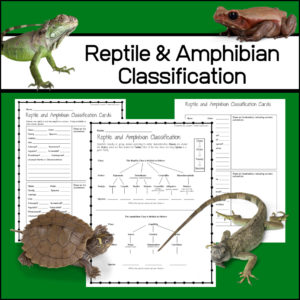
This Science / Biology resource includes 2 student exercises plus classification card templates that can be used for centers, projects and more.
-
$6.00Add to Cart
Stop the “I don’t know what to write about!” struggle before it starts. This daily writing prompts resource provides a seamless solution for developing consistent writing habits, critical thinking skills, and creative expression for students in 4th – 12th Grade. Whether it’s a deep dive into facts and history or a light-hearted reflection, this month’s prompts ensure your students have a meaningful reason to put pen to paper every single day.
What’s Included?
This isn’t just a list of sentences; it is a complete journaling system. Each month is packed with:
- Individual Journal Pages: A unique, dedicated page for every day of the month.
- Diverse Prompt Styles: A balanced mix of “light and fun” topics and “deep-dive” prompts that challenge students to think critically about values, history, and social issues.
Here are two examples:
March 3rd – (Star Spangled Banner became the U.S. national anthem)
The Star Spangled Banner was written during the Revolution, but it didn’t become the national anthem until 1931. Some people think that it’s a great anthem. Other people think that it isn’t. What do you think? If we were to change the national anthem, what would you want to have instead? Or would you not want to change it, no matter what?March 24th – (Tuberculosis bacillus discovered)
In 1882, a German scientist named Robert Koch isolated the bacillus that cased tuberculosis. Tuberculosis still kills about two million people annually worldwide. However, this discovery enabled scientist to fight this disease, which can be vaccinated against, and cured. If you could cure one disease, what would it be? Why would you choose to cure that disease?How to implement it:
- Daily Starts: Start your morning or English period with a 10-minute quiet writing session.
- Fast-Finisher Activity: Keep your “early birds” engaged with a meaningful task that doesn’t feel like “busy work.”
- Homeschool Portfolios: Use these daily entries to track progress in handwriting, grammar, and expressive thought throughout the year.
- Digital or Print: These pages are designed to be “print-and-go” ready, but they also work beautifully as digital assignments. Simply give them to your student(s) and allow them to create a word document for each. First, have them copy (type) the prompt. Then answer it! Print and place in a growing 3 ring-binder of work.
The Benefits of Daily Prompting
Daily writing is like a workout for the brain. By using these journals, students will:
- Build Writing Stamina
- Strengthen Critical Thinking
- Encourage Research
- Encourages Deep Thinking About Different Topics
My Teaching Library has writing prompts for the entire year – BUNDLE & SAVE: Daily Writing Prompt Journal – ONE YEAR BUNDLE
-
$2.25Add to Cart
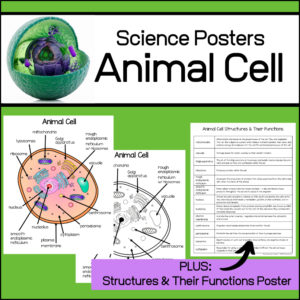
This Science / Biology resource offers 2 labeled posters showing the structures and organelles of an animal cell! I’ve also included a handout detailing the major function(s) of each structure/organelle. Structures and organelles include: centrosome, plasma membrane, mitochondria, vacuole, Golgi apparatus, ribosome, lysosomes, rough endoplasmic reticulum, smooth endoplasmic reticulum, nucleus, nucleolus, peroxisome, cytoplasm
-
$5.00Add to Cart
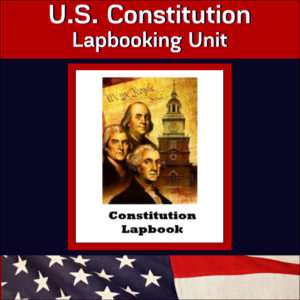
This United States Constitution Lapbook will help students gain an good understanding of America’s foundational document and American History.
It is an interactive learning resource and can be student guided or teacher directed!
Included in this product…
- Lapbooking instructions
- Assignment page
- Lapbook Rubric
- Complete copy of the U.S. Constitution
- Lapbook templates
While completing this project, students will be asked to report on things such as…the purpose of the Constitution, when it was written, the amendments, Bill of Rights, the framers of the document, the Constitutional delegates, the Virginia Plan, separation of powers, checks and balances, the make up of the different branches of our government and more. A copy of the U.S. Constitution is included. Students will be required to research or read books to gather information to complete much of the project.
-
$1.99Add to Cart
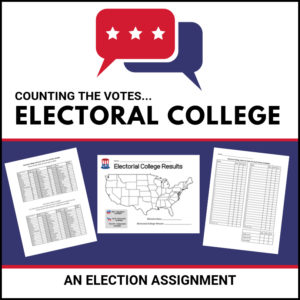
Whether it is an election year or not, if you are studying the U.S. Electoral College, this is a great resource for your classroom.
Suggestions for Use:
* If it is an election year, you can assign it for students to complete on election night.
* Not an election year? You can still use it! Simply assign students to complete the assignment for a specific presidential election.
* Study a variety of past presidential elections in U.S. History and how the electoral college voted! This would be a wonderful cooperative groups activity where each group completed (and reported their findings) on a different election. -
$3.00Add to Cart
This Pi Day Activity has been designed for Science and Math classrooms. Students will use measuring tools to determine the radius, diameter, and circumference of various circular objects. They will then use the data that they collect to calculate pi.
*This activity gives students the opportunity to clearly understand the concept of the number pi and practice math skills through a hands-on activity with a variety of circular objects.
-
$3.00Add to CartStudents should understand the significance of a terrible day in American history, September 11th, 2001, otherwise known as 9-11.This resource has been designed to help students gain factual knowledge of the events of that day, the heroic efforts of first responders and the U.S. military response.May be used as a standalone mini-lesson or as part of your own curriculum. (Designed for 7th-10th grades)
&url=https://myteachinglibrary.com/product/sense-and-sensibility-jane-austen/&media=https://myteachinglibrary.com/wp-content/uploads/2019/08/wy-308-c.jpg)
&url=https://myteachinglibrary.com/product/the-prairie-cooper/&media=https://myteachinglibrary.com/wp-content/uploads/2019/08/wy-306-e.jpg)


