
Category: 6th-8th
Showing 281–300 of 603 resultsSorted by latest
-
 $1.00Add to Cart
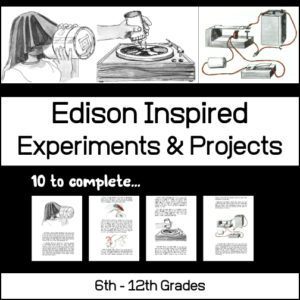
10 Experiments / Projects inspired by Edison – Including: A phonograph Pick-Up, The Relay in Action, A Pinhole Camera and 7 others!
-
FREEAdd to Cart
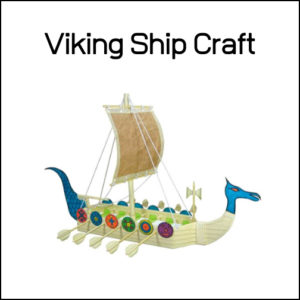
Here is a free craft idea for those studying the vikings or (really) for anytime!
Using recycled materials from around your home, step by step instructions are given to help you create a viking longship.
-
$2.00Add to Cart
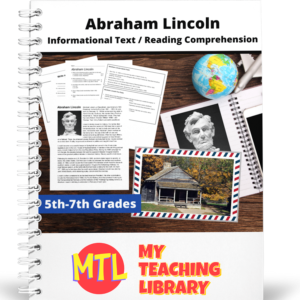
This informational resource on Abraham Lincoln is designed to give 5th – 7th graders practice reading and comprehending content area text. There are two pages of text which will cover Lincoln’s life beginning in Kentucky and progresses through his life touching on his family, his career as a lawyer, his election in 1860 and finally his death by the hands of John Wilkes Booth. After reading both the text and two charts (quick facts and fun facts), students will complete a comprehension worksheet. Finally, there is a fun postcard writing activity asking them to write to President Lincoln.
-
$4.00Add to Cart
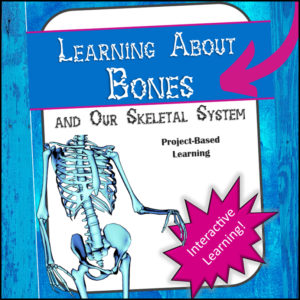
Students will enjoy this ANATOMY / BIOLOGY / HEALTH resource as they learn about their bones and skeletal system! Using this product, students can create either a lapbook or a Science notebook.
-
 $2.50Add to Cart
This is a downloadable copy of the book.
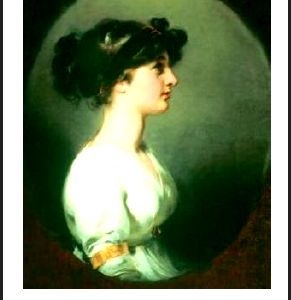
About the book: Jane Austen was at the height of her artistic powers when she wrote Emma, the fourth and last of her works to be published during her lifetime. The novel is a lively comedy of manners populated by some of Austen’s most entertaining and memorable characters, and it showcases her technical skills as a mature and experimental writer.About the Author: Jane Austen was an English novelist known primarily for her six major novels, which interpret, critique and comment upon the British landed gentry at the end of the 18th century. Austen’s plots often explore the dependence of women on marriage in the pursuit of favorable social standing and economic security.
-
$3.00Add to Cart
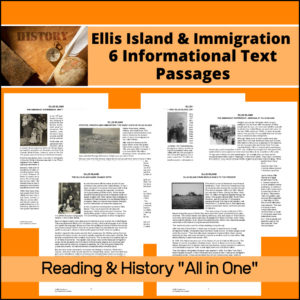
This resource, Immigration – Ellis Island – US History Informational Text, has SIX parts: The Early Days, 1892-1954 Gateway to the United States, The Immigrant Experience, Why They Came, From WWII to the Present and Ellis Island Name Change Myth.
In each part, students will have one page of informational text and then a page of multiple choice questions plus one essay question to assess understanding / comprehension. Answer Keys provided.
-
$6.00Add to Cart
Stop the “I don’t know what to write about!” struggle before it starts. This daily writing prompts resource provides a seamless solution for developing consistent writing habits, critical thinking skills, and creative expression for students in 4th – 12th Grade. Whether it’s a deep dive into facts and history or a light-hearted reflection, this month’s prompts ensure your students have a meaningful reason to put pen to paper every single day.
What’s Included?
This isn’t just a list of sentences; it is a complete journaling system. Each month is packed with:
- Individual Journal Pages: A unique, dedicated page for every day of the month.
- Diverse Prompt Styles: A balanced mix of “light and fun” topics and “deep-dive” prompts that challenge students to think critically about values, history, and social issues.
Here are two examples:
December 3rd – (International Day of Disabled Persons)
Some of the greatest success stories you will ever hear are about people who overcame difficulties to reach their goals. Many people with disabilities learn to overcome challenges others would never even attempt. Are you, or is someone you know, disabled? How can a disability make life more difficult? Is there any way that a disability can make life better? Write about a disabled person specifically, or about disability in general.December 4th – (Mary Celeste was found)
On December 4th, 1872, a British ship came across another ship, the Mary Celeste, which was drifting in the Atlantic Ocean. The Mary Celeste was sailing from New York to Genoa, Italy. The captain, his wife, their daughter and the crew of eight were all missing from the ship. They were never found and nobody knows why they left the ship. The ship still had food, water and all its cargo. What do you think happened?How to implement it:
- Daily Starts: Start your morning or English period with a 10-minute quiet writing session.
- Fast-Finisher Activity: Keep your “early birds” engaged with a meaningful task that doesn’t feel like “busy work.”
- Homeschool Portfolios: Use these daily entries to track progress in handwriting, grammar, and expressive thought throughout the year.
- Digital or Print: These pages are designed to be “print-and-go” ready, but they also work beautifully as digital assignments. Simply give them to your student(s) and allow them to create a word document for each. First, have them copy (type) the prompt. Then answer it! Print and place in a growing 3 ring-binder of work.
The Benefits of Daily Prompting
Daily writing is like a workout for the brain. By using these journals, students will:
- Build Writing Stamina
- Strengthen Critical Thinking
- Encourage Research
- Encourages Deep Thinking About Different Topics
My Teaching Library has writing prompts for the entire year – BUNDLE & SAVE: Daily Writing Prompt Journal – ONE YEAR BUNDLE
-
$3.00Add to Cart
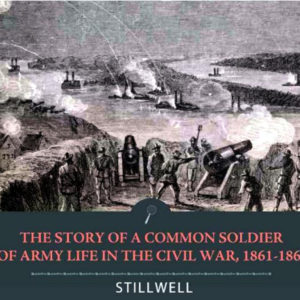
Leander Stillwell was typical of thousands of Northern boys who answered President Lincoln’s call for volunteers. In January 1862, only a few months past his 18th birthday, and only after he and his father had sowed the wheat, gathered the corn and cut the winter firewood, Stillwell left his family’s log cabin in the Jersey County backwoods of western Illinois and enlisted in Company D of the 61st Illinois Infantry Regiment. For three and a half years he served in the Western theater of operations as a noncommissioned officer before being mustered out as a lieutenant in September 1865. His first—and biggest—battle, Shiloh, was the one he remembered most vividly. He also took part in skirmishes in Tennessee and Arkansas, as well as the Siege of Vicksburg. In The Story of a Common Soldier Stillwell tells of his Army experiences, as critic H. L. Mencken observed admiringly in a review, “in plain, straightforward American, naked and unashamed, without any of the customary strutting and bawling.” Small for his age and given to taking solitary walks in the woods beyond the picket lines, Stillwell was nevertheless an enthusiastic and obedient soldier. “Just a little mortifying,” was Stillwell’s reaction when his regiment missed two battles because it had been left to guard a town in Tennessee. But, he hastened to add, “the common soldier can only obey orders, and stay where he is put, and doubtless it was all for the best.”
-
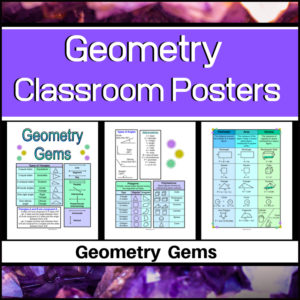
$3.00Add to CartHere are 3 colorful “Geometry Gem” posters to display in your classroom or to place in a math, learning center as a reference.See description below for a list of what is included!
-
$1.50Add to Cart
Inject a little history into your science lessons and perform some cool experiments too!
What you’ll get:- – 2 Short informational texts: One on Benjamin Franklin and one on Franklin’s Glass Armonica
- – 4 Experiments: Bottle Pipes, Lemon Battery, Magnetic Art, and the Thermometer
-
 $2.50Add to Cart
This is a downloadable copy of the book.
About the book: It is the fourth novel Cooper wrote featuring Natty Bumppo, his fictitious frontier hero, and the third chronological episode of the Leatherstocking Tales. The Pathfinder shows Natty at his old trick of guiding tender damsels through the dangerous woods, and the siege at the blockhouse and the storm on Lake Ontario are considerably like other of Cooper’s sieges and storms. Natty, in this novel commonly called the Pathfinder, keeps in a hardy middle age his simple and honest nature, which is severely tested by his love for a nineteen year old young woman. She is a conventional heroine of romance. A certain soft amiability about her turns for a time all the thoughts of the scout to the world of domestic affections. More talkative than ever before, he reveals new mental and moral traits. With the same touch of realism which had kept Uncas and Cora apart in The Last of the Mohicans, Cooper separates these lovers, and sends Natty’s romantic interest to the arms of a younger suitor, restoring the hero to his home in the wilderness.About the Author: James Fenimore Cooper was an American writer of the first half of the 19th century. His historical romances draw a picture of frontier and American Indian life in the early American days which created a unique form of American literature.
-
$3.00Add to Cart
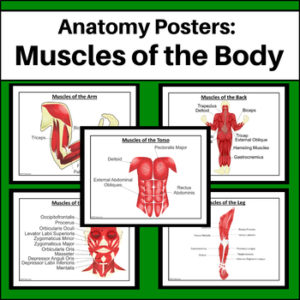
Perfect for any Middle School or High School Biology / Anatomy Classroom teaching human anatomy: Anatomy Posters – Muscles of the Body. These 5 colorful posters will help students quickly identify muscles of the body (Arm, Leg, Back, Torso and Face). Great for Health classrooms as well!
-
$1.75Add to Cart
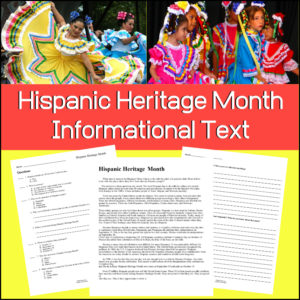
This informational article will explain to students that the word “Hispanic” is a cultural word and that people from more than 20 countries and nationalities are considered Hispanic. This cultural people group can be divided in many ways. There are Indo-Hispanics, Afro-Hispanics, Cuban-Americans and Mexican-Americans. Students will also learn how those ethnic groups can be broken down into other groups and why there has been an entire month dedicated to celebrating the many cultural diversities and people of Hispanic descent.
-
 $2.50Add to Cart
This is a downloadable copy of the book.
About the book: It tells of a young girl named Alice falling through a rabbit hole into a fantasy world populated by peculiar, anthropomorphic creatures. The tale plays with logic, giving the story lasting popularity with adults as well as with children. It is considered to be one of the best examples of the literary nonsense genre.About the Author: Lewis Carroll, was an English writer of world-famous children’s fiction, notably Alice’s Adventures in Wonderland and its sequel Through the Looking-Glass. He was noted for his facility at word play, logic, and fantasy. The poems Jabberwocky and The Hunting of the Snark are classified in the genre of literary nonsense. He was also a mathematician, photographer, and Anglican deacon. (Lewis Carroll is a pen name – Given name was Charles Lutwidge Dodgson)
-
$1.25Add to Cart
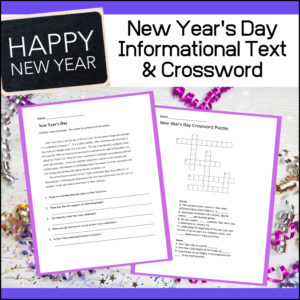
Whether late December or early January, this holiday resource will provide your students with a quick lesson on New Year’s Day. After they read the passage, their attention to detail is accessed as they answer five short answer questions and then complete a crossword puzzle.
-
$2.00Add to Cart
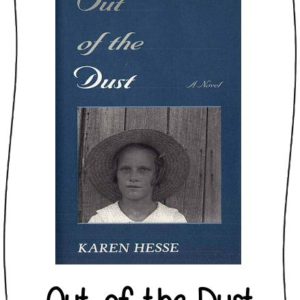
This resource offers vocabulary work, reading comprehension and discussion questions about the story and characters.
This resource offers vocabulary work, reading comprehension and discussion questions about the story and characters.
About the book (Not included):
Out of the Dust is a verse novel by Karen Hesse, first published in 1997 and the recipient of the 1998 Newbery Award. A poem cycle that reads as a novel, Out of the Dust tells the story of a girl named Billie Jo, who struggles to help her family survive the dust-bowl years of the Depression. Fighting against the elements on her Oklahoma farm, Billie Jo takes on even more responsibilities when her mother dies in a tragic accident.
Interest level:
Grades 5 – 8Reading level:
Grades 5 – 8 -
$3.00Add to Cart
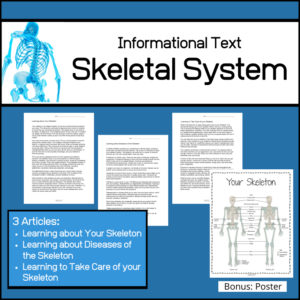
This ANATOMY / BIOLOGY / HEALTH resource contains 3 informational text articles (each with comprehension questions followings) and a bonus labeled poster! These articles can be used in any Science class or in a Language Arts / Reading classroom. Use as standalone mini-lessons or as supplemental activities, homework or in centers.
-
$4.00Add to Cart
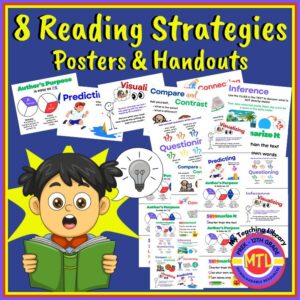
Colorful and eye-catching reading comprehension strategy posters and handouts that will help readers connect and understand what they are reading. When using these strategies, students will be actively engaged in and analyzing the written text. They will activate prior knowledge, seek to understand the author’s purpose, ask questions (about characters, setting and events), predicting, visualize, infer, summarize, compare and contrast and question.
This resource includes:
- – 8 Full-page individual strategy posters
- – 8 Half-page strategy handouts
- – 1 Full-page poster/handout that includes all 8 strategies
Strategies included:
- – Author’s purpose – PIE (Persuade, Inform, Entertain
- – SUMmarize it
- – Questioning (4 questions that encompass characters, setting, events as well as asking themselves questions about their own thoughts)
- – Compare and Contrast
- – Connecting (text to self ; text to text ; text to world)
- – Visualizing (create images of events and actions)
- – Predicting
- – Inference (Looking for clues in the text to discover what is not directly stated)
-
$2.75Add to Cart
9 worksheet activities to help students practice and reinforce important Grammar skills!
Here are the skills covered:
1. Proofreading – Spotting incomplete sentences, spelling mistakes, capitalization
2. Using punctuation correctly – periods, commas, quotation marks
3. Writing to inform: Correct sequencing, adding supporting evidence, descriptive writing, title creation
4. Writing dialogue
5. Using Tense correctly – past, present, future
6. Perspective – 1st, 2nd and 3rd person
7. Homophones



&url=https://myteachinglibrary.com/product/emma-jane-austen/&media=https://myteachinglibrary.com/wp-content/uploads/2019/08/wy-308-b.jpg)


&url=https://myteachinglibrary.com/product/the-story-of-a-common-soldier-civil-war/&media=https://myteachinglibrary.com/wp-content/uploads/2019/08/wy-445-f-1024x961.jpg)


&url=https://myteachinglibrary.com/product/the-pathfinder-cooper/&media=https://myteachinglibrary.com/wp-content/uploads/2019/08/wy-306-f.jpg)


&url=https://myteachinglibrary.com/product/alices-adventures-in-wonderland-lewis-carroll/&media=https://myteachinglibrary.com/wp-content/uploads/2019/08/wy-306-a.jpg)

%20Book%20Unit&url=https://myteachinglibrary.com/product/out-of-the-dust-1998-book-unit/&media=https://myteachinglibrary.com/wp-content/uploads/2019/08/wy-312-e.jpg)


