
Category: Branch of Science
Showing 101–120 of 150 resultsSorted by latest
-
 $3.00Add to Cart
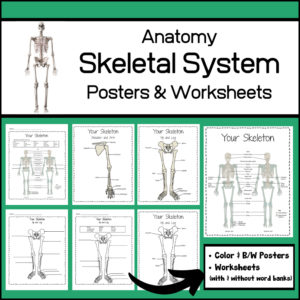
This ANATOMY / BIOLOGY / HEALTH resource includes 3 sets of human skeleton posters and worksheets to help you teach the names of major bones. Each set has a color poster (great for bulletin boards) and b/w poster (great for student handouts) and each worksheet comes with and without a word bank. Bones: Skull (cranial portion, facial portion), clavicle, scapula, sternum, ribs, vertebral column, hip bones (pelvic girdle), humerus, ulna, radius, carpals, metacarpals, phalanges, femur, patella, tibia, fibula, tarsals, metatarsals.
-
 $1.00Add to Cart
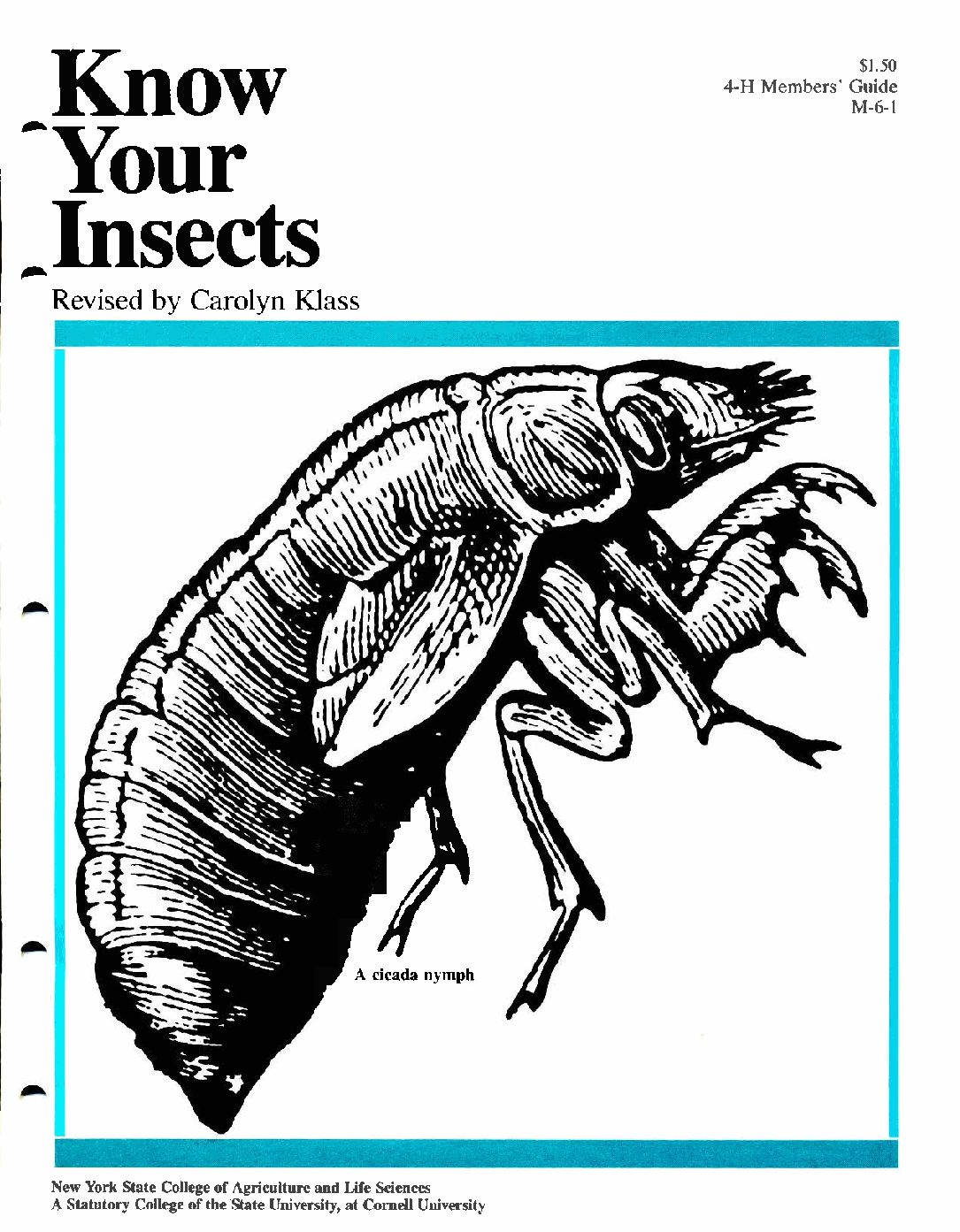
This is a small (15 page) old handout to help students learn basics about insects and how to mount them when creating an insect collection.
-
 $1.00Add to Cart
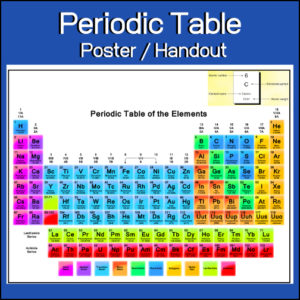
You can use this resource as a poster or a handout – the Periodic Table of Elements (with a ‘how to read each element’ visual model).
The table shows all elements through 103 Lr and is color coordinated showing:
– alkali metal
– alkaline earth
– transition metal
– basic metal
– semimetals
– nonmetals
– halogens
– noble gas
– langthanides
– actinides -
$2.75Add to Cart
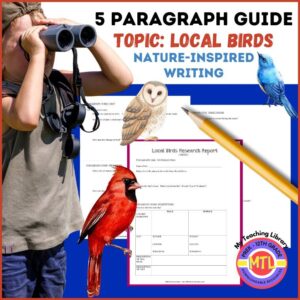
Easy-to-use, step-by-step, print-and-go guide for students to use as they learn to write a 5-paragraph essay! This nature-themed resource has a local bird focus and guides students as they research, observe and write about one bird species that lives in their local area.
This 3-page resource outlines paragraph by paragraph what to include and gives space for students to write detailed notes.
What will students learn and observe about a bird species before they begin writing?
– where the bird geographically lives
– habitat(s) where they are most likely found
– physical characteristics (coloring, markings, size, bill, feet)
– diet (herbivore, carnivore, omnivore) and where/how they find/gather their food
– predators and self-protection
– interesting factsPlus, this guide will encourage students to reflect on what they have learned.
Once completed, students will be able to take the guide and their notes and write amazing 5-paragraph essays!
Use once as one assignment for one bird of their choice or use again and again to create an entire collection of essays on local birds. Regardless of where you live, these pages will have students observing and learning about local birds.
-
$2.00Add to Cart
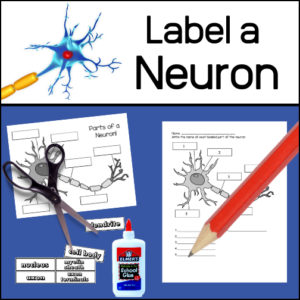
This resource is meant to help students learn and remember the basic parts of a neuron (dendrite, nucleus, cell body, myelin sheath, axon and axon terminals).
Includes:- – Poster
- – Center activity
- – 2 Student worksheets
- – Answer Key
-
$1.00Add to Cart
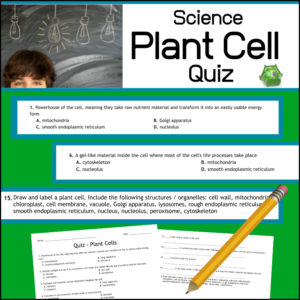
The resource is a 15 question quiz that will assess student understanding of the following structures / organelles of a plant cell: cell wall, mitochondria, chloroplast, cell membrane, vacuole, Golgi apparatus, lysosomes, rough endoplasmic reticulum w/ ribosomes, smooth endoplasmic reticulum, nucleus, nucleolus, peroxisome, cytoskeleton
-
$4.99Add to Cart
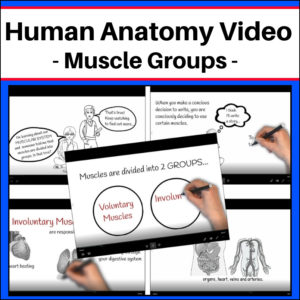
Human Anatomy – Muscle Groups Video has been created to introduce, explain and/or review voluntary and involuntary muscles in the human body. Each group is defined, explained and definitions given. This is great for visual learners!
To add student interest, one student is helping another student learn, interesting graphics have been added and upbeat music fills the background. (Music is easily muted if needed.)
Supporting Document: A worksheet (with answer key) that students can complete as they watch!
-
$1.50Add to Cart
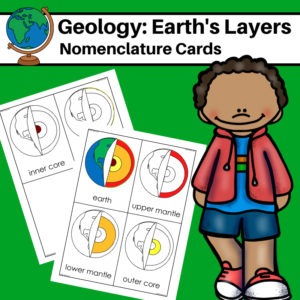
This resource, Earth’s Layers – Nomenclature Cards, will help your students learn the names of the layers of the Earth: upper mantle, lower mantle, outer core, inner core, and crust.
I’ve also included a set of blank cards for students to use and label themselves!
-
Natural Science: Physics & Earth Science – Grade 7 (Student Edition) to Pinterest (opens in a new window)$15.00Add to Cart
This physics and earth science student textbook is designed to use with middle school students (specifically those learning at or ready for 7th grade work). View the table of contents in the description below. Preview video here.
Get the TEACHER’S EDITION here!
Bundle and Save: 7th Grade Science Curriculum Bundle
-
$6.00Add to Cart
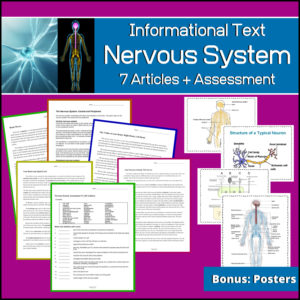
This ANATOMY / BIOLOGY / HEALTH resource contains 7 informational text articles (each with comprehension questions followings), 2 end of unit assessments and 4 bonus posters! These articles can be used in any Science related class or in a Language Arts / Reading classroom. Use as standalone mini-lessons or as supplemental activities, homework or in centers.
Flesch-Kincaid Grade Levels for articles range from 5.1 – 7.4
-
$1.50Add to Cart
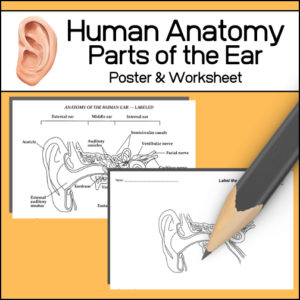
Studying the human ear? This resource includes…
- – Poster with the following parts labeled (auricle, auditory ossicles, semicircular canals, vestibule nerve, facial nerve, cochlear nerve cochlea, vestibule, eardrum, Eustachian tube, external auditory meatus)
- – Student worksheet to label
-
$0.50Add to Cart
Taking what they already know about ‘matter’, this one page worksheet will require students to ‘think deeply’ (using critical thinking skills) to answer questions. Answer key also included.
-
Natural Science: Biology & Chemistry – Grade 8 (Teacher’s Edition) to Pinterest (opens in a new window)$15.00Add to Cart
This is the teacher’s edition to Natural Science: Biology & Chemistry – Grade 8 (Student Edition)
Watch a video preview of the matching student textbook here.
Bundle and Save: 8th Grade Science Curriculum Bundle
-
$1.25Add to Cart
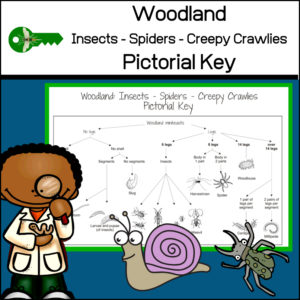
Students love entomology! What is that bug? Some may use the term MINI-BEAST. Is it an insect, a spider, a slug? “I found this bug in the woods, but what is it called?” To help answer student questions like these, here is an easy to use PICTORIAL IDENTIFICATION KEY!
Woodland minibeasts included on this picture guide: snail, worm, larvae (pupae), slug, beetle, earwig, aphid, weevil, harvestman, spider, woodlouse, centipede and millipede (all common creepy crawlies found in the woods)
-
$1.00Add to Cart
Chemical Energy is released when bonds form in a chemical reaction, often producing heat as a by-product (exothermic reaction).
Here are four experiments for students to perform which display chemical energy! Experiments include:
1. Rusty Heat
2. Easy Endothermic Reaction
3. Classic Mentos Geyser
4. Hot Ice -
$2.00Add to Cart
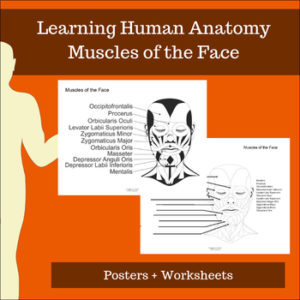
Muscles of the Face – Learning Human Anatomy will be exactly what you need if you are looking for a easy to read posters as well as a labeling worksheet for students.
This resource actually comes with two worksheets, one with and one without terms. (You choose if you want your students to completely remember the names or if they need the terms to help them. )
-
$3.00Add to Cart
Want student to investigate a variety of different types of insects? This K-W-L resource includes 13 different KWL worksheets so that students (individually or in cooperative groups) can use as they study different bugs and creepy crawlies. Perhaps they want (or you want) the focus to be on insects that hop or ground dwelling insects. What if their study should focus on beetles only or butterflies and moths? Not only will you get worksheets for a variety of specified ‘types’ of insects but I’ve also included some that can be tailor designed to what you or your students choose to study!
-
$20.00Add to Cart
Physical Science is the study of the inorganic world. It is ordinarily thought of as consisting of four broad areas: astronomy, physics, chemistry, and the Earth sciences. This textbook is a full-year Physical Science curriculum (356 pages) and can be used in Middle or High School.
-
$4.00Add to Cart
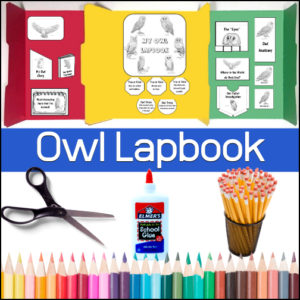
This engaging, hands-on project will give students the materials necessary to learn all about owls and create a great project to display their learning!
Suggested for 3rd-6th grades. (See description for more information)
-
$1.00Add to Cart
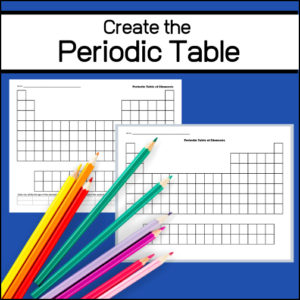
Here are two worksheets for students to use to create the periodic table of elements.
– One for elements only
– One to create a color key showing the type of elementsThese are great for students to use when they are just learning the elements and can be used as a student-created study guide as well.