
Category: 9th-12th
Showing 61–80 of 98 resultsSorted by latest
-
 $2.50Add to Cart
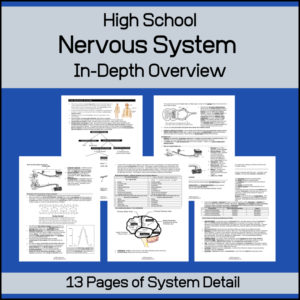
This 13 page resource is a very detailed overview of the nervous system and is meant for High School level students.
-
$9.75Add to Cart
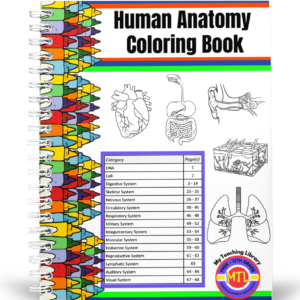
This 68-page anatomy coloring book has been designed for 5th-12th grade classrooms (Health, Science, Anatomy, Biology, Physiology).
Categories:
- DNA
- Cell
- Digestive System
- Skeletal System
- Nervous System
- Circulatory System
- Respiratory System
- Urinary System
- Integumentary System
- Muscular System
- Endocrine System
- Reproductive System
- Lymphatic System
- Auditory System
- Visual System
-
$1.00Add to Cart
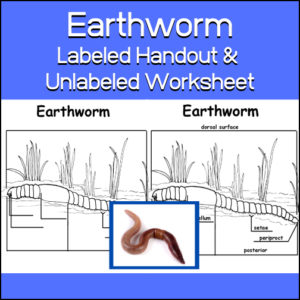
The earthworm is an annelid. The annelids , also known as the ringed worms or segmented worms, are a large phylum, with over 22,000 species which includes earthworms, ragworms, and leeches. This resource includes a labeled handout (showing the following parts: mouth, prostomium, clitellum, setae, periproct) and a worksheets for students to label.
-
$5.00Add to Cart
This BIOLOGY / HEALTH / ANATOMY / BODY SYSTEMS resource centers around the human nervous system and is a notebooking project unit. This interactive 56 page resource will require students to perform research and can be used independently or along side your curriculum.
-
$1.00Add to Cart
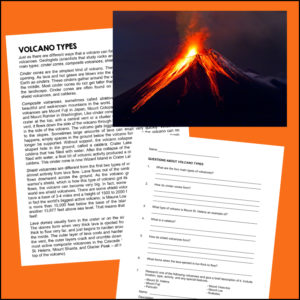
Here is a one page informational article to help students (6th-9th grades) learn about the various types of volcanoes and characteristics of each. After reading the text, student will answer questions to assess their comprehension.
-
$2.50Add to Cart
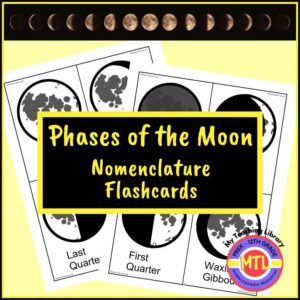
Teaching about the different phases of the moon? Get “Earth Science: Moon Phases Nomenclature Flashcards” to help students learn and identify the 8 different phases of the moon, regardless of grade level.
✨ What’s Included:
- Printable Nomenclature / flash cards for hands-on learning.
- Clear and concise labeled illustrations of each of the following moon phases: new moon, waxing moon, first quarter, waxing gibbous, full moon, waning gibbous, last quarter and waning crescent
✅ Perfect For…
- – Earth Science and general science lessons
- – Engaging students with moon phases and astronomy concepts.
This resource is built on the belief that understanding scientific terminology should be an active and interactive process. By utilizing a nomenclature-based approach, these flashcards encourage students to not only memorize terms but also to actively engage with the visual and conceptual aspects of moon phases. This method fosters deeper understanding and retention, making complex scientific ideas more accessible and memorable for every learner.
📚 Learning Objectives
- – Students will be able to identify and name the different moon phases.
- – Students will understand and define key Earth Science vocabulary related to the moon.
Transform your science lessons with these dynamic and effective Earth Science Vocabulary Moon Phases Nomenclature Flashcards! They are a fantastic tool to illuminate the wonders of space science for your students.
Click Add to Cart today!
-
$3.00Add to Cart
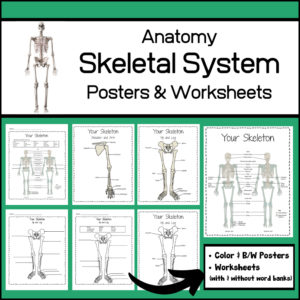
This ANATOMY / BIOLOGY / HEALTH resource includes 3 sets of human skeleton posters and worksheets to help you teach the names of major bones. Each set has a color poster (great for bulletin boards) and b/w poster (great for student handouts) and each worksheet comes with and without a word bank. Bones: Skull (cranial portion, facial portion), clavicle, scapula, sternum, ribs, vertebral column, hip bones (pelvic girdle), humerus, ulna, radius, carpals, metacarpals, phalanges, femur, patella, tibia, fibula, tarsals, metatarsals.
-
$1.00Add to Cart
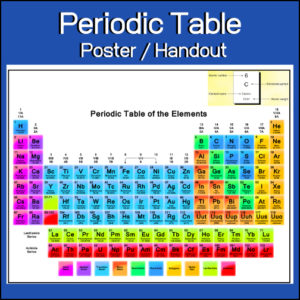
You can use this resource as a poster or a handout – the Periodic Table of Elements (with a ‘how to read each element’ visual model).
The table shows all elements through 103 Lr and is color coordinated showing:
– alkali metal
– alkaline earth
– transition metal
– basic metal
– semimetals
– nonmetals
– halogens
– noble gas
– langthanides
– actinides -
$2.50Add to Cart
This is a downloadable copy of the book. (138 pages)
About the book: A Guide for the Study of Animals is a classic zoology guide (1911) which is intended for pupils in 9th-12th grades. It was prepared by the authors at the request of the Biology Round Table, an association composed of the teachers of Biology in the Chicago High Schools. The book is basically a Biology / Zoology Lab activity guide. Please note that this is not a ‘textbook’ but a lab activity book. (See description for further details.) -
$1.00Add to Cart
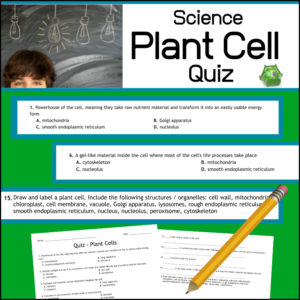
The resource is a 15 question quiz that will assess student understanding of the following structures / organelles of a plant cell: cell wall, mitochondria, chloroplast, cell membrane, vacuole, Golgi apparatus, lysosomes, rough endoplasmic reticulum w/ ribosomes, smooth endoplasmic reticulum, nucleus, nucleolus, peroxisome, cytoskeleton
-
$2.00Add to Cart
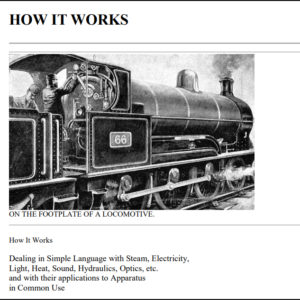
This is a downloadable copy of the book. (279 pages)
About the book: This out-of-print book will give students details ‘in simple language’ (and illustrations) dealing with steam, electricity, light, heat, sound, hydraulics, optics and other apparatus. (See more in description below) -
$1.50Add to Cart
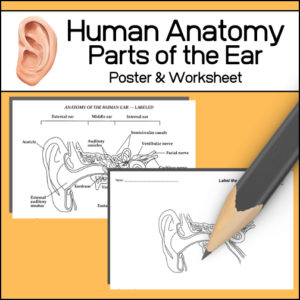
Studying the human ear? This resource includes…
- – Poster with the following parts labeled (auricle, auditory ossicles, semicircular canals, vestibule nerve, facial nerve, cochlear nerve cochlea, vestibule, eardrum, Eustachian tube, external auditory meatus)
- – Student worksheet to label
-
$0.50Add to Cart
Taking what they already know about ‘matter’, this one page worksheet will require students to ‘think deeply’ (using critical thinking skills) to answer questions. Answer key also included.
-
$1.00Add to Cart
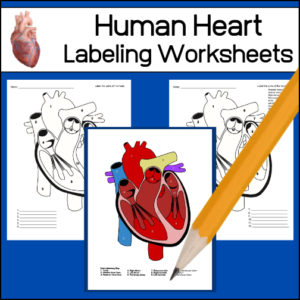
Two worksheets for students to label of the human heart. One with a word bank and one without. Answer key provided.
-
$1.00Add to Cart
Chemical Energy is released when bonds form in a chemical reaction, often producing heat as a by-product (exothermic reaction).
Here are four experiments for students to perform which display chemical energy! Experiments include:
1. Rusty Heat
2. Easy Endothermic Reaction
3. Classic Mentos Geyser
4. Hot Ice -
$2.00Add to Cart
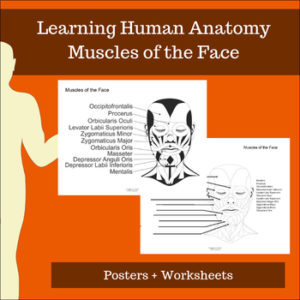
Muscles of the Face – Learning Human Anatomy will be exactly what you need if you are looking for a easy to read posters as well as a labeling worksheet for students.
This resource actually comes with two worksheets, one with and one without terms. (You choose if you want your students to completely remember the names or if they need the terms to help them. )
-
$3.00Add to Cart
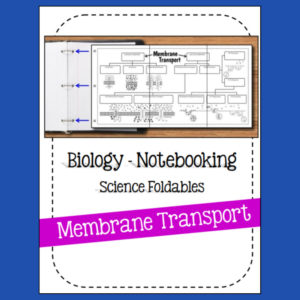
High School Biology Notebook resource!
Students will learn all about the cell membrane. Terms include: phospholipid, phospholipid bilayer, integral protein, peripheral protein, cholesterol, glycolipid, oligosaccharide/sugar chain, glycoprotein, transport, attachment and recognition, receptor for signalling, enzymatic activities
-
$20.00Add to Cart
Physical Science is the study of the inorganic world. It is ordinarily thought of as consisting of four broad areas: astronomy, physics, chemistry, and the Earth sciences. This textbook is a full-year Physical Science curriculum (356 pages) and can be used in Middle or High School.
-
$1.00Add to Cart
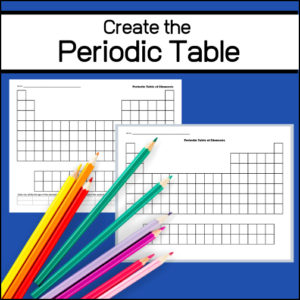
Here are two worksheets for students to use to create the periodic table of elements.
– One for elements only
– One to create a color key showing the type of elementsThese are great for students to use when they are just learning the elements and can be used as a student-created study guide as well.