
Category: 4th-5th
Showing 241–260 of 716 resultsSorted by latest
-
 $1.25Add to Cart
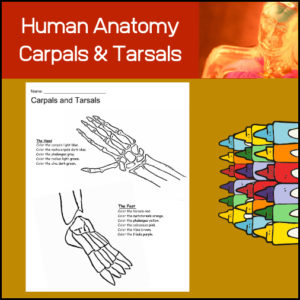
On this one page worksheet titled Carpals and Tarsals, students identify the bones of the hands (+ wrist and lower arm) and feet (+ lower leg): carpals, metacarpals, phalanges, radius, ulna, tarsals, metatarsals, phalanges, calcaneus, tibia and fibula.
Suggested uses: Use in a Science center when studying human anatomy, give as homework or use as a quick quiz. Answer key is provided.
-
$1.99Add to Cart
This cross-curricular resource will inform and assess students’ understanding of the basic process of photosynthesis. Includes both close reading and a cloze activity.
-
$1.00Add to Cart
One page form on which students can write a report on the U.S. Constitution as well as list sources used.
-
$3.00Add to Cart
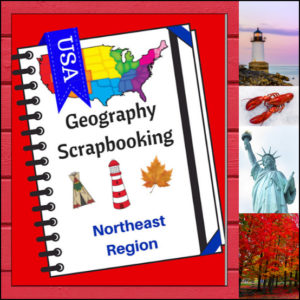
Turn your geography lessons into a creative travel adventure! As your students explore the historic and diverse Northeast region, these scrapbooking pages offer a dynamic way for them to document their “journey.” Instead of just memorizing facts, students become curators of their own learning, capturing the essence of the states from Maine down to Pennsylvania.
This 5-page set is designed to be the perfect companion to your regional studies, allowing students to blend artistic expression with factual writing.
🧠 The “How” and “Why” (Educational Benefits)
Why swap traditional worksheets for scrapbooking? It’s all about active synthesis:
- Multisensory Engagement: By drawing or pasting pictures and writing short descriptions, students engage multiple areas of the brain, leading to significantly higher information retention. 🎨
- Critical Thinking & Opinion: The “Personal Opinion” section moves beyond rote memorization, asking students to evaluate information and decide what interests them most—a key skill in developing independent learners. 💭
- Comprehensive Coverage: These pages guide students through the “Big Six” of geography: Climate, Landforms, Water, Natural Resources, Landmarks, and Culture. 🏔️🌊
- Ownership of Learning: Creating a scrapbook gives students a sense of pride and ownership. It’s no longer just a school assignment; it’s an artifact of their hard work. 📖
🛠️ Creative Ways to Use These Pages
- The “Travel Journal” Project: Have students “visit” the Northeast virtually. Use these pages as their daily log to record what they “saw” each day. ✈️
- State Fair Displays: If students are doing a deep dive into specific states, use these pages as the centerpiece for a poster board or display table.
- Geography Portfolios: Add these pages to a year-long geography binder. By the end of the year, students will have a complete “Travel Guide to the USA.” 📁
- Collaborative Posters: Print the pages at a larger scale and have small groups (or family) work together to illustrate and describe a specific aspect of the Northeast (like “Culture and Food”). 🍕
📝 What’s Included:
- 5 Detailed Scrapbooking Pages: Focused on the Northeast states.
- Guided Categories: Sections for Climate, Landforms, Water, Natural Resources, Landmarks, and Culture.
- Map Skills: Locating the states within the region.
- Personal Reflection: Space for students to share where they would most like to visit.
Pro Tip: This set is designed to pair perfectly with My Teaching Library’s Regions of the U.S. – Northeast Region | Informational Text and Worksheets for a complete, no-prep curriculum solution!
🚀 Start Your Northeast Adventure!
Transform your geography unit from dry facts into a vivid discovery! Download the Northeast Scrapbooking Pages today and give your students the creative space to show off what they know!✨
⭐ This product is included in a $$$ SAVING BUNDLE: Regions of the U.S.A. | Geography Bundle
-
$2.00Add to Cart
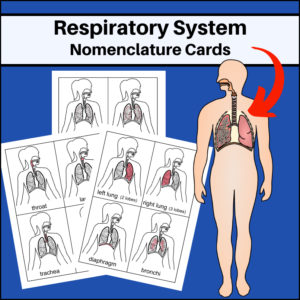
Respiratory System – Human Anatomy Nomenclature Cards – This resource will help students learn and study the location of the following parts of the respiratory system: left lung, right lung, diaphragm, bronchi, bronchioles, alveoli, sinus cavity, nose, throat, larynx, trachea, and pleura. There are also 4 extra diagrams with no labels for you to use as you wish…such as give to students to have them color in and label the cards for themselves!
-
$2.25Add to Cart
A fun and whimsical cross-curricular activity that your students will love. Students will read a ‘going back in time’ narrative about a young man finding himself aboard a ship with Christopher Columbus. After reading the passage and answering a few ‘get you thinking’ questions, students will be asked to ‘complete the story’. Ask students not only to use their knowledge and skills of writing but also their knowledge about Columbus, the time, the passage to the ‘New World’, living conditions, etc. You may also ask them to do a little research to find out more about the subject before completing the story.
-
$3.00Add to Cart
Lois Lowry’s Newberry Award winning book, Number the Stars, is a classic and a wonderful book to use to ‘delve deeper.’ This resource of book activities has been designed to do just that!
See description below for more details.
-
$6.00Add to Cart
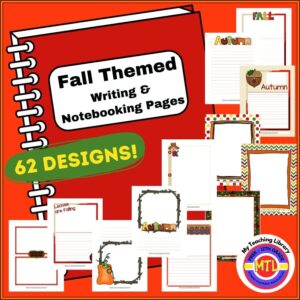
Here are 62 colorful Fall writing and notebooking pages that can set your student’s writing and reporting on fire!
Suggested uses:
- – Back to School writing
- – Fall / Autumn themed writing (stories, poetry, book reports)
- – To create a Memory book
- – In writing centers
- – For bulletin board displays
-
$3.00Add to Cart
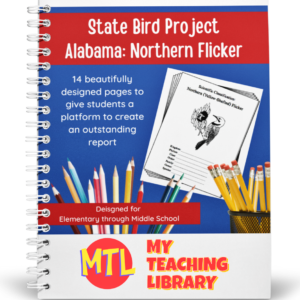
Studying the state of Alabama? Perhaps doing a unit on Ornithology? This project based unit is designed to help students study and record information about Alabama’s state bird – the Northern Flicker!
What type of pages are contained in this set:
– A map page (for the state)
– Scientific classification page
– A page for students to give details about the bird’s physical description, habitat, diet, life span and reproduction
– A page where students will do additional map work to show where in the U.S. the bird lives in addition to migration information
– Coloring page
– Several pages on which students can use for expository and/or creative writing as well as sections in which students may draw.14 pages in all and is designed for different levels / abilities.
My Teaching Library has a notebooking set for each of all 50 states. In addition, you can get all of them bundled!
If you only want a specific state, type in the search bar the state you want + ‘notebooking set’ (Example: West Virginia Notebooking Set)
Here are other bird related products you’ll love…
-
$1.75Add to Cart
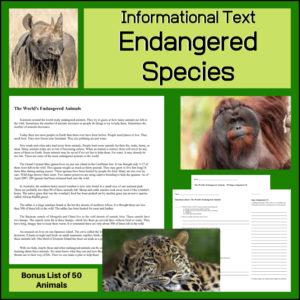
This cross-curricular (Language Arts – Science) informational article has been designed to help students gain a better understanding of why some animals in our world are endangered. The article will list causes such the need for more land and food for humans as well as pollution and hunting. Students will also be given several examples of animals from around the world that are in danger and what we need to learn in order to make plans to help them survive.
-
$5.00Add to Cart
This reading / literacy resource has been created to use with the Caldecott winning book, Jumanji, written by Chris Van Allsburg. It includes guided reading questions, journal response pages, reading journal pages, student activity pages, extended activities, and vocabulary work. Designed to use with 3rd – 4th -5th grades.
Includes:
- Guided Reading includes Pre-Reading, About the Cover, After Reading, and About the Art questions.
- Journal Response pages include questions about the story, an area for students to develop their own questions, questions students still have after reading and art expressions.
- Reading Journal (2 pages from which to choose) on which students record pages read, new words, record story events and student opinion about the story.
- Student Activity pages include creating a story setting map (with key), art work and write a different ending.
- Extended Activity (11 from which to choose) examples: Create a diorama of a favorite scene, create a board game.
- Vocabulary Work includes a word wall (40 words), definition and sentence writing and word search.
Reading Level information about Jumanji: Level: 3.9
-
$2.25Add to Cart
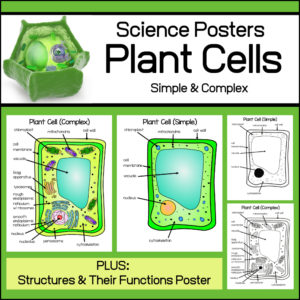
This Science / Biology resource offers 5 posters – Color posters which are perfect for bulletin boards or centers and B/W posters which are great to use as student handouts.
-
$1.00Add to Cart
This resource includes 14 flashcards (all in both color and b/w) for naming family members. They include: father, mother, husband, wife, parents, child, son, daughter, sister, brother, siblings, grandparents, grandfather, grandmother. Also comes with 2 blank cards for you to add others if you like!
Each flash card includes the word in French, in English and a photo.
-
$1.50Add to Cart
Why teach about syllables? Dividing words into parts, or “chunks” helps speed the process of decoding. Knowing the rules for syllable division can students read words more accurately and fluently. Understanding syllables can also help students learn to spell words correctly. This resource will help your students learn to divide words into syllables!
-
$8.00Add to Cart
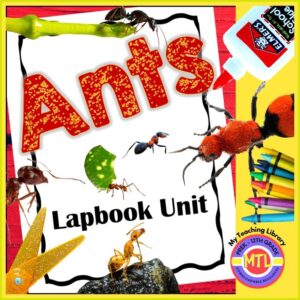
Think you know the “common” ant? Think again! With over 10,000 species crawling across the globe, these tiny powerhouses are anything but ordinary.
Ants | Hands-on Insect Science is an interactive, student-centered resource designed to transform science into a buzzing (or should we say crawling?) hub of discovery. Moving beyond simple worksheets, this unit culminates in a stunning 3D project that students can proudly display. Whether you are a homeschool parent looking for an immersive unit study or a teacher wanting to spice up your life science curriculum, this resource is built to engage.
🧠 What’s the Buzz? (The Learning Journey)
This unit dives deep into the complex world of formicaries. Students won’t just look at pictures; they’ll explore the “how” and “why” of ant life, including:
- The Life Cycle: From egg to adult.
- Anatomy: Breaking down the head, thorax, and abdomen.
- Social Structures: Understanding the hierarchy of the colony.
- Communication: How do they “talk” without voices?
- Ecosystem Impact: The good, the bad, and the tiny.
- Predators & Habitats: Who eats them and where do they hide?
📦 What’s Inside:
My Teaching Library has included everything you need to facilitate a deep-dive investigation with zero “ant-xiety”:
Feature Description Informational Text Comprehensive reading on communication, diet, and anatomy. Visual Aids Full-color posters and diagrams of the life cycle and anatomy. Species Flashcards 15 cards featuring different ants with photos and facts. Vocabulary Guide Key scientific terms with student-friendly definitions. 3D Project Templates Step-by-step instructions and templates for the final build. Fun Fact Cards Bite-sized trivia to keep engagement high. 🎨 Flexible
Whether you’re working at a kitchen table or in a 30-student classroom, this project scales to fit your needs:
- Individual Mastery: Let each student create their own 3D masterpiece.
- Cooperative Learning: Teaching multiple children? Assign roles and have students build a “super-colony” together!
Give your students a microscopic view of a massive world. 🌍
🛒 Ready to start the colony?
Add Ants | Hands-on Insect Science to your cart and download today…and watch your students’ curiosity grow!
-
$2.00Add to Cart
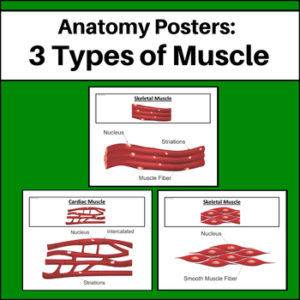
Perfect for any Biology / Anatomy Classroom teaching human anatomy: Anatomy Posters – Types of Muscle. These 3 colorful posters will help students quickly identify each type of muscle (Cardiac, Skeletal, Smooth) as well as the parts of each muscle.
-
$3.00Add to Cart
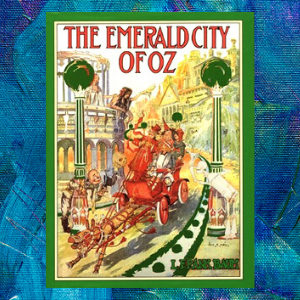
The Emerald City of Oz is the sixth of L. Frank Baum’s fourteen Land of Oz books. It was also adapted into a Canadian animated film in 1987. Originally published on July 20, 1910, it is the story of Dorothy Gale and her Uncle Henry and Aunt Em coming to live in Oz permanently. While they are toured through the Quadling Country, the Nome King is assembling allies for an invasion of Oz. This is the first time in the Oz series that Baum made use of double plots for one of the books.
Plot: At the beginning of this story, it is made quite clear that Dorothy Gale (the primary protagonist of many of the previous Oz books), is in the habit of freely speaking of her many adventures in the Land of Oz to her only living relatives, her Aunt Em and Uncle Henry. Neither of them believes a word of her stories, but consider her a dreamer, as her dead mother had been. She is undeterred.
Later, it is revealed that the destruction of their farmhouse by the tornado back in The Wonderful Wizard of Oz has left Uncle Henry in terrible debt. In order to pay it, he has taken out a mortgage on his farm. If he cannot repay his creditors, they will seize the farm, thus leaving Henry and his family homeless. He is not too afraid for himself, but both he and his wife, Aunt Em, fear very much for their niece’s future. Upon learning this, Dorothy quickly arranges with Princess Ozma to let her bring her guardians to Oz where they will be very happier and forever safe. Using the Magic Belt (a tool captured from the jealous Nome King Roquat), Ozma transports them to her throne room. They are given rooms to live in and luxuries to enjoy, including a vast and complex wardrobe. They meet with many of Dorothy’s animal friends, including the Cowardly Lion and Billina the Yellow Hen.
In the underground Nome Kingdom, the Nome King Roquat is plotting to conquer the Land of Oz and recover his magic belt, which Dorothy took from him in Ozma of Oz. After ordering the expulsion of his General (who will not agree to such an attack) and the death of his Colonel (who also refuses), King Roquat holds counsel with a veteran soldier called Guph. Guph believes that against the many magicians of Oz (the reputation of which has grown in the telling), the Nome Army has no chance alone. He therefore sets out personally to recruit allies.
Dorothy, accompanied by the Wizard of Oz and several other friends, departs the Emerald City in a carriage drawn by the Wooden Sawhorse, intending to give her aunt and uncle a tour of the land.
-
$4.00Add to Cart
Your students will be inspired to write using these fun, print and go pages with a back to school theme! Whether you assign a creative writing project, a get to know you piece or anything else, you’ll find pages that are perfect to use. Most pages have single lined sheets but a few are completely open. Several have sections designed for students to add their own illustrations.
Includes:
- 32 Color pages
- 28 B/W pages
-
$3.25Add to Cart
This resource includes 27 ready to use Math worksheets for 4th-5th grade students. Designed to give students plenty of practice and to reinforce student knowledge of decimal notation, location on a number line, digit value and relative value in relation to half.
-
$1.25Add to Cart
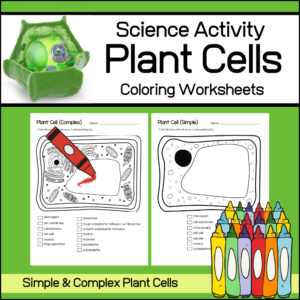
Interactive Science learning – This resource includes 2 coloring worksheets: Simple Plant Cell and Complex Plant Cell. As students color (identify) each part, they will also create a corresponding key.
Structures to be identified and colored:
1. Simple Plant Cell – cell wall, mitochondria, chloroplast, cell membrane, vacuole, nucleus, cytoskeleton
2. Complex Plant Cell – cell wall, mitochondria, chloroplast, cell membrane, vacuole, Golgi apparatus, lysosomes, rough endoplasmic reticulum w/ ribosomes, smooth endoplasmic reticulum, nucleus, nucleolus, peroxisome, cytoskeleton